Exploring Two Much: The 1995 Romantic Screwball Comedy Starring Antonio Banderas
Two Much is a 1995 romantic screwball comedy directed by Fernando Trueba, featuring Antonio Banderas as an art dealer who creates a fictional twin brother to simultaneously date two sisters, played by Melanie Griffith and Daryl Hannah....
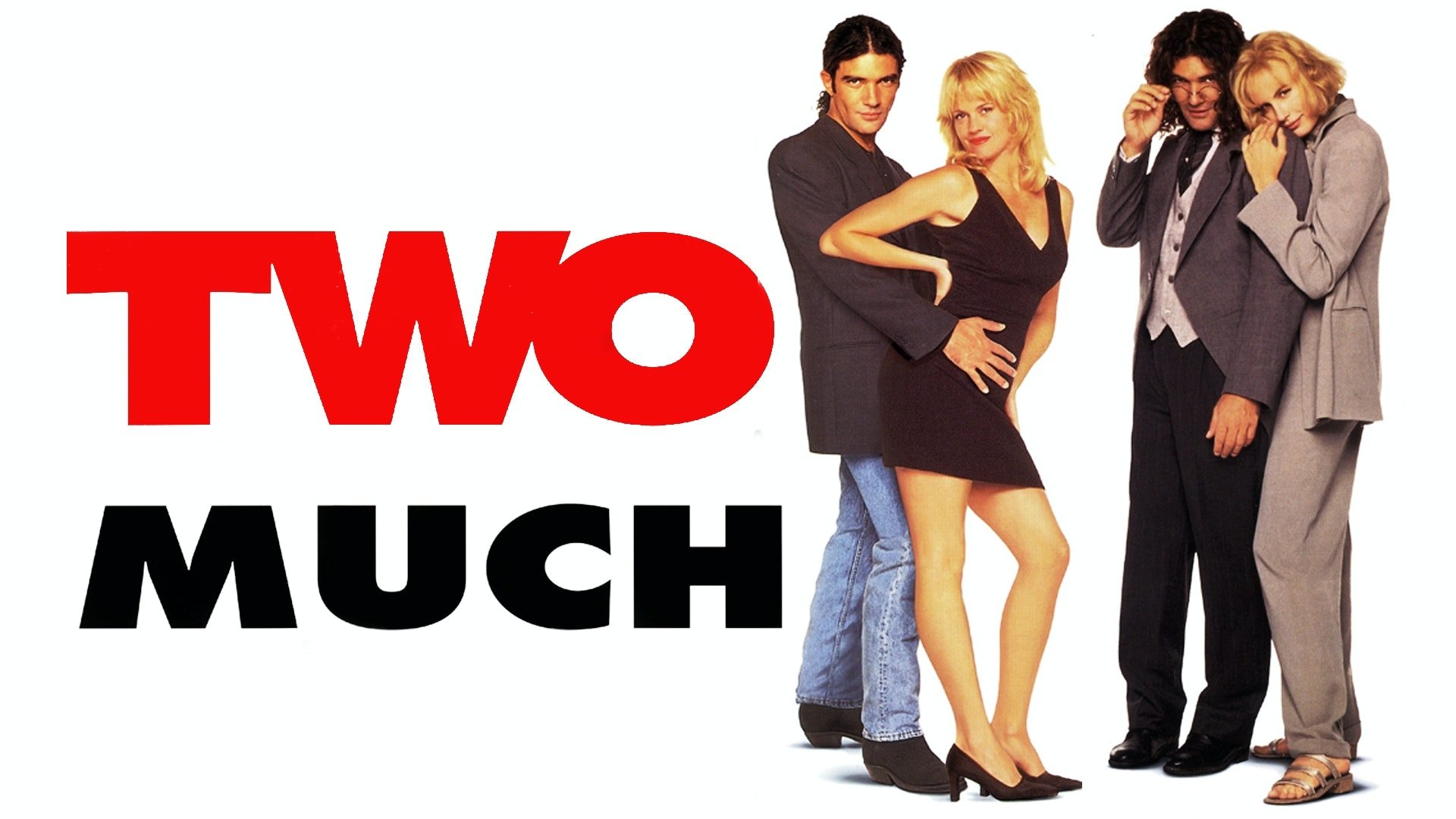
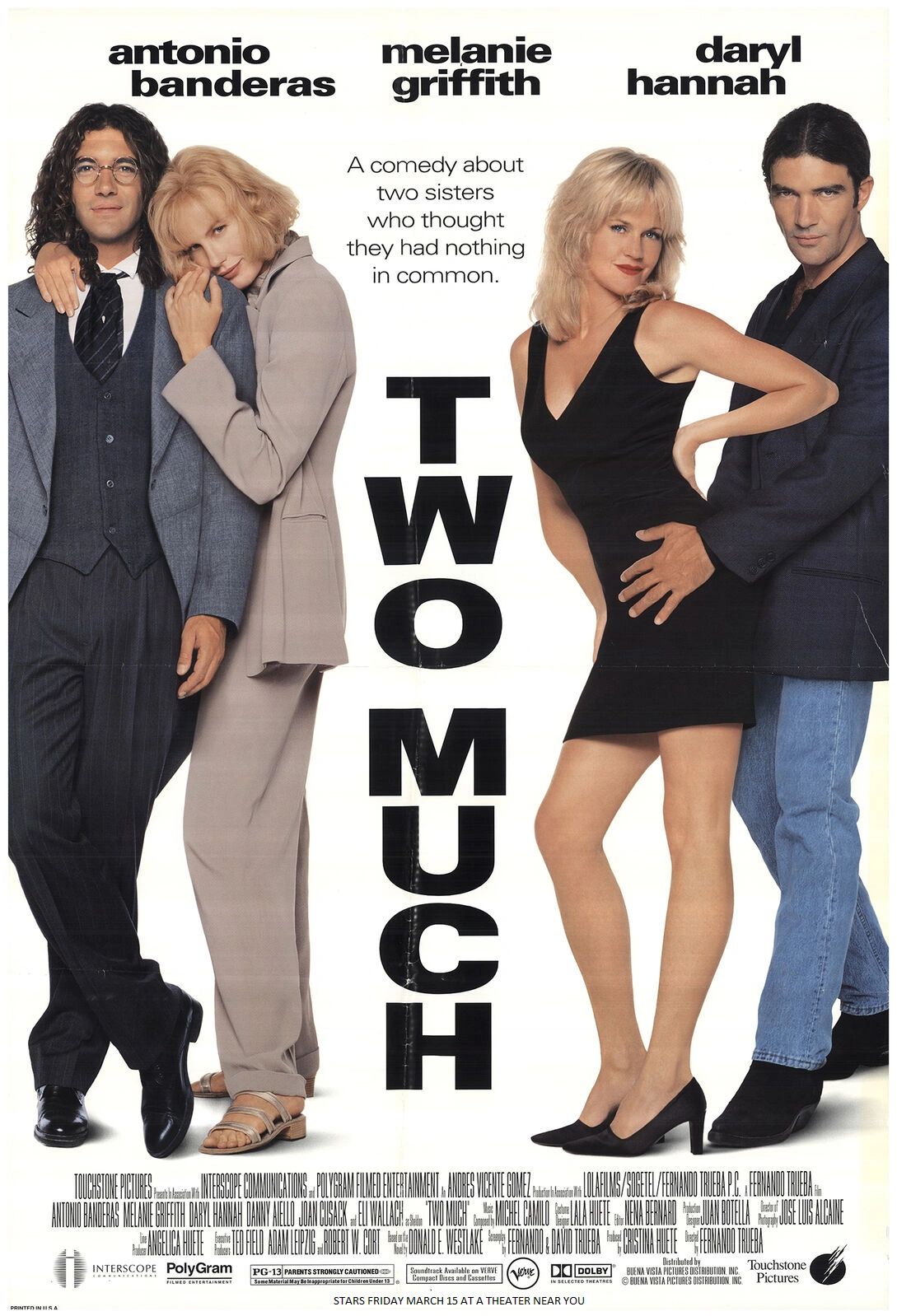
Two Much is a 1995 romantic screwball comedy directed by Fernando Trueba, featuring Antonio Banderas as an art dealer who creates a fictional twin brother to simultaneously date two sisters, played by Melanie Griffith and Daryl Hannah. Renowned for its high-energy slapstick and farcical plot, the film is also historically significant as the project where Banderas and Griffith began their long-term real-life relationship.
Contents
The Origins and Production of Two Much
To understand Two Much, one must look at its literary and directorial roots. The film was adapted from the 1975 novel of the same name by Donald E. Westlake, a prolific mystery and comedy writer known for his intricate heist plots and sharp wit. The transition from the page to the screen was overseen by Spanish director Fernando Trueba, who was at the height of his international acclaim following the Academy Award win for Belle Époque (1992).
Trueba’s approach to the material was to infuse a classic Hollywood genre—the screwball comedy—with a vibrant, Mediterranean energy, despite the film being set in the neon-lit landscapes of Miami. The production was a significant undertaking, intended to be a crossover hit that would cement Banderas’s status as a leading man in the American market while showcasing Trueba’s versatility. The script, co-written by Trueba and David Trueba, leaned heavily into the mechanics of the "double identity" trope, a staple of comedic theater and cinema since the days of Plautus and Shakespeare.
The filming process itself became tabloid fodder, as the chemistry between Antonio Banderas and Melanie Griffith shifted from professional to personal. This off-screen romance added a layer of meta-textual interest to the film’s release in late 1995 and early 1996, though it occasionally overshadowed the technical merits of the film’s comedic construction.
Plot Mechanics: The Art of the Double Deception
The narrative engine of Two Much is driven by the character Art Dodge (Banderas), a struggling Miami art gallery owner who finds himself in a financial and romantic quagmire. After a series of mishaps, Art becomes involved with Betty Kerner (Melanie Griffith), a recent divorcee of a mobster. However, Art quickly falls for Betty’s more intellectual and reserved sister, Liz Kerner (Daryl Hannah).
Unable to choose between them and desperate to keep both relationships afloat, Art resurrects a persona: his "twin brother," Bart Dodge. The comedy arises from the increasingly frantic physical and verbal gymnastics Art must perform to keep the two women from discovering the truth. This involves:
- Rapid Costume Changes: Art must frequently switch between his standard look and a more "intellectual" version of himself (incorporating glasses and a different hairstyle) to portray Bart.
- Logistical Complexity: Scheduling dates in the same locations or during the same events, leading to the classic "running between two rooms" sequences synonymous with farce.
- Psychological Strain: As Art spends more time as Bart, the lines between his true self and his fabrication begin to blur, leading to a climax where the deception becomes unsustainable.
The film utilizes the Miami setting to enhance the absurdity. The bright, high-contrast colors of the city serve as a backdrop for Art’s darkening web of lies, creating a visual irony that is common in 1990s neo-screwball cinema.
Analyzing the Screwball Comedy Elements
A "screwball comedy" is defined by specific narrative and stylistic hallmarks, most of which Two Much attempts to modernize for a 1995 audience. These elements include:
The Battle of the Sexes
Trueba’s film places Art Dodge at the mercy of the Kerner sisters. While Art believes he is the one in control of the narrative, the script often highlights his ineptitude. The "screwball" element often involves a dominant or eccentric female lead who challenges the male protagonist; in this case, the dynamic is split between Betty’s impulsive energy and Liz’s grounded skepticism.
Fast-Paced Dialogue and Physical Farce
The dialogue in Two Much is delivered with a rapid-fire cadence, aiming to mimic the rhythmic patterns of 1930s classics like His Girl Friday. Banderas, who was still relatively new to English-language lead roles at the time, leaned heavily into physical comedy—double takes, pratfalls, and exaggerated facial expressions—to compensate for the frantic pace of the script.
The Element of Social Satire
While primarily a romance, the film takes subtle swipes at the pretentiousness of the 1990s art world and the superficiality of Miami’s high society. Art’s gallery is a temple to "concept over substance," which mirrors his own romantic strategy: selling a concept (Bart) because the substance (Art) feels inadequate.
Cast and Character Dynamics
The success of a farce depends entirely on the ensemble’s ability to maintain a straight face amidst the chaos. The casting of Two Much was intentionally high-profile to bolster its international appeal.
| Actor | Character | Role/Function in Plot |
|---|---|---|
| Antonio Banderas | Art / Bart Dodge | The protagonist; an art dealer caught in his own lie. |
| Melanie Griffith | Betty Kerner | The more outgoing, impulsive sister who falls for Art. |
| Daryl Hannah | Liz Kerner | The intellectual sister who falls for the "twin" Bart. |
| Danny Aiello | Gene | Betty’s ex-husband, adding a layer of physical threat. |
| Joan Cusack | Gloria | Art’s loyal but cynical assistant who facilitates the ruse. |
| Eli Wallach | Sheldon | Art’s father, providing a moral (or lack thereof) anchor. |
Antonio Banderas’s performance is the linchpin of the film. Playing two characters who are essentially the same person pretending to be someone else requires a specific type of energetic commitment. His portrayal of Bart—the more sensitive, bespectacled "brother"—was designed to contrast with Art’s more aggressive, desperate persona.
Melanie Griffith and Daryl Hannah provide the necessary contrast to keep the "twin" conceit working. Griffith’s Betty is written with a vulnerability that makes Art’s deception feel increasingly cruel, while Hannah’s Liz represents the "ideal" woman who forces Art to confront his own shallow nature.
Critical Reception and Commercial Performance
Upon its release in 1995, Two Much received a polarized reception. Critics were divided on whether the film successfully captured the magic of old Hollywood or if it felt like a dated retread.
Critical Critique
Reviewers who disliked the film often pointed to its length and the repetitive nature of the "switching identities" gags. Some felt that the chemistry between Banderas and Griffith, while evident, didn't translate into comedic timing. Legendary critic Roger Ebert noted that while Banderas was charming, the movie's plot was so transparent that it was difficult for the audience to stay invested in the suspense of the deception.
Commercial Outcome
Financially, the film struggled in the United States. Despite the star power of its leads, the romantic comedy market in 1995 was crowded. However, Two Much performed significantly better in European markets, particularly in Spain, where Fernando Trueba and Antonio Banderas were national icons. In Spain, the film was a major cultural event and a box office success, proving that the European sensibility of the direction resonated more strongly with those audiences.
The Legacy of Two Much in 2026
Looking back from 2026, Two Much is often viewed through the lens of Hollywood history rather than just as a standalone comedy. It serves as a time capsule of the mid-90s "Latin Explosion" in Hollywood, where Banderas was being positioned as the ultimate versatile leading man.
The film is also remembered as the catalyst for one of Hollywood’s most discussed marriages of the era. The union of Banderas and Griffith lasted nearly twenty years, and their professional collaboration in Two Much remains a permanent record of their early attraction. For film students, the movie is a case study in the challenges of the "transatlantic" film—how a European director adapts a distinctly American genre and whether that blend results in something unique or merely disconnected.
Furthermore, the film’s reliance on physical practical effects and location shooting in Miami offers a nostalgic look at pre-CGI heavy romantic comedies. The vibrant cinematography and the use of actual physical space for the comedic set-pieces give the film a tactile quality that is often missing from modern digital productions.
Common Questions Regarding Two Much (1995)
Is Two Much based on a true story?
No, Two Much is entirely fictional. It is based on the 1975 novel of the same name by Donald E. Westlake. Westlake was a master of the "comic caper" and "mistaken identity" tropes, and the film follows the book's premise of an art dealer creating a twin to juggle two romantic interests.
Where was the movie filmed?
The film was shot primarily on location in Miami and Miami Beach, Florida. The production utilized various iconic locations, including Art Deco hotels and waterfront estates, to capture the specific aesthetic of South Florida in the mid-1990s.
Why is the film called "Two Much"?
The title is a double entendre. It refers to the "two" versions of the protagonist (Art and his fake twin Bart) and is also a play on the phrase "too much," suggesting that the situation Art has created is overwhelming and excessive.
Did Antonio Banderas and Melanie Griffith marry because of this movie?
While they didn't marry immediately, they met and fell in love during the production of Two Much in 1995. Both were married to other people at the time (Banderas to Ana Leza and Griffith to Don Johnson), but they wed shortly after their respective divorces were finalized in 1996.
How does the film hold up for modern audiences?
In 2026, the film is seen as a lighthearted, if slightly overlong, farce. While some of the gender dynamics and the central deception might feel dated to modern viewers, the physical comedy and the charismatic performances of the leads remain entertaining for fans of 90s cinema.
Final Recommendation
For those interested in the evolution of the romantic screwball comedy, or for fans of Antonio Banderas and Melanie Griffith, Two Much is a mandatory watch. It represents a specific moment in film history where international talent attempted to revitalize a classic American genre. To get the most out of the experience, viewers should approach it as a piece of theatrical farce rather than a grounded romantic drama. It is currently available on various digital platforms and remains a staple of 1990s retrospective collections.
Image Gallery