Navigating Maricopa County Justice Courts: 2026 Legal Procedures, Jurisdictions, and Filing Guidelines
The Justice Courts of Maricopa County handle civil lawsuits where the amount in dispute is less than $10,000, small claims cases under $3,500, evictions, traffic violations, and criminal misdemeanors. Operating across 26 distinct preci...
The Justice Courts of Maricopa County handle civil lawsuits where the amount in dispute is less than $10,000, small claims cases under $3,500, evictions, traffic violations, and criminal misdemeanors. Operating across 26 distinct precincts, these courts provide accessible legal resolution for residents, though they require strict adherence to the Arizona Rules of Civil Procedure and specific 2026 local administrative protocols.
Contents
Understanding the Role and Jurisdiction of Justice Courts in 2026
Maricopa County Justice Courts serve as the primary legal venue for limited-jurisdiction cases within the Phoenix metropolitan area. While the Superior Court of Arizona handles felony cases and high-value civil litigation, the Justice Courts are designed for efficiency and community-level dispute resolution. In 2026, these courts have integrated advanced digital filing systems and hybrid hearing models to manage the high volume of cases across the county's sprawling geography.
The jurisdiction of these courts is defined by both the subject matter of the case and the geographic boundaries of the precinct. Each of the 26 precincts is presided over by an elected Justice of the Peace. It is critical to understand that filing a case in the wrong precinct can lead to a dismissal for improper venue, necessitating a clear understanding of precinct boundaries.
Subject Matter Jurisdictions
The legal authority of the Maricopa County Justice Courts is strictly limited to the following categories:
- Civil Lawsuits: Disputes involving debt collection, breach of contract, or personal injury where the damages claimed do not exceed $10,000.
- Small Claims: A subset of civil law for disputes under $3,500. These cases are designed to be faster and less formal, often prohibiting the use of attorneys unless both parties agree in writing.
- Evictions (Forcible Entry and Detainer): Legal actions brought by landlords to regain possession of a rental property. These cases are governed by the Arizona Residential Landlord and Tenant Act.
- Criminal Misdemeanors: Crimes punishable by a fine, probation, or a jail sentence of six months or less (e.g., DUI, petty theft, simple assault).
- Traffic Violations: Civil and criminal traffic citations issued by the Maricopa County Sheriff's Office (MCSO) or the Arizona Department of Public Safety (DPS).
- Protective Orders: Issuance of Orders of Protection and Injunctions Against Harassment.
The 26 Precincts of Maricopa County: Locations and Logistics
As of 2026, Maricopa County maintains 26 justice court precincts. Identifying the correct precinct is determined by where the defendant resides or where the incident (such as a contract breach or traffic stop) occurred.
| Precinct Name | Primary Area Served | Key Landmark/Region |
|---|---|---|
| Agua Fria | Avondale, Litchfield Park | West Valley |
| Arcadia Biltmore | Central/East Phoenix | Biltmore Area |
| Arrowhead | Glendale, Peoria | Arrowhead Mall Region |
| Country Meadows | West Phoenix | Maryvale / Westgate |
| Desert Ridge | North Phoenix, Scottsdale | Loop 101 & SR-51 |
| Downtown | Central Phoenix | Maricopa County Court Complex |
| Dreamy Draw | North Central Phoenix | Piestewa Peak Region |
| East Mesa | East Mesa, Apache Junction | Superstition Springs |
| Encanto | Midtown Phoenix | Encanto Park / Central Ave |
| Hassayampa | Wickenburg, Surprise | Far West Valley |
| Highland | Gilbert | Heritage District |
| Ironwood | Ahwatukee, Chandler | I-10 & Ray Road |
| Kyrene | South Tempe, Chandler | Kyrene School District |
| Manistee | Glendale | Historic Glendale |
| Maryvale | West Phoenix | 51st Ave & Indian School |
| McDowell Mountain | North Scottsdale | DC Ranch / McDowell Mtns |
| Moon Valley | North Phoenix | Seventh St & Coral Gables |
| North Mesa | North Mesa | Mesa Riverview |
| North Valley | Cave Creek, Carefree | Anthem / North Black Canyon |
| San Marcos | Chandler | Downtown Chandler |
| San Tan | Chandler, Gilbert, Queen Creek | South East Valley |
| South Mountain | South Phoenix | Baseline Road / Laveen |
| University Lakes | Tempe | ASU / Town Lake |
| West Mesa | West Mesa | Fiesta District |
| West Valley | Tolleson, Phoenix | I-10 & 75th Ave |
| White Tank | Buckeye, Surprise | White Tank Mtns |
For specific addresses and operating hours, visitors should consult the Maricopa County Justice Courts Official Website.
Procedural Requirements for Civil and Small Claims Cases
Navigating the litigation process in 2026 requires a firm grasp of the Arizona Rules of Civil Procedure. The process typically begins with the filing of a Complaint and the issuance of a Summons.
Step 1: Filing the Complaint
The plaintiff must file a formal document stating the legal basis for the claim and the specific amount of money or relief sought. In 2026, most filings are conducted via the AZTurboCourt portal, which allows for electronic submission of documents and payment of filing fees.
Step 2: Service of Process
Once filed, the defendant must be legally served with the Summons and Complaint. This must be done by a certified process server or a sheriff’s deputy. Evidence of service (Affidavit of Service) must be filed with the court to proceed.
Step 3: The Answer
The defendant generally has 20 calendar days (if served within Arizona) to file a written Answer. Failure to respond may result in a Default Judgment, where the court grants the plaintiff the requested amount without a trial.
Step 4: Disclosure and Discovery
In civil cases (excluding small claims), parties are required to exchange information and evidence they intend to use at trial. This "disclosure" phase ensures that there are no surprises in the courtroom and encourages settlement.
Step 5: Mediation and Trial
Many Maricopa County Justice Courts now mandate mediation for civil cases in 2026. If mediation fails, the case proceeds to a bench trial where the Justice of the Peace will hear testimony, review evidence, and issue a final judgment.
Eviction Procedures (Forcible Entry and Detainer)
Eviction actions in Maricopa County are governed by the Arizona Rules of Procedure for Eviction Actions (RPEA). These cases are prioritized on the court calendar due to their urgent nature regarding property possession.
Mandatory Notice Requirements Before a landlord can file an eviction in Justice Court, they must provide the tenant with a proper written notice. For non-payment of rent, this is typically a 5-Day Notice to Pay or Quit. For material non-compliance with the lease, a 10-Day Notice is required. Failure to provide this notice with proof of delivery is a common reason for case dismissal.
In 2026, the courts require landlords to provide specific documentation of any government rental assistance applied for or received during the tenancy to ensure compliance with current housing stability regulations.
2026 Fee Schedule and Financial Considerations
Filing fees in Maricopa County Justice Courts are standardized but subject to annual adjustments. Below is the estimated fee structure for the 2026 calendar year.
| Action Type | Estimated Filing Fee (2026) | Notes |
|---|---|---|
| Small Claims (Under $3,500) | $35.00 - $50.00 | Varies by precinct and service |
| Civil Complaint ($3,500 - $10,000) | $105.00 - $125.00 | Higher tiers involve more complex filing |
| Eviction Action (Landlord) | $110.00 | Includes court automation fees |
| Defendant's Answer | $40.00 - $60.00 | Required to contest a claim |
| Writ of Restitution | $100.00 | Required for physical lockout after eviction |
Fees may be waived or deferred for individuals who meet specific low-income criteria. Applications for "Deferral or Waiver of Court Fees" must be submitted at the time of filing.
Technology and Remote Access in 2026
The Maricopa County Justice Court system has undergone significant digital transformation. By 2026, several key technologies are integrated into the daily workflow:
- eFiling (AZTurboCourt): The mandatory platform for attorneys and the preferred platform for self-represented litigants to submit documents.
- Virtual Hearings: Most initial appearances, pre-trial conferences, and even some trials are held via platforms like Microsoft Teams or Zoom. This reduces the need for travel and time off work for litigants.
- Online Payment Portal: Fines and fees for traffic tickets and criminal cases can be paid 24/7 through the official Maricopa County Justice Court Payment Page.
- Case Look-up: The Public Access to Court Information tool allows anyone to search for case statuses, hearing dates, and minute entries using a case number or name.
Common Pitfalls and Expert Recommendations
As a strategist in the legal administrative field, I observe several recurring mistakes made by self-represented litigants. Avoiding these is essential for a successful outcome.
- Improper Venue: Filing in the Phoenix Downtown precinct when the incident occurred in Chandler (San Marcos precinct). Always verify the precinct using the Maricopa County Interactive Map.
- Insufficient Evidence: In small claims or civil cases, parties often rely on verbal testimony. The court prefers "black letter" evidence: receipts, signed contracts, date-stamped photos, and printed text messages.
- Ignoring the Rules of Evidence: While Justice Courts are more relaxed than Superior Courts, they still follow the Arizona Rules of Evidence. Hearsay (testimony about what someone else said) is generally inadmissible.
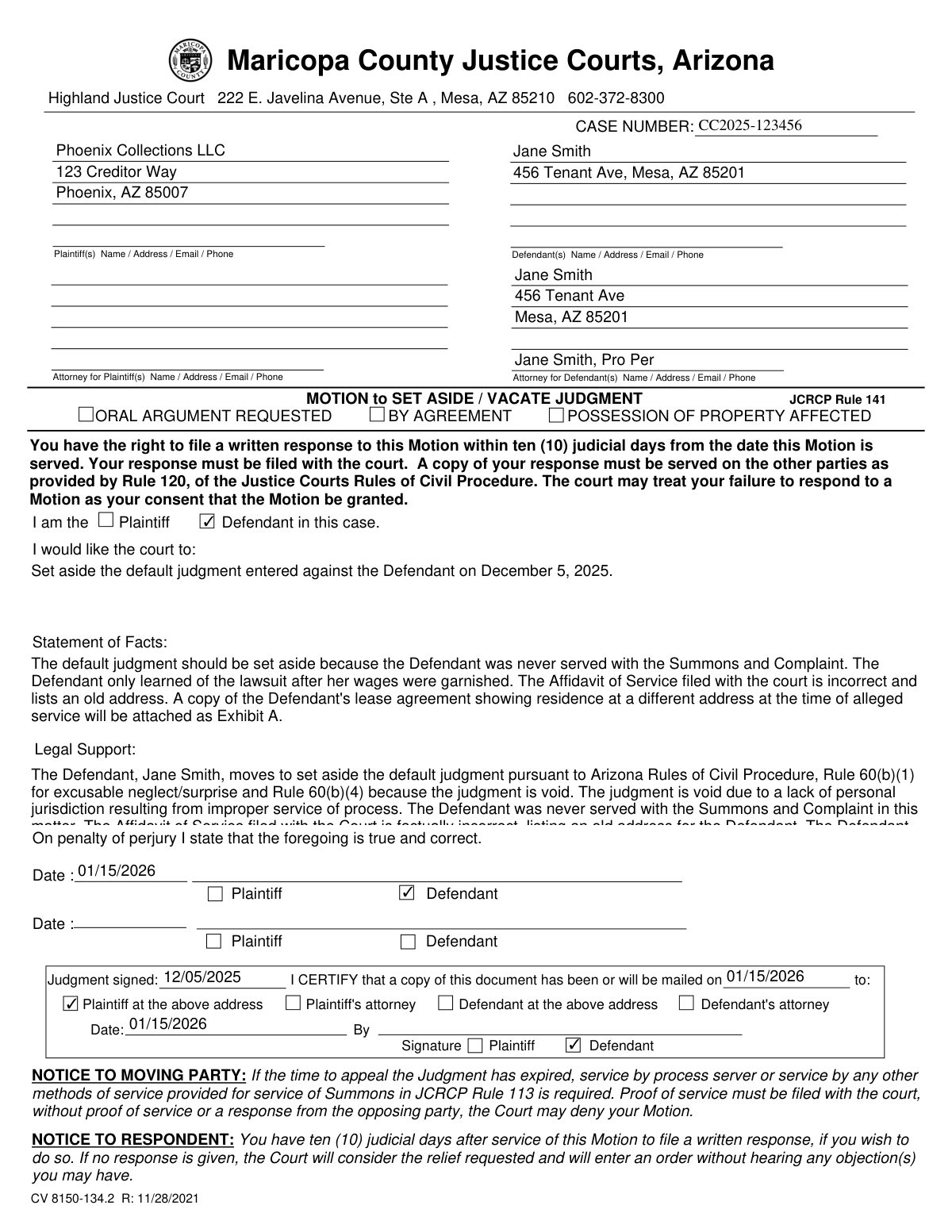
- Failure to Update Contact Information: If the court cannot reach you via the email or physical address on file, you may miss a hearing date, resulting in a dismissal or default judgment.
Frequently Asked Questions
What happens if I miss my court date in Maricopa County?
If you are the defendant and miss a hearing, the court will likely enter a "Default Judgment" against you, meaning the plaintiff wins automatically. If you are the plaintiff and miss the hearing, your case will likely be dismissed. In criminal or traffic cases, a failure to appear (FTA) may result in a warrant for your arrest or the suspension of your driver's license.
Do I need a lawyer for a Maricopa County Justice Court case?
You are not required to have a lawyer. Many people represent themselves (Pro Se). However, in civil cases where the stakes are high, legal counsel is recommended. Note that in Small Claims Court, lawyers are generally not allowed to represent parties during the hearing unless both sides agree.
How can I find which precinct I belong to?
You should use the Maricopa County Recorder’s "Find My Precinct" tool or the Justice Court’s location finder. You must enter your residential address or the address where the incident occurred to find the specific jurisdiction (e.g., Kyrene vs. Ironwood).
How long does a typical civil case take to resolve?
In 2026, the average time from filing a complaint to a final judgment in Maricopa County Justice Courts ranges from 3 to 9 months, depending on the complexity of the discovery process and the court’s current backlog. Eviction cases are much faster, usually resolving within 2 to 3 weeks.
Can I appeal a decision made by a Justice of the Peace?
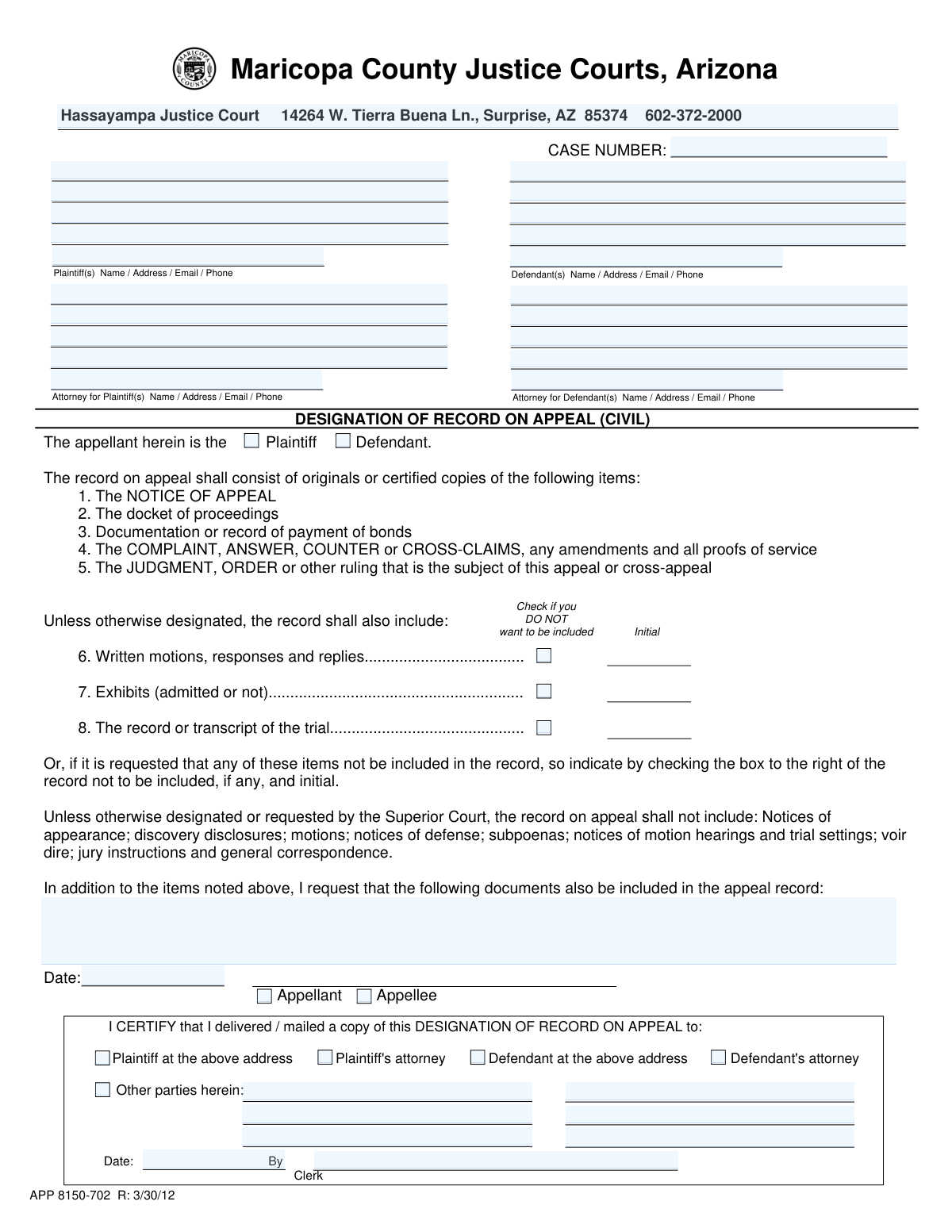
Yes. Decisions from the Justice Court can be appealed to the Maricopa County Superior Court. However, appeals are generally based on legal errors made by the judge, not a "re-do" of the facts. There are strict deadlines (usually 10 to 14 days) and additional fees for filing an appeal.
How do I clear a warrant from a Maricopa County Justice Court?
To clear a warrant, you must typically appear in person at the precinct that issued the warrant to "quash" it. Some precincts offer "Warrant Clinics" or allow you to file a Motion to Quash Warrant online in 2026, especially for non-violent misdemeanors or traffic-related failures to appear.
Critical Resources and External Links
For those navigating the Maricopa County Justice Courts, the following official resources provide the most accurate and up-to-date information for 2026:
- Maricopa County Justice Courts Official Portal: justicecourts.maricopa.gov
- Arizona Judicial Branch Case Search: apps.azcourts.gov/publicaccess
- Arizona Residential Landlord and Tenant Act: azhousing.gov/landlord-tenant-act
- AZTurboCourt eFiling System: azturbocourt.gov
Navigating the legal system requires precision and patience. Whether you are dealing with a traffic citation, an eviction notice, or a civil dispute, ensuring you are in the correct precinct and following the 2026 procedural updates is the first step toward a fair legal resolution. If your case involves complex legal theories or significant financial risk, consulting with a licensed Arizona attorney is always the most prudent course of action.
Image Gallery