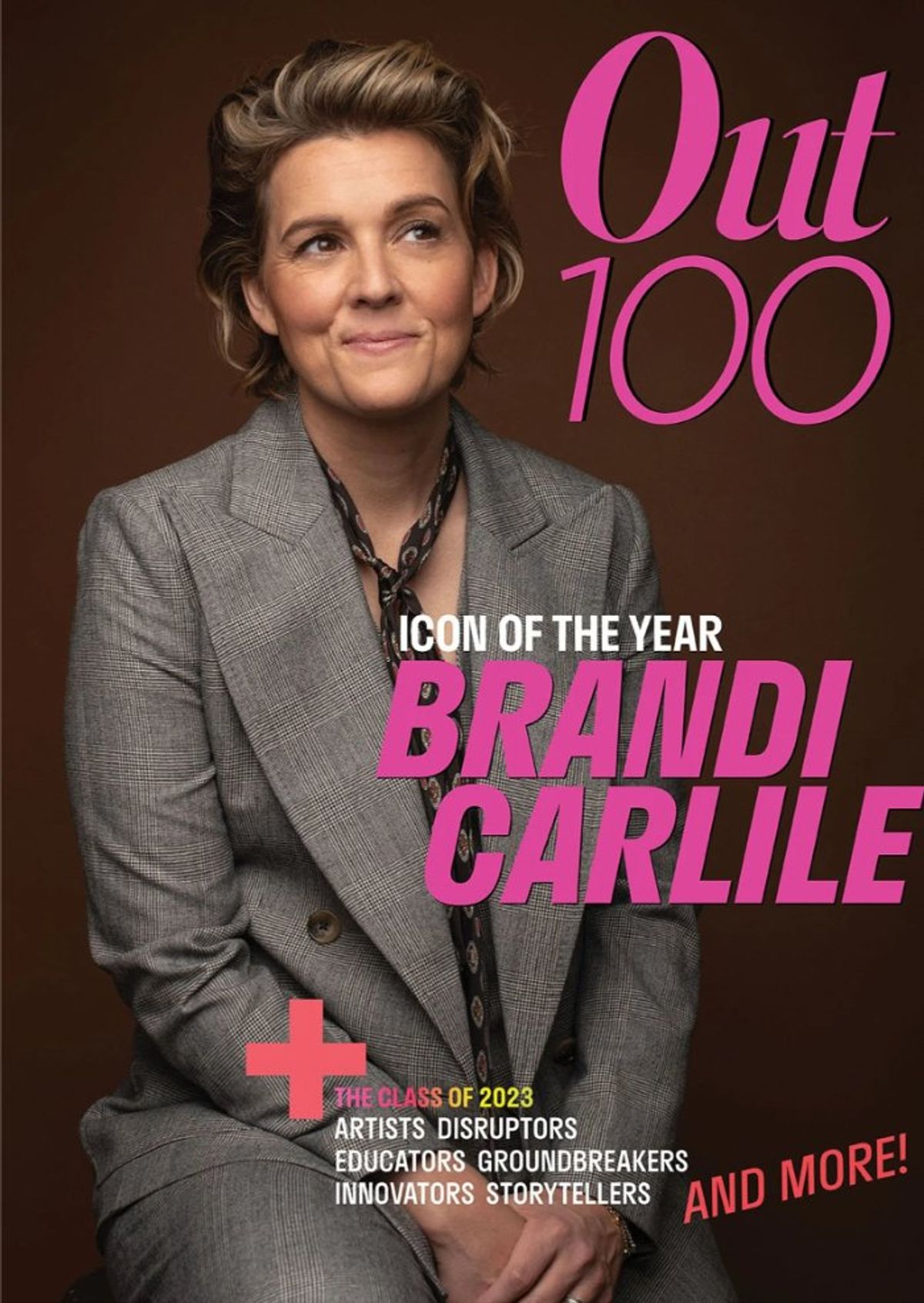
Is Brandi Carlile a Christian? Exploring the Faith and Spirituality of the Americana Icon
Brandi Carlile identifies as a Christian, though her relationship with the faith is deeply nuanced, intellectual, and marked by a history of both devotion and institutional exclusion. As a lesbian woman who grew up in the church, she h...
Brandi Carlile identifies as a Christian, though her relationship with the faith is deeply nuanced, intellectual, and marked by a history of both devotion and institutional exclusion. As a lesbian woman who grew up in the church, she has spent decades reconciling her spirituality with her identity, eventually moving toward a "faith-based" worldview that prioritizes inclusivity and the radical teachings of Jesus over rigid denominational dogma.
Contents
The question of Brandi Carlile’s religious identity is not one with a simple "yes" or "no" answer, as she herself has spent the better part of her career—and much of her 2021 memoir, Broken Horses—deconstructing the very definition of what it means to be a person of faith. By 2026, her stance remains a touchstone for many who feel marginalized by traditional religious institutions but remain drawn to the spiritual and communal aspects of Christianity.
The Foundations of Faith in Ravensdale
Brandi Carlile’s spiritual journey began in the small town of Ravensdale, Washington. Growing up in a rural, working-class environment, the church was not just a place of worship but the center of social and musical life. As a child, Carlile was a self-described "Jesus freak," deeply immersed in the charismatic and Baptist traditions that shaped her early understanding of the world.
Her early exposure to music was inextricably linked to the church. The soaring harmonies of gospel music and the narrative power of hymns provided the technical foundation for her later career in Americana and folk-rock. For Carlile, the act of singing was an act of prayer, a connection she has maintained even as her relationship with the church building itself fractured.
During these formative years, Carlile’s faith was earnest. She participated in youth groups and sought the spiritual validation common in evangelical circles. However, this period also set the stage for a traumatic collision between her burgeoning self-awareness as a queer person and the restrictive doctrines of her local religious community.
The Baptism Turning Point and Institutional Rejection
The most cited event in Brandi Carlile’s religious history occurred when she was sixteen years old. Having prepared for her baptism, a significant rite of passage in her Baptist church, she was publicly rejected. The pastor refused to perform the ceremony because Carlile was openly gay and refused to "repent" for her identity.
This rejection was not a private matter; it happened in front of her friends, family, and congregation. In her interviews and writings, Carlile has identified this moment as a catalyst for her spiritual evolution. Rather than abandoning her belief in God, she began to separate the concept of "The Creator" from the "The Church."
This distinction is crucial for understanding her current status. While many in her position would have walked away from religion entirely, Carlile chose to "reconstruct" her faith. She argued that the exclusion she experienced was a human failure, not a divine one. This perspective has allowed her to remain a "Christian" in a philosophical and spiritual sense, even while remaining an outsider to many conservative denominations.
Spiritual Themes in Carlile’s Songwriting
Carlile’s discography serves as a public diary of her spiritual wrestling. She frequently employs biblical imagery, not as a means of proselytizing, but as a language to explore universal themes of forgiveness, sacrifice, and redemption.
- "The Eye": This song deals with the stillness in the center of a storm, a metaphor often used in spiritual practices to describe internal peace amidst chaos.
- "Sinners, Saints and Fools": Found on her 2021 album In These Silent Days, this track directly critiques religious hypocrisy and the "gates" that people build to keep others out. It is perhaps her most pointed musical commentary on institutional religion.
- "Broken Horses": The title track of her memoir (and a powerful rock song) explores the idea of being "broken" and "re-formed," a concept deeply rooted in the Christian narrative of rebirth.
By 2026, these themes have only deepened. Her music continues to bridge the gap between secular audiences and those searching for spiritual depth. She often references the "radical Jesus"—the historical figure who stood with the marginalized and the outcasts—as her primary point of inspiration.
Reconciling Sexuality and Spirituality
One of the most significant ways Carlile expresses her faith is through her advocacy. She does not see her lesbian identity and her Christian faith as being in conflict; rather, she views them as complementary. She has often stated that her experiences as a marginalized person have given her a clearer window into the heart of the gospel than those who have never faced exclusion.
In her marriage to Catherine Shepherd and the raising of their two daughters, Carlile has sought to create a "chosen family" that embodies the communal values of the early church. She has been vocal about the need for churches to become truly "affirming"—meaning they don't just "tolerate" LGBTQ+ individuals but celebrate them as equal members of the faith.
| Aspect of Faith | Traditional Interpretation | Brandi Carlile’s Interpretation (2026) |
|---|---|---|
| Baptism | A rite of passage requiring adherence to dogma. | A personal commitment to a spiritual path, regardless of clergy approval. |
| Scripture | Literal, often used to enforce social norms. | A "living" text used to find empathy and historical connection to the marginalized. |
| Church | A physical building and institutional hierarchy. | A community of "chosen family" and the act of making music together. |
| Theology | Focused on salvation and original sin. | Focused on radical love, forgiveness, and social justice. |
The Role of the "Looking Out Foundation"
Carlile’s faith is also highly "orthopraxic"—meaning it is expressed through action rather than just belief. Through her Looking Out Foundation, she has funneled millions of dollars into causes that align with her spiritual values: helping refugees, supporting the homeless, and advocating for racial justice.
For Carlile, these are not just political actions; they are the fulfillment of her spiritual mandate. She frequently quotes the idea that "faith without works is dead." This practical application of her beliefs has garnered her respect across the religious spectrum, even from those who might disagree with her on specific theological points. You can learn more about her philanthropic work through the Looking Out Foundation.
Brandi Carlile's Status in 2026: A Summary of Belief
As of 2026, Brandi Carlile remains a prominent voice in the "Exvangelical" or "Deconstruction" movement, though she hasn't entirely left the fold. She occupies a unique space as a bridge-builder. She can perform at the Ryman Auditorium—the "Mother Church" of country music—and invoke the spirit of a gospel revival, while simultaneously advocating for the rights of the queer community.
Her faith is characterized by:
- A rejection of religious gatekeeping: She believes no human has the authority to deny another person’s relationship with the divine.
- A focus on the "Red Letter" teachings: Prioritizing the words of Jesus regarding poverty, love, and judgment.
- Spirituality through Art: Viewing music as the ultimate "inter-denominational" church.
Frequently Asked Questions
Is Brandi Carlile's music considered "Christian Music"?
No, Brandi Carlile is not a "Contemporary Christian Music" (CCM) artist. Her music is classified as Americana, folk, and rock. However, her songs are frequently imbued with spiritual themes and biblical metaphors, making them popular among listeners who appreciate faith-based lyrics without the constraints of the CCM industry.
Did Brandi Carlile ever get baptized?
In her memoir Broken Horses, Carlile details the trauma of being refused baptism as a teenager. While she has not sought a traditional "re-baptism" in a restrictive denomination, she has spoken about finding her own forms of spiritual initiation and renewal through her music and her relationship with her community.
What does Brandi Carlile say about Jesus?
Carlile frequently expresses an affinity for the "radical" and "revolutionary" version of Jesus. She views him as a figure who challenged the religious authorities of his time to stand up for the poor and the marginalized, a model she tries to emulate in her own life and advocacy work.
Has Brandi Carlile written a book about her faith?
Her 2021 memoir, Broken Horses, is the primary source for understanding her faith. While it is an autobiography covering her entire life, the narrative arc is heavily focused on her spiritual journey, her rejection by the church, and her eventual reconciliation with her own version of Christianity. For more context, The New York Times provides a detailed review of these themes.
Does Brandi Carlile attend a specific church?
Carlile does not publicly claim membership in a specific traditional denomination. She often speaks of finding "church" in the act of performance, in nature, and in her home life. She has, however, collaborated with various inclusive and affirming religious leaders and communities over the years.
Practical Recommendations for Readers
If you are interested in exploring the intersection of faith and identity through the lens of Brandi Carlile’s life, consider the following steps:
- Read "Broken Horses": This memoir is essential for anyone wanting to understand the "Why" behind her beliefs. It provides a first-hand account of the events that shaped her.
- Listen to "In These Silent Days": This album contains some of her most mature reflections on faith, humanity, and forgiveness.
- Explore "Affirming" Faith Communities: If you are someone who, like Carlile, feels marginalized by traditional religion but still identifies as a person of faith, look for "Open and Affirming" (ONA) congregations that explicitly welcome LGBTQ+ individuals.
- Engage with her Interviews: Carlile is a frequent guest on programs like NPR's Fresh Air, where she speaks eloquently and at length about her spiritual evolution.
Image Gallery