Guide to Michaels Perfume Bottles: Types, Specs, and Crafting Uses
Michaels offers a wide selection of glass perfume bottles, fine-mist atomizers, roller bottles, and decorative vials across its craft glass, wedding favor, and DIY beauty aisles. Available in capacities from 5 mL to 100 mL, these conta...
Michaels offers a wide selection of glass perfume bottles, fine-mist atomizers, roller bottles, and decorative vials across its craft glass, wedding favor, and DIY beauty aisles. Available in capacities from 5 mL to 100 mL, these containers serve crafters, small-batch perfumers, and gift makers seeking accessible packaging for custom fragrances, essential oil blends, and vanity displays.
Contents
Types of Perfume Bottles Available at Michaels
Navigating the aisles or online store at Michaels reveals several distinct categories of glass containers suitable for fragrance storage. Understanding the structural differences among these options ensures you select the proper container for your specific liquid formulation.
| Fine-Mist Atomizers (Alcohol/Water) | Roll-On & Dropper Bottles (Oil Fragrances) | Vintage & Decorative Vanity Bottles (Dabbing / Display) |
|---|
Fine-Mist Atomizers and Spray Bottles
Fine-mist sprayers are the standard choice for alcohol-based perfumes, eau de parfum, eau de toilette, and room mists. Michaels stocks travel-size spray bottles (typically 10 mL to 30 mL) and standard tabletop atomizers (50 mL to 100 mL). These bottles feature a dip tube extending to the bottom of the container and an internal pump assembly engineered to atomize liquid into a fine mist rather than a heavy stream. Most atomizer units sold at Michaels use screw-on closures, making them reusable and easy to refill.
Roll-On and Dropper Bottles
For concentrated oil-based perfumes, attars, and essential oil blends, roller-ball bottles and glass dropper vials are preferred over sprayers. Heavy botanical oils can clog fine-mist pump nozzles. Roll-on bottles, typically sold in 5 mL and 10 mL sizes, utilize a stainless steel or glass roller ball seated in a plastic housing. When rolled against the skin, the ball transfers a thin layer of oil without leaking. Dropper bottles feature a rubber bulb and glass pipette assembly, ideal for precise application or blending sessions.
Decorative Glass and Vintage Vanity Bottles
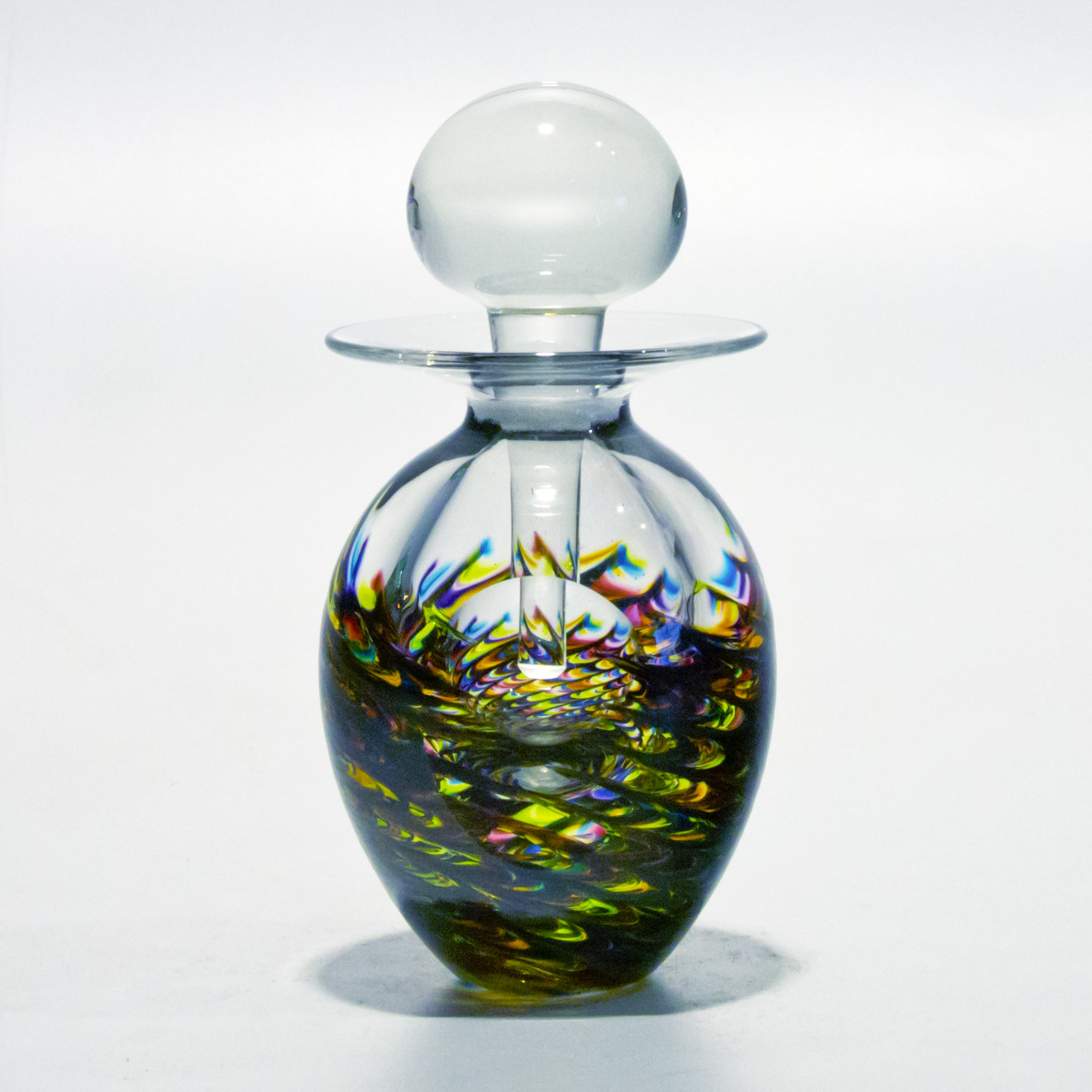
Michaels frequently carries ornate glass bottles within its floral, seasonal, and home decor departments (often under store brands such as Ashland). These bottles emphasize aesthetic appeal, featuring cut-glass patterns, faceted crystal stoppers, iridescent coatings, or vintage brass-finished metal hardware. While some include working pump sprayers with vintage bulb assemblies, many decorative bottles function via a glass dapper wand attached to the stopper. These pieces prioritize vanity presentation and decorative gifting over portable durability.
Miniature Vials and Favor Bottles
Located primarily in the wedding, party, and bead storage sections, mini glass vials range from tiny 2 mL sample vials up to 15 mL corked bottles. These containers are popular for wedding favors, sample kits, mini potion bottles, and spell jar crafts. While cork stoppers offer an attractive rustic look, they are permeable to alcohol evaporation over extended periods, making them better suited for short-term favors or solid decor rather than long-term alcohol perfume storage.
Technical Specifications and Material Considerations
Selecting the right bottle requires evaluating how your fragrance formula interacts with glass chemistry, nozzle closures, and air exposure.
- Atomizer Cap
- Spray Nozzle
- Screw Collar
- Neck Finish (e.g., 18/410)
- Glass Body (Flint / Amber)
- Dip Tube
Glass Composition and Light Sensitivity
Most glass craft bottles at Michaels are manufactured from clear soda-lime glass, commonly known as flint glass. Soda-lime glass is chemically inert, non-porous, and resistant to reaction with ethanol, fragrance oils, and water. However, clear glass provides zero protection against ultraviolet (UV) light degradation.
- Clear Glass: Best for showcasing colored perfume liquids and decorative elements. Must be stored away from direct sunlight to prevent perfume oxidation and scent breakdown.
- Amber and Cobalt Glass: Frequently found in the aromatherapy and essential oil aisles, colored glass filters harmful UV wavelengths, preserving light-sensitive essential oils and natural botanical aromatic compounds.
Nozzle Mechanics and Threading
The functional performance of a spray bottle depends on its neck finish and pump construction. Standard consumer bottle threading follows standardized GPI (Glass Packaging Institute) sizing, such as 18/410 or 20/410 (where the first number is the neck diameter in millimeters and the second is the thread style).
- Dip Tube Length: Ensure the plastic dip tube reaches the bottom corner of the bottle. If the tube is too long, it can buckle against the glass floor, restricting liquid intake; if too short, it leaves leftover perfume un-sprayable.
- Gasket Quality: Reliable atomizers feature a small PE (polyethylene) gasket inside the screw collar. This gasket forms an airtight seal against the top rim of the glass neck to prevent fluid leakage and evaporation.
Closure Types and Chemical Compatibility
When formulating fragrances, match your solvent base to the appropriate bottle closure mechanism:
| Perfume Base Type | Recommended Bottle | Closure Mechanism | Avoid |
|---|---|---|---|
| Ethanol/Alcohol | Fine-Mist Atomizer | Screw/Crimp Pump | Cork Stoppers |
| Carrying Oils | Roll-On / Dropper | Roller Ball / Pipette | Fine-Mist Pump |
| Water / Hydrosol | Atomizer / Spray | Pump Sprayer | Unsealed Cork |
| Solid / Wax Base | Wide-Mouth Jar | Screw Lid | Narrow Neck |
Technical Comparison of Michaels Perfume Bottle Styles
The following matrix compares the practical parameters of common glass containers available at Michaels stores:
| Bottle Category | Typical Volume Range | Primary Material | Closure Mechanism | Compatible Liquids | Best Application | Key Limitation |
|---|---|---|---|---|---|---|
| Fine-Mist Atomizer | 10 mL – 100 mL | Clear Soda-Lime Glass | Screw-on Pump Sprayer | Alcohol-based perfumes, room mists | Daily fragrance wear, travel sprays | Thick oils clog the fine orifice |
| Essential Oil Roll-On | 5 mL – 10 mL | Amber / Cobalt Glass | Steel/Glass Roller Ball | Jojoba/MCT oil perfume blends | Spot application, portable oil scents | Not suitable for thin alcohol sprays |
| Decorative Vanity Bottle | 50 mL – 200 mL | Heavy Cut Glass / Crystal | Glass Stopper / Wand | Concentrated perfume oil, display liquid | Dresser decor, luxury gifting | Glass stoppers do not seal airtight |
| Mini Corked Vials | 2 mL – 15 mL | Lightweight Clear Glass | Natural Cork Stopper | Dry scents, oils (short-term) | Wedding favors, craft potion bottles | Alcohol evaporates through cork |
| Glass Dropper Bottle | 15 mL – 30 mL | Flint / Amber Glass | Rubber Bulb Pipette | Fragrance oils, serum formulas | Formulating mixes, precise drop dosing | Rubber bulb can degrade from pure essential oils over time |
How to Sterilize, Fill, and Seal Michaels Perfume Bottles
Before filling craft bottles with homemade fragrances, perform proper cleaning and assembly procedures to prevent microbial contamination, scent distortion, or leakage.
- Wash & Rinse: Warm soapy water wash
- Sanitization: 70% Isopropyl Alcohol rinse
- Air Drying: Dust-free drying upside down
- Precision Fill: Funnel/Pipette to 85-90% volume
- Airtight Seal: Secure pump + PTFE tape (optional)
Step 1: Cleaning and Sanitization
Craft bottles stored on retail shelves accumulate dust, glass micro-particles, and handling oils.
- Disassemble the bottle completely, separating the glass vessel, plastic pump collar, dip tube, and cap.
- Wash the glass bottle in warm water mixed with mild, fragrance-free dish soap. Flush the inside using a small cylinder brush.
- Submerge the glass bottle in 70% Isopropyl Alcohol (IPA) for at least 5 minutes to sanitize internal surfaces. Flush isopropyl alcohol through the pump mechanism by spraying it several times.
- Place the cleaned components upside down on a clean paper towel in a dust-free room to dry completely. Do not fill bottles while wet with water, as moisture spoils alcohol fragrance clarity.
Step 2: Precision Filling
Filling narrow-neck perfume bottles without spills requires accurate tools:
- Use a mini stainless steel or plastic craft funnel inserted directly into the bottle neck.
- For smaller 5 mL–10 mL vials, transfer liquid using a graduated plastic transfer pipette or syringe.
- Fill Level: Leave roughly 10% to 15% headspace (air gap) at the top of the bottle neck. Overfilling causes liquid to overflow when inserting the pump stem and dip tube.
CAUTION: Avoid filling glass bottles to the absolute top rim. Temperature changes cause liquid expansion, which can push perfume past gaskets or crack rigid glass containers.
Step 3: Evaporation Control and Sealing
Alcohol-based perfumery relies on volatile solvents like Denatured Alcohol or Everclear (190-proof ethanol). To prevent your fragrance from evaporating:
- Ensure the internal PE seating gasket is present inside the spray pump cap.
- Screw the atomizer housing down firmly until it meets tight resistance against the glass rim.
- For long-term storage or shipping, wrap 1 to 2 turns of PTFE thread-seal tape (Teflon tape) around the glass neck threads before screwing on the pump cap. This creates a seal that prevents vapor loss.
Customizing Craft Perfume Bottles
One advantage of buying plain glass perfume bottles from Michaels is the potential for personalized craft embellishments.
| Chemical Etching Cream | Glass Painting & Gilding | Vinyl Decals & Charms |
|---|---|---|
| Permanent frosted lettering & monogram | Opaque glass paint & gold leaf trim | Cricut / Silhouette precision vinyl |
Glass Etching
Etching glass creates a permanent, frosted, vintage appearance that will not peel or rub off:
- Apply an adhesive vinyl stencil (cut via craft plotters like Cricut or Silhouette) onto the clean glass surface.
- Apply a thick layer of glass etching cream (containing ammonium bifluoride) over the stencil openings using a foam brush.
- Allow the cream to react according to manufacturer instructions (usually 3 to 5 minutes), then rinse thoroughly under cold running water.
- Peel off the stencil to reveal permanent monograms, labels, or botanical patterns.
Painting and Gold Leafing
- Glass Paints: Use specialized solvent-based or baked enamel glass paints for opaque designs. Standard acrylic craft paint will peel off smooth glass unless sealed with an outdoor or glass-rated varnish.
- Gilding: Apply gilding size (tack adhesive) to raised glass scrollwork, allow it to become tacky, and press gold or copper leaf sheets onto the surface. Burnish with a soft brush and seal with clear shellac or acrylic sealant.
Sourcing Analysis: Michaels vs. Bulk Wholesale Suppliers
When choosing where to source perfume packaging, balance convenience and immediate availability against volume pricing constraints.
- Need Bottles Urgently?
- Yes: Michaels Retail (Instant pickup, high unit price)
- No: Bulk Wholesale (Low cost/unit, lead times apply)
Advantages of Purchasing at Michaels
- Immediate Availability: Buy items same-day in-store or through curbside pickup without waiting for freight shipping.
- Visual Inspection: Inspect glass clarity, check pump threads, and verify cap fitment in person before purchasing.
- Small Project Quantities: Purchase single units or 2-to-6 piece multi-packs without meeting steep minimum order quantities (MOQs).
- Coupons and Rewards: Take advantage of store coupons, seasonal sales, and Michaels Rewards discounts to lower retail unit costs.
When to Transition to Wholesale Distributors
If you are scaling a commercial fragrance line beyond small craft gifts:
- Cost Per Unit: Michaels retail prices for individual bottles range from $1.50 to $8.00 per unit. Wholesale packaging distributors offer comparable bottles at $0.30 to $1.20 per unit in case quantities (100+ units).
- Component Uniformity: Retail craft inventory changes seasonally. Commercial perfumers who require standardized packaging year-round benefit from established wholesale supply chains.
- Crimp Neck Atomizers: Commercial perfume manufacturing often utilizes crimp-neck atomizers secured with a mechanical crimping tool. Crimp closures provide tamper-proof seals superior to standard retail screw-cap bottles.
Frequently Asked Questions
Are Michaels perfume bottles leak-proof for travel?
Most screw-on spray atomizers sold at Michaels are leak-resistant for normal handling, but air pressure changes during flights can force liquid up through the dip tube. To secure bottles for travel, keep them upright inside a sealed plastic pouch, wrap the neck threads with PTFE Teflon tape, and ensure the outer protective cap is snapped on firmly.
Can I put oil-based perfumes in a fine-mist spray bottle?
No. Thick carrier oils (such as jojoba oil, fractionated coconut oil, or sweet almond oil) are too viscous for the tiny internal valve chambers of fine-mist spray pumps. The oil will clog the mechanism, causing the pump to stick or spray a narrow stream rather than a mist. Use roll-on bottles or dropper vials for oil formulations.
How do I unclog a perfume spray nozzle that stopped misting?
Remove the spray nozzle cap from the bottle stem. Submerge the nozzle in a small container of hot water mixed with 70% isopropyl alcohol for 15 minutes to dissolve dried perfume oils or crystalized aromatic compounds. Flush hot water through the nozzle using a syringe, or pump hot water through the assembly until a clear spray resumes.
Are cork-stoppered mini vials suitable for long-term perfume storage?
Cork stoppers are not ideal for long-term alcohol perfume storage. Alcohol vapor easily passes through the porous cell structure of natural cork, leading to evaporation and alteration of the scent profile over time. Use corked vials primarily for dry botanical crafts, bath salts, solid perfume waxes, or short-term event favors.
How can I tell if a glass bottle at Michaels is safe for essential oils?
Look for bottles made of thick glass (either clear, amber, or cobalt blue). Pure, undiluted essential oils can degrade certain soft plastics (such as polystyrene), but they will not react with glass containers. Ensure that internal pump gaskets or dropper bulbs are made of chemical-resistant materials like polyethylene (PE), polypropylene (PP), or fluoropolymer rubber.
Practical Recommendations and Next Steps
To build custom fragrance gifts or small-batch products using Michaels perfume bottles, follow this implementation checklist:
- Match Formula to Closure: Select fine-mist atomizers for alcohol/water sprays, amber roller bottles for essential oil blends, and decorative glass dabbers for vanity display pieces.
- Purchase Accessories: Pick up mini plastic funnels, 70% isopropyl alcohol for sanitization, and transfer pipettes alongside your glass bottles.
- Inspect In-Store: Check glass surfaces for hairline cracks or manufacturing inclusions, and verify that screw caps tighten smoothly without slipping threads.
- Sanitize Before Use: Always wash and alcohol-rinse new glass bottles to remove microscopic glass dust and manufacturing residue before filling.
- Test Sprayers: Fill one sample bottle with plain isopropyl alcohol or water to test pump mist quality and spray radius before completing your full production batch.
Image Gallery