Emergency Number: Global Directory and Priority Response Guidelines for 2026
An emergency number is a specialized shortcode—most commonly 112, 911, or 999—that provides immediate access to police, fire, and medical dispatchers. While 112 is the international standard for GSM networks, local protocols vary by co...
An emergency number is a specialized shortcode—most commonly 112, 911, or 999—that provides immediate access to police, fire, and medical dispatchers. While 112 is the international standard for GSM networks, local protocols vary by country. In 2026, these systems utilize advanced location-tracking and satellite-to-cell technologies to ensure rapid response. This guide focuses on universal public safety answering points (PSAPs) and official emergency communication protocols across major global jurisdictions.
Contents
Global Emergency Number Standards and Interconnectivity
The landscape of emergency communication has shifted significantly by 2026, moving from legacy copper-wire voice calls to a fully integrated Next Generation 911 (NG911) and European E112 ecosystem. These systems allow for the transmission of data, including real-time video, photos, and precise medical telemetry, directly to emergency dispatchers.
Understanding which number to dial depends entirely on your geographic location and the type of network you are using. However, international telecommunications standards have created "fail-safe" mechanisms to bridge these gaps.
The Universal 112 Standard
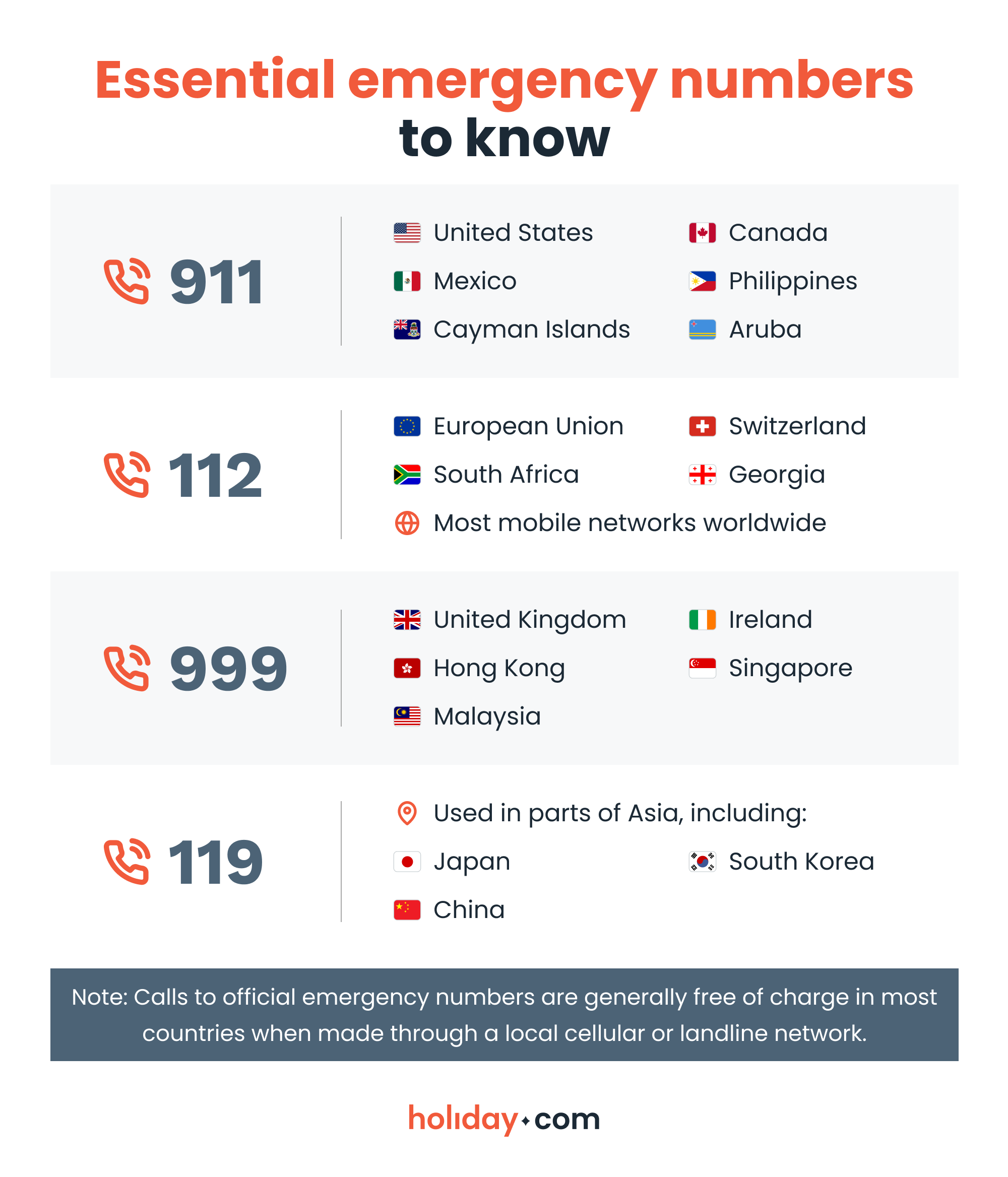
The number 112 is the pan-European emergency number, used in all 27 EU member states and several other countries in Eurasia and Africa. Most GSM-compliant mobile phones are programmed to recognize 112 as a universal emergency command. If you dial 112 in a country that officially uses 911 (like the United States), the network will often redirect the call to the local PSAP automatically.
Regional Primary Numbers
While 112 is the mobile standard, traditional landlines and local cultures still prioritize regional shortcodes. These numbers are hardcoded into the national infrastructure and should be the first choice for anyone requiring immediate intervention.
| Region | Primary Emergency Number | Services Included | Technical Protocol |
|---|---|---|---|
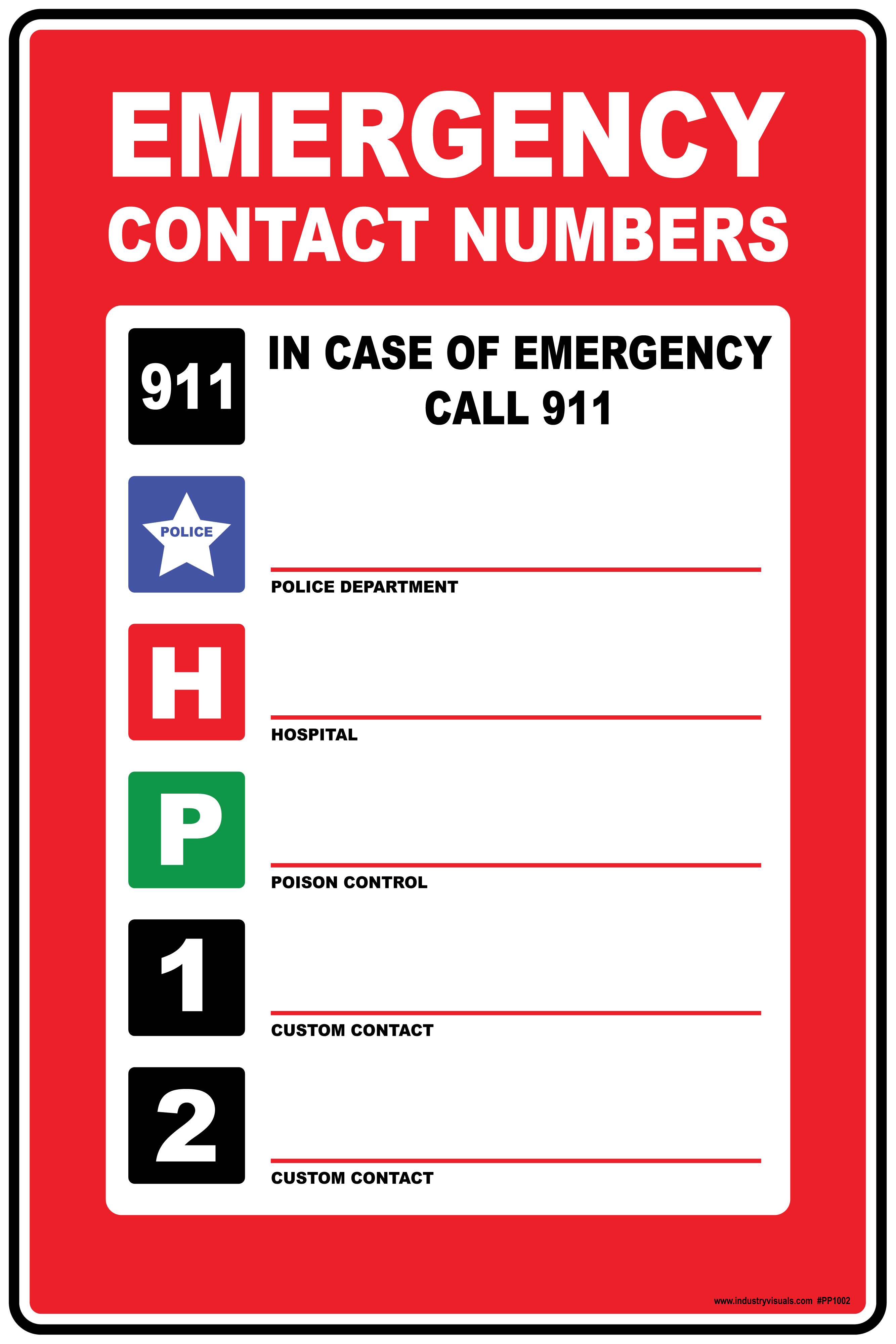
| North America (USA/Canada) | 911 | Police, Fire, EMS | NG911 / i3 Standard |
| European Union | 112 | Police, Fire, EMS | E112 / AML (Advanced Mobile Location) |
| United Kingdom | 999 / 112 | Police, Fire, EMS, Coastguard | BT/EE Emergency Handling |
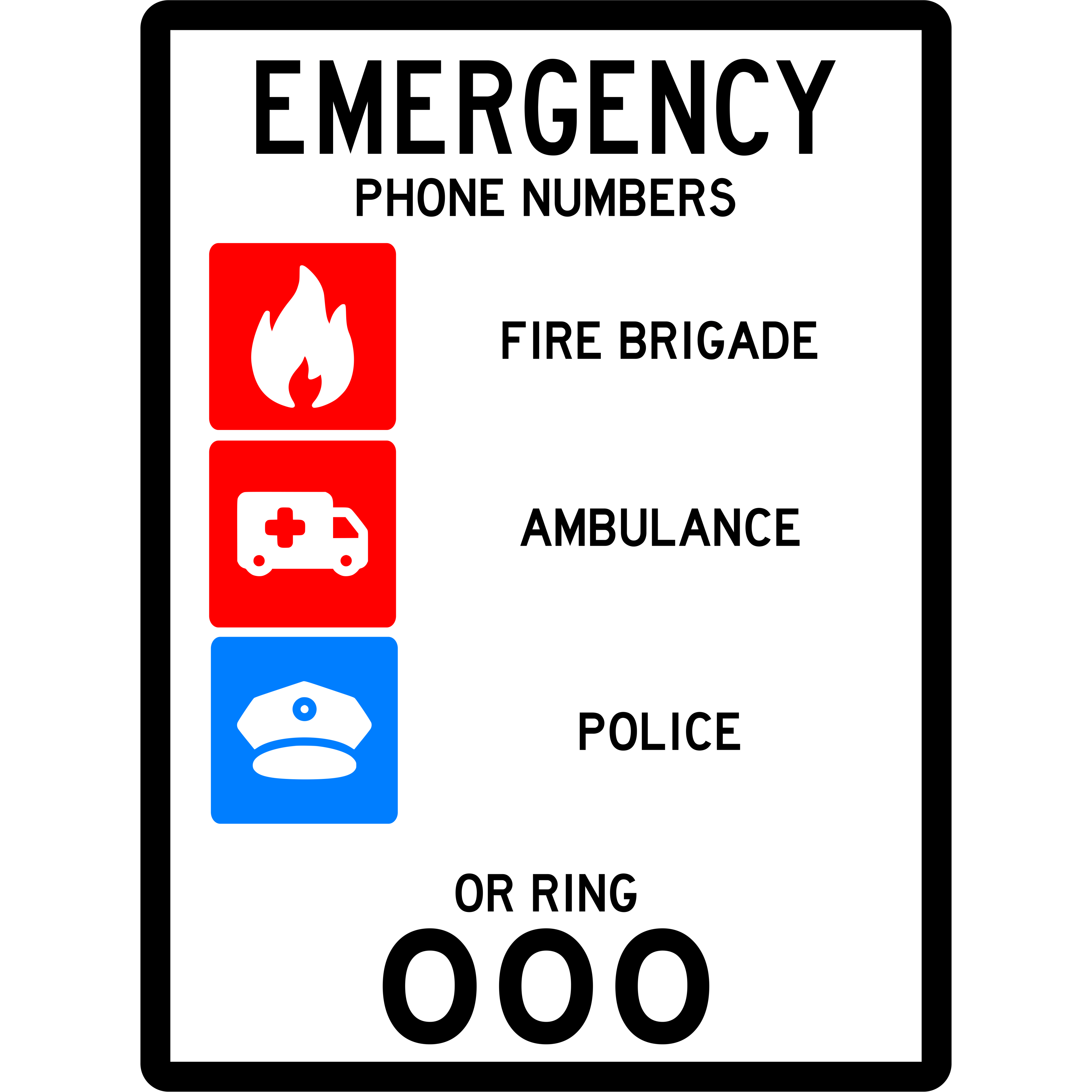
| Australia | 000 | Police, Fire, EMS | Triple Zero (000) |
| New Zealand | 111 | Police, Fire, EMS | Spark/Chorus Infrastructure |
| India | 112 | Unified Emergency Service | ERSS (Emergency Response Support System) |
| Japan | 110 (Police) / 119 (Fire/EMS) | Split Services | NTT East/West Managed |
| China | 110 (Police) / 120 (EMS) / 119 (Fire) | Split Services | State Council Managed |
Technical Evolution: Emergency Services in 2026
By 2026, the technical infrastructure supporting emergency numbers has moved beyond simple voice transmission. Three major technological pillars now define how a call is handled:
1. Next Generation 911 (NG911) and i3 Architecture
In North America, the transition to NG911 is largely complete as of 2026. Unlike legacy systems that relied on Automatic Number Identification (ANI) and Automatic Location Identification (ALI) via analog trunks, NG911 uses an End-to-End IP-based system. This allows dispatchers to receive:
- Precise GPS coordinates via Device-Based Hybrid (DBH) location.
- Building floor and room numbers through "Z-axis" height data.
- Medical profiles linked to the caller's phone number (with prior consent).
2. Satellite-to-Cell SOS
One of the most critical developments in 2026 is the ubiquity of satellite-based emergency messaging. For users in "dead zones" without cellular or Wi-Fi coverage, modern smartphones now connect directly to Low Earth Orbit (LEO) satellite constellations (such as Starlink or Globalstar). When an emergency number is dialed in these areas, the phone automatically initiates a satellite handshake to send a compressed data packet containing the user's location, nature of the emergency, and battery status to a specialized relay center.
3. Advanced Mobile Location (AML)
In Europe and over 30 other countries, AML is the gold standard. When 112 is dialed, the phone automatically activates its GPS and Wi-Fi scanning to determine its location and sends a hidden SMS to the emergency services with the coordinates. This process is up to 4,000 times more accurate than traditional cell-tower triangulation.
Proper Protocol: What to Do When You Dial an Emergency Number
Calling an emergency dispatcher is a high-stress event, but the efficiency of the response depends heavily on the information provided by the caller. Professional dispatchers are trained to lead the conversation, but being prepared with the "Five Pillars of Emergency Reporting" is essential.
1. State the Precise Location In many cases, even with 2026 technology, location data can have a margin of error. Always start by stating the city, street name, and any landmarks or apartment numbers. If you are on a highway, look for mile markers or exit signs.
2. Define the Nature of the Emergency Clearly state whether you need Police, Fire, or Medical services. This allows the primary PSAP dispatcher to "hand off" the call to the specific agency specialized in that field while remaining on the line to coordinate.
3. Provide a Callback Number Ensure the dispatcher has your direct number in case the call is disconnected. In 2026, most systems automatically display this, but verbal confirmation prevents errors in areas with poor signal.
4. Follow Instructions Calmly Modern dispatchers are often trained in Emergency Medical Dispatch (EMD). They can provide step-by-step instructions for CPR, AED usage, or bleeding control (Stop the Bleed protocols) via voice or real-time video link while the first responders are en route.
5. Stay on the Line Do not hang up until the dispatcher tells you to do so. Even if the call was placed accidentally, stay on the line to explain the mistake. If you hang up, emergency services may be required to dispatch an officer to your location to verify your safety, wasting valuable resources.
Specialized Emergency Numbers and Non-Emergency Lines
Not every situation requires a 911 or 112 response. Misusing emergency numbers can delay assistance for life-threatening situations. In 2026, many jurisdictions have expanded "N-1-1" codes to handle specific needs.
- 988 (Mental Health Crisis): Available across North America and similar shortcodes in parts of Europe, this number connects callers directly to trained suicide prevention and mental health counselors.
- 311 (Non-Emergency Municipal Services): Use this for reporting potholes, broken streetlights, or non-urgent noise complaints.
- 211 (Community Resources): Provides information on local food banks, housing assistance, and disaster relief services.
- 511 (Traffic and Weather): Provides real-time updates on road conditions and transit delays.
Comparing Emergency Communication Systems
The efficiency of an emergency response is often a product of the underlying network's priority level.
| Feature | Legacy PSTN (Landline) | Modern Cellular (VoIP/LTE/5G) | Satellite SOS (2026 Standard) |
|---|---|---|---|
| Location Accuracy | Fixed (Billing Address) | High (GPS/Wi-Fi/AML) | Moderate to High (GNSS) |
| Reliability | High (Hardwired) | Variable (Signal Dependent) | High (Requires Clear Sky) |
| Data Transmission | Voice Only | Voice, Text, Video, Health Data | Text and Location Data Only |
| Network Priority | Standard | High (E911 Override) | Absolute Priority |
| Roaming Support | None | Universal (112 Redirect) | Global (Constellation Dependent) |
Critical Failures and Troubleshooting
Even in 2026, technical failures can occur. Knowing how to troubleshoot an emergency call can be life-saving.
The "No Service" Myth
Many people believe that if their phone says "No Service," they cannot call an emergency number. This is often incorrect. In most countries, if your primary carrier has no signal, but a competing carrier has a signal, your phone is legally allowed to "roam" onto that network specifically for an emergency call. If your screen says "Emergency Calls Only," it means you can still reach a PSAP.
VoIP and Internet-Based Calls
If you use a VoIP service (like a home internet phone or a business PBX system), your location is not always automatically sent to the dispatcher. Ensure your E911 address is updated in your service provider's portal. In 2026, modern VoIP providers use "Static-Dynamic" hybrid location, but manual verification is still the safest practice.
Accidental Dials (Pocket Dialing)
With the advent of "Emergency SOS" features that trigger after five rapid button presses or a hard fall, accidental dials have increased. If you trigger an emergency call:
- Do not hang up.
- Wait for the dispatcher to answer.
- State: "This was an accidental dial, I am safe and there is no emergency."
- The dispatcher will verify your identity and close the call.
The Future of Emergency Numbers: AI and Real-Time Integration
As we look toward the latter half of 2026, Artificial Intelligence has begun to play a supportive role in PSAPs. AI-assisted dispatching helps categorize calls by urgency, translates over 100 languages in real-time, and can even detect the sound of gunfire or glass breaking in the background of a call to provide dispatchers with immediate context.
Furthermore, "Connected Vehicle" technology (V2X) now automatically dials the emergency number if a vehicle’s airbags deploy, sending the car's exact location, the number of occupants, and the force of the impact to the nearest trauma center.
Frequently Asked Questions
What happens if I call 911 in a country that uses 112?
In most modern telecommunications networks, dialing 911 will automatically redirect to the local emergency number (like 112 or 999). This is a safety feature built into the GSMA standards for mobile devices to protect travelers. However, you should always attempt to learn the local number of your destination before traveling.
Can I text an emergency number?
Yes, in 2026, "Text-to-911" and "Text-to-112" are widely available in developed nations. This is intended for individuals who are deaf, hard of hearing, or in a situation where speaking out loud would be dangerous (such as a home invasion or domestic violence situation). You should "Call if you can, text if you can't."
Does 112 work without a SIM card?
While the technical standard for 112 allows for calls without a SIM card, many countries (including the USA, UK, and parts of the EU) have disabled this feature to prevent prank calls and "dead-dialing" from old handsets. In 2026, it is highly recommended to have an active SIM or an e-SIM to ensure your call is prioritized and your location is transmitted.
Is there a different number for the Coast Guard or Mountain Rescue?
In many countries, these services are integrated into the primary emergency number (911/112/999). When you call, the dispatcher will ask which service you require. In specific regions with high maritime activity, like the UK, you can specifically ask for "Coast Guard" when dialing 999.
What should I do if I am in a foreign country and don't speak the language?
The international emergency standard requires that dispatchers have access to translation services. If you call 112, simply stay on the line and say the name of your language in English (e.g., "Spanish" or "Chinese"). You will be connected to an interpreter, usually within 30 to 60 seconds.
Recommendations for Emergency Preparedness in 2026
To maximize your safety, ensure your technology is configured correctly before an emergency occurs.
- Update Medical ID: On your smartphone (iOS or Android), fill out your Medical ID profile. This information is shared with 2026-compliant PSAPs when you dial an emergency number.
- Enable Satellite Services: Ensure your device firmware is updated to support the latest LEO satellite SOS protocols.
- Teach Children Early: Ensure children know how to bypass a phone's lock screen to hit the "Emergency" button and how to state their home address clearly.
- Local Awareness: If traveling to a country outside the US or EU, save the local emergency number in your contacts as "Emergency" to allow for quick voice-activated dialing (e.g., "Siri, call Emergency").
Image Gallery