Workers’ Compensation Insurance in Austin, TX: A Comprehensive 2026 Employer’s Guide
In Austin, Texas, workers' compensation insurance is a unique regulatory landscape where most private employers can choose whether or not to provide coverage. While elective, obtaining a policy provides "exclusive remedy" protection, s...
In Austin, Texas, workers' compensation insurance is a unique regulatory landscape where most private employers can choose whether or not to provide coverage. While elective, obtaining a policy provides "exclusive remedy" protection, shielding Austin businesses from personal injury lawsuits by injured employees. Coverage ensures medical costs and lost wages are paid following workplace incidents.
Contents
As of 2026, Austin continues to see a surge in economic activity across tech, construction, and healthcare. For business owners in the "Silicon Hills," navigating the complexities of the Texas Workers’ Compensation Act is essential for financial stability and workforce protection. This guide explores the legal requirements, cost factors, and strategic benefits of maintaining workers' compensation in the Texas capital.
The Texas Exception: Understanding Elective Coverage in 2026
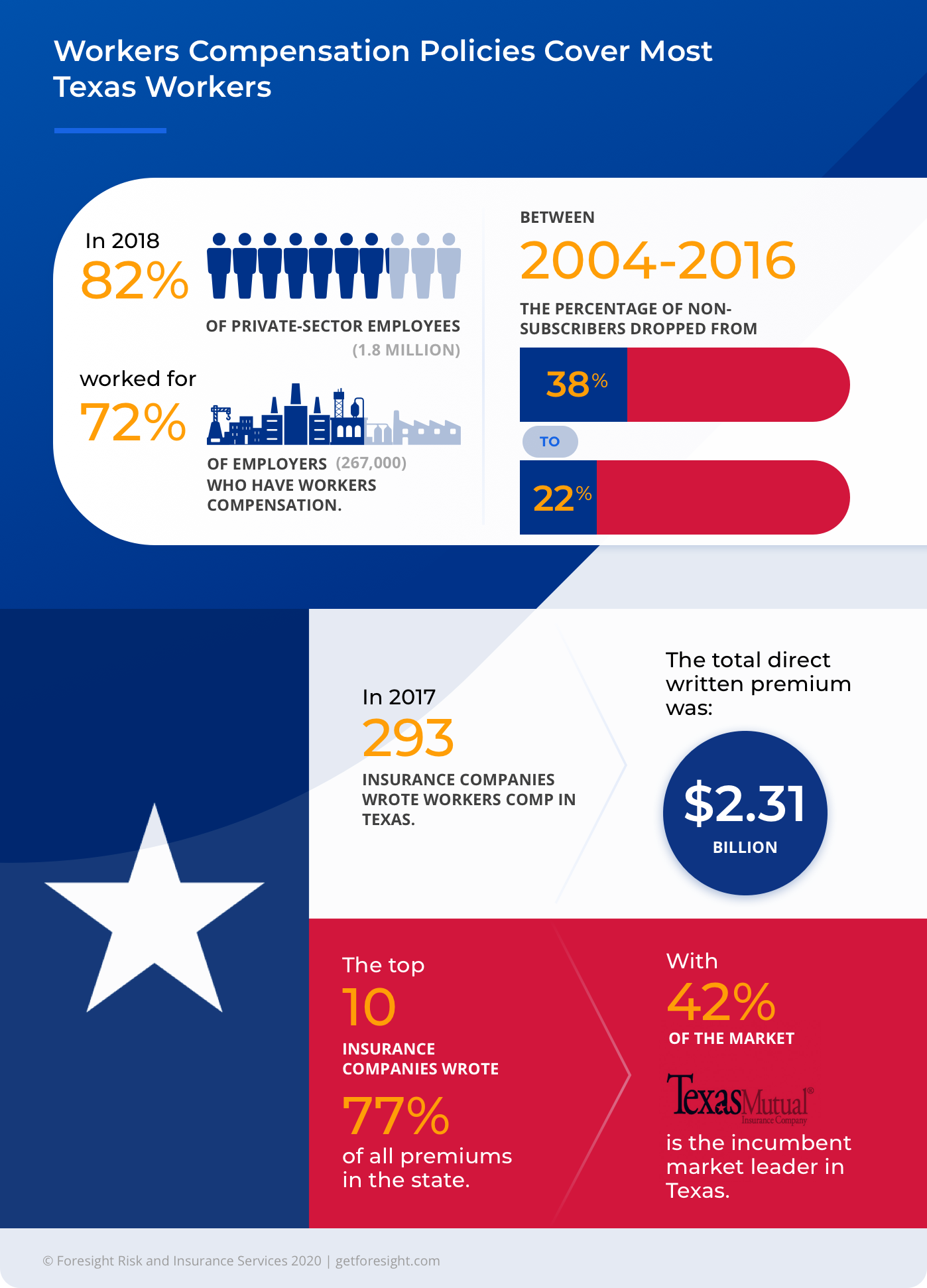
Texas remains the only state in the U.S. where workers' compensation insurance is truly optional for the majority of private employers. In the 2026 regulatory environment, the Texas Department of Insurance (TDI), specifically the Division of Workers' Compensation (DWC), oversees the system. Employers who choose to carry insurance are known as subscribers, while those who opt out are labeled nonsubscribers.
The Benefits of Being a Subscriber
For an Austin-based startup or an established manufacturing firm, becoming a subscriber offers a critical legal "safe harbor." Under the Texas Workers' Compensation Act, if an employer has a valid policy, the insurance benefits are the "exclusive remedy" for the employee. This means the employee generally cannot sue the employer for negligence related to a workplace injury. The policy pays for:
- Medical Benefits: All reasonably required medical care related to the injury.
- Income Benefits: A portion of lost wages (Temporary, Impairment, or Supplemental).
- Death and Burial Benefits: Provided to eligible beneficiaries if a work-related injury results in death.
The Risks of Nonsubscription
Nonsubscribers in Austin face significant financial exposure. If an employee is injured, they can sue the employer directly for damages, including pain and suffering and punitive damages. Furthermore, nonsubscribers lose several traditional legal defenses in court. They cannot argue that the employee was partially at fault (contributory negligence) or that the employee knew the risks of the job (assumption of risk). In a 2026 legal climate where jury awards in Travis County can be substantial, nonsubscription is often viewed by risk managers as a high-stakes gamble.
Mandatory Coverage Requirements in Austin
While the state generally allows choice, there are specific scenarios where Austin employers must provide workers' compensation insurance. Failure to comply in these areas can lead to contract termination and heavy administrative penalties.
- Public Employers: All public entities in Austin, including the City of Austin, Travis County, and local school districts, are required to provide workers' compensation for their employees.
- Government Contractors: If you are a private contractor or subcontractor working on a public building or construction project for a governmental entity in Texas, you are legally required to provide coverage for every employee working on that project.
- Specific Professional Services: Certain state-funded programs or specific healthcare certifications may mandate coverage as a condition of participation or licensing.
For those who do not have coverage, the DWC requires strict notification protocols. Employers must notify new hires in writing and post a specific notice (DWC Form 7) in the workplace. Additionally, nonsubscribers must file an annual notice (DWC Form 5) with the state to maintain their status.
Estimating the Cost of Coverage for Austin Businesses
In 2026, workers' compensation premiums in Austin are influenced by several variables. Because Texas has a competitive market, rates can vary significantly between carriers. The primary formula used by insurers is:
** (Payroll / 100) × Class Code Rate × Experience Modifier = Estimated Premium **
1. Classification Codes (NCCI)
Each job type is assigned a four-digit code by the National Council on Compensation Insurance (NCCI). These codes reflect the inherent risk of the work. For example, a software developer at an Austin tech firm will have a much lower rate than a high-rise window cleaner working on a downtown Austin skyscraper.
2. Experience Rating Modifier (E-Mod)
The E-Mod is a multiplier that rewards safe companies and penalizes those with frequent claims. A "1.0" is average. If your Austin business has a strong safety record over a three-year period, your E-Mod might drop to 0.85, granting you a 15% discount. Conversely, a history of frequent accidents could push it to 1.25, increasing your costs.
3. Payroll
Premiums are calculated based on every $100 of your annual payroll. In 2026, as Austin’s cost of living and average wages continue to rise, employers should expect their total premium outlays to grow alongside their payroll, even if their base rates remain steady.
2026 Estimated Rate Comparison by Austin Industry
| Industry Category | Example Austin Business Type | Relative Risk Level | Estimated Rate Range (per $100 payroll) |
|---|---|---|---|
| Professional/Tech | Software Development, Legal, Marketing | Low | $0.10 – $0.25 |
| Retail/Hospitality | Restaurants on 6th Street, Boutiques | Moderate | $1.15 – $2.50 |
| Healthcare | Home Health, Private Clinics | Moderate-High | $2.00 – $4.00 |
| Construction | Residential Remodeling, Commercial HVAC | High | $5.00 – $12.00 |
| Manufacturing | Semiconductor Fabrication, Food Prep | High | $3.50 – $7.00 |
Note: These ranges are estimates for 2026 and vary based on specific insurer filings and individual company safety records.
How to Obtain Workers' Comp in the Austin Market
Austin business owners have three primary paths to securing coverage in 2026. Choosing the right one depends on the size of the company and its risk appetite.
The Voluntary Market (Private Carriers)
Most Austin businesses purchase policies from private insurance companies like The Hartford, Travelers, or Liberty Mutual. These carriers compete on price and services, such as loss control and safety training. It is advisable to work with a local Austin-based independent agent who understands the specific nuances of the Texas market.
Texas Mutual Insurance Company
Originally created by the state but now a policyholder-owned company, Texas Mutual is the "insurer of last resort." However, they are also the largest provider in the state. They often provide dividends to policyholders with good safety records, which can significantly lower the net cost of insurance for Austin small businesses.
Self-Insurance
Large corporations with significant operations in the Austin area (such as major tech campuses or large healthcare systems) may choose to self-insure. To do this, they must be certified by the Texas Department of Insurance. This requires demonstrating massive financial reserves and a sophisticated internal claims-management structure.
Claims Management and Safety in the Austin Workplace
Securing a policy is only the first step. Effective management of workers' compensation in 2026 requires a proactive approach to safety and a streamlined claims process.
Implementing a Return-to-Work (RTW) Program
Austin employers can lower their long-term costs by establishing a Return-to-Work program. This involves identifying "light-duty" tasks that an injured worker can perform while recovering. By bringing an employee back to work sooner, the employer reduces the "Income Benefits" paid out by the insurance company, which helps keep the Experience Modifier low.
Reporting Requirements
When an injury occurs in an Austin workplace, the clock starts ticking. Employers must report injuries to their insurance carrier within eight days of the accident or within eight days of the employee reporting a disease. Failure to report promptly can result in administrative fines from the DWC.
Workplace Safety Inspections
In 2026, many insurance carriers offer Austin-based businesses free safety consultations. Given the high cost of medical care in Central Texas, preventing a single back injury or slip-and-fall can save a business thousands of dollars in future premium hikes.
Frequently Asked Questions
Is workers' compensation mandatory for startups in Austin?
For most private startups, it is not mandatory under Texas law. However, if your startup plans to bid on City of Austin contracts or provide services to state agencies, you will likely be required to show proof of coverage. Furthermore, many venture capital firms and commercial landlords require workers' compensation as a condition of funding or leasing office space.
What happens if I don't have insurance and an employee gets hurt?
As a "nonsubscriber," you are responsible for the employee's medical bills and lost wages out of pocket if you are found liable. More importantly, the employee can sue you in Travis County civil court. Because you lose your common-law defenses, if you were even 1% at fault for the injury, you could be held liable for 100% of the damages, including non-economic damages like emotional distress.
Can I fire an employee for filing a workers' comp claim?
No. Texas law (Chapter 451 of the Texas Labor Code) prohibits employers from discriminating or retaliating against an employee who has filed a workers' compensation claim in good faith. Doing so can lead to a separate "wrongful retaliation" lawsuit, which is not covered by the workers' compensation policy itself.
Does workers' comp cover remote workers living in Austin?
Yes. If your employee lives in Austin but works remotely for your company, they are covered as long as the injury occurred "in the course and scope of employment." In 2026, defining "course and scope" for home offices has become more standardized, but it remains essential to have a clear telecommuting policy in place to differentiate between work tasks and personal activities.
How are 2026 rates trending in the Austin area?
While Austin's medical costs are rising, the Texas workers' compensation market remains highly competitive. Increased use of telemedicine for initial injury assessments and improved safety technologies have helped stabilize rates for many low-to-medium-risk industries. However, the construction and heavy manufacturing sectors continue to see upward pressure due to the complexity of claims and rising surgical costs.
Next Steps for Austin Business Owners
To ensure your Austin business is protected in 2026, begin by auditing your current employee headcount and job classifications. If you are currently a nonsubscriber, consult with a legal advisor to quantify your exposure in the event of a catastrophic workplace injury. For those seeking coverage, reach out to a licensed Texas insurance agent to request quotes from multiple carriers, including Texas Mutual. Prioritizing workplace safety today is the most effective strategy for controlling your workers' compensation costs tomorrow.
Image Gallery