Comprehensive Federal Prison Inmate Search Guide for 2026
To conduct a federal prison inmate search, utilize the official Federal Bureau of Prisons (BOP) online locator tool. You can locate individuals by their BOP Register Number, DCDC Number, FBI Number, or INS Number, or by searching their...
To conduct a federal prison inmate search, utilize the official Federal Bureau of Prisons (BOP) online locator tool. You can locate individuals by their BOP Register Number, DCDC Number, FBI Number, or INS Number, or by searching their full legal name, including filters for race, age, and sex. This system tracks all federal inmates incarcerated from 1982 to the current date in 2026.
Contents
Federal inmate tracking has undergone significant digital transformation by 2026, integrating real-time data from the First Step Act implementation and enhanced transparency protocols. Whether you are a legal professional, a family member, or a researcher, navigating the complexities of the federal carceral system requires a precise understanding of how the Department of Justice (DOJ) categorizes and displays inmate data. This guide provides the technical specifications and procedural steps necessary to locate an individual within the federal system efficiently.
The Infrastructure of the 2026 Federal Inmate Locator System
The Bureau of Prisons (BOP), a component of the U.S. Department of Justice, manages the custody of approximately 150,000 federal inmates. The digital locator is the primary gateway for public access to inmate locations. As of 2026, the database is optimized for mobile access and includes expanded data points regarding an inmate's facility assignment and projected release dates, which are frequently adjusted based on earned time credits under modern sentencing reforms.
The search engine is divided into two primary methodologies: "Find By Number" and "Find By Name." For the highest accuracy, searching by a unique identification number is the industry standard, as it eliminates the "false positive" results associated with common surnames.
Specialized Identification Numbers
The BOP Register Number This is the most reliable identifier for any federal inmate. It consists of an eight-digit sequence (e.g., 12345-000). The first five digits represent the specific individual, while the last three digits indicate the judicial district where the individual was sentenced.
The FBI Number Assigned by the Federal Bureau of Investigation, this number tracks an individual across multiple law enforcement databases. It is particularly useful if the individual has a history of both state and federal offenses, though it is less specific to the BOP system than the Register Number.
DCDC and INS Numbers The DCDC number is historically associated with individuals processed through the District of Columbia Department of Corrections. The INS (now ICE) number is utilized for non-citizens or individuals detained under immigration-related federal statutes.
Step-by-Step Process for Executing an Accurate Search
To initiate a search in 2026, visit the official bop.gov portal. Accuracy is paramount, as the system does not utilize "fuzzy logic" for names; the spelling must match the legal records exactly as they were entered during the intake process at a Federal Transfer Center (FTC) or a local holding facility.
- Select the Search Category: Choose between "Find by Number" or "Find by Name." If you possess the Register Number, always use this option first.
- Input Precise Data: For name-based searches, you must enter the First Name and Last Name. Middle names are optional but highly recommended to narrow results.
- Apply Demographic Filters: In 2026, the locator allows for filtering by Race, Ethnicity, Sex, and Age. Age is a dynamic field; the system calculates the inmate's current age based on their date of birth in the record.
- Analyze the Search Results: The system will return a list of matching entries including the Register Number, Name, Age, Race, Sex, and "Release Date" or "Location."
- Verify the Facility: Click on the facility name (e.g., USP Atlanta, FCI Danbury) to view the physical address, visitation schedules, and specific shipping instructions for inmate mail.
Interpreting Complex Search Result Statuses
One of the most frequent points of confusion for users is the "Location" field when an inmate is not physically behind bars at a traditional penitentiary. In 2026, the BOP utilizes a wider variety of custody statuses due to the expansion of community-based reentry programs.
| Status Displayed | Technical Meaning | Operational Reality |
|---|---|---|
| In Transit | The inmate is currently being moved between facilities. | Usually handled by JPATS (Justice Prisoner and Alien Transportation System); location is non-disclosed for security. |
| RRM [City Name] | Residential Reentry Management office. | The inmate is likely in a halfway house or on home confinement under the supervision of a local field office. |
| Released On [Date] | The inmate has completed their sentence. | The record remains in the database permanently but reflects the historical completion of the term. |
| FPC [Name] | Federal Prison Camp. | A minimum-security facility with no perimeter fencing, often adjacent to a larger complex. |
| Medical Center (FMC) | Federal Medical Center. | The inmate is at a specialized facility (like FMC Devens or FMC Carswell) for long-term clinical care. |
Comparative Analysis of Federal vs. State Inmate Databases
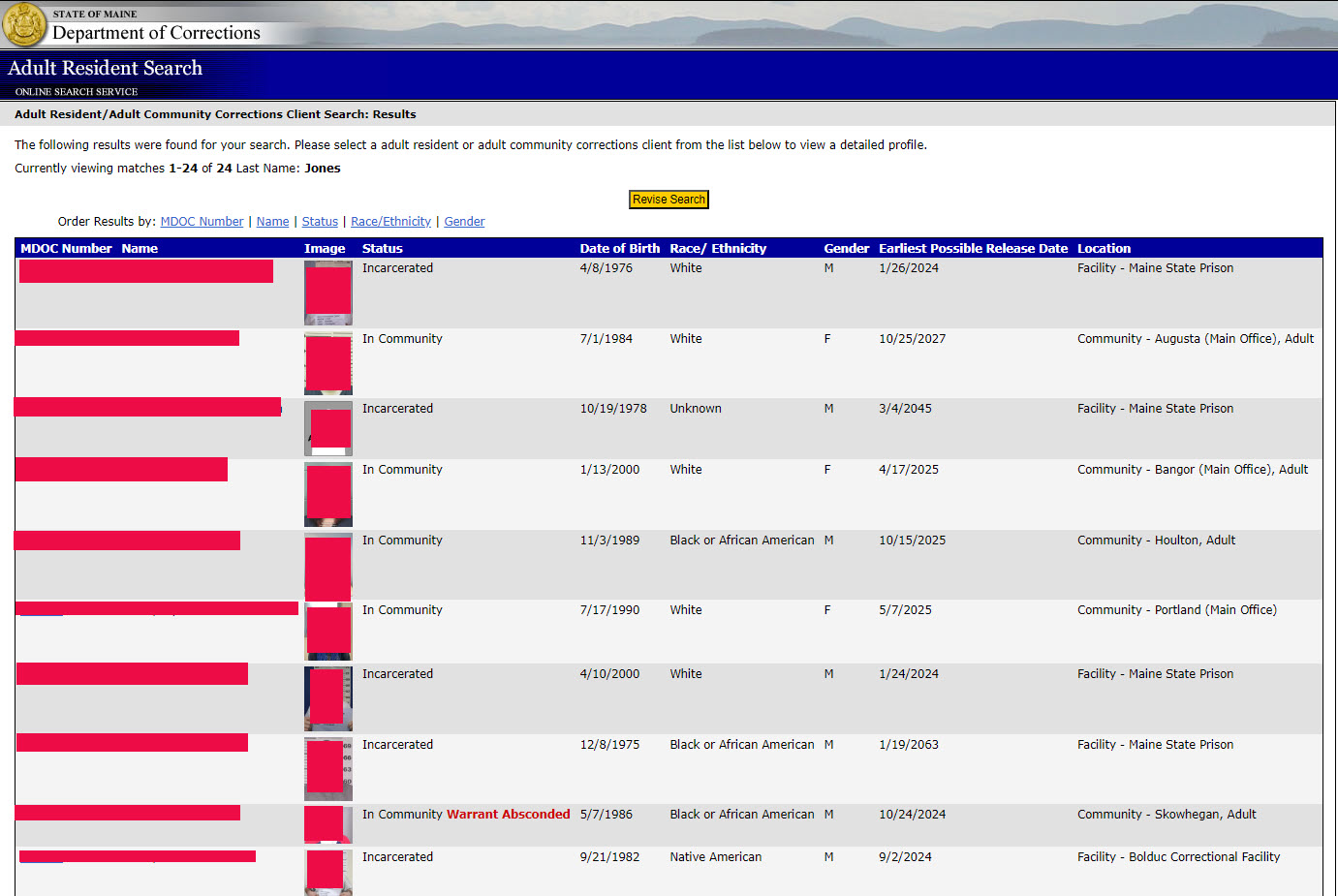
It is critical to distinguish between a federal prison inmate search and searches conducted at the state or local level. Federal inmates are those who have violated U.S. Code (e.g., interstate drug trafficking, tax evasion, racketeering, or crimes committed on federal property).
Jurisdictional Boundaries Federal searches will not return results for individuals held in New York State Prisons (DOCCS) or California Department of Corrections (CDCR) unless those individuals are facing concurrent federal charges or are being "boarded" in a federal facility under a specific contract.
Data Retention Policies The BOP locator is comprehensive for all individuals released after 1982. For records prior to 1982, researchers must contact the National Archives and Records Administration (NARA), as these files are not digitized within the standard 2026 web interface.
Frequency of Updates The BOP database typically updates every 24 hours. State systems vary wildly, with some local county jails updating in near real-time (every 15-30 minutes) and others lagging by several business days.
Advanced Search Challenges and Troubleshooting
In some instances, a federal prison inmate search may yield no results even when you are certain the individual is in federal custody. This is rarely a system error and usually stems from specific legal or administrative classifications.
- Sealed Records: If a judge has sealed a case for national security reasons or ongoing investigations, the inmate may not appear in the public-facing locator.
- Witness Security Program (WITSEC): Individuals enrolled in the federal witness protection program are removed from all public databases to ensure their safety. Their location is categorized as "Not in BOP Custody" or they are assigned an alias that does not match public knowledge.
- Pre-Trial Detainees: Individuals recently arrested by federal agents (FBI, DEA, ATF) may be held in local county jails under contract with the U.S. Marshals Service (USMS). Until these individuals are sentenced and designated to a BOP facility, they may only appear in the USMS prisoner tracking system, which is not always accessible to the general public via the standard BOP portal.
- Private Contract Facilities: While the DOJ has moved to reduce reliance on private prisons, some federal detainees remain in facilities managed by private entities. These inmates should still appear in the BOP search, but their "Location" will list the private facility name.
Professional Use Cases for Legal and Investigative Research
For legal professionals in 2026, the inmate search tool serves as the foundation for broader due diligence. Often, the locator is used in conjunction with PACER (Public Access to Court Electronic Records) to align an inmate's current location with their sentencing transcripts and appellate status.
When conducting a "skip trace" or professional background check, the BOP locator provides a definitive verification of "Incarceration Status," which is a vital metric for civil litigation, process serving, and debt collection. Furthermore, the search results provide the "Actual Release Date," which is essential for calculating statutes of limitations or determining the eligibility of a witness for testimony.
Frequently Asked Questions
How can I find an inmate who was released before 1982? The online BOP locator only contains records for inmates released from 1982 onwards. For individuals incarcerated and released prior to this date, you must submit a request to the National Archives (NARA). These records are kept in physical or microfiche format and require specific details like the inmate's name, date of birth, and the facility where they were housed.
Why does the search result say "Unknown" for an inmate's location? An "Unknown" status usually occurs during the transition period immediately following sentencing. The U.S. Marshals Service may still have physical custody of the individual while the BOP Designation and Sentence Computation Center (DSCC) determines which federal institution is appropriate based on security level, medical needs, and proximity to family.
Does a federal prison inmate search show the crimes committed? No, the BOP locator does not list the specific charges or criminal history. It only provides the location and identification details. To view the specific crimes, you must access the federal court records through the PACER system using the inmate's name or the case number associated with their sentencing.
Can I use the inmate search to send money to someone in prison? Yes, finding the correct Register Number via the search tool is a prerequisite for sending funds. In 2026, services like Western Union, MoneyGram, and the National Financial Center require the full eight-digit Register Number and the inmate's legal name to process deposits into a commissary account.
How accurate is the "Projected Release Date" shown in 2026? The projected release date is a high-confidence estimate but is subject to change. Under the First Step Act, inmates can earn "Time Credits" for participating in recidivism reduction programs. These credits are applied periodically, which may result in the release date moving earlier. Conversely, disciplinary infractions can result in the loss of "Good Conduct Time," pushing the date further out.
Summary of Best Practices for 2026 Inmate Searches
To ensure success in your federal prison inmate search, always prioritize the Register Number over name-based queries. If a name search is necessary, utilize the middle name and age filters to exclude the thousands of identical names within the DOJ database. Remember that the BOP system is distinct from state-level Department of Corrections (DOC) websites; if an individual is not found in the federal system, broaden your search to the specific state where the crime occurred. For those tracking the movements of an inmate for legal or personal reasons, checking the locator at least once per week is recommended, as facility transfers and status changes (such as moves to home confinement) are updated in 2026 with higher frequency than in previous decades.
Image Gallery