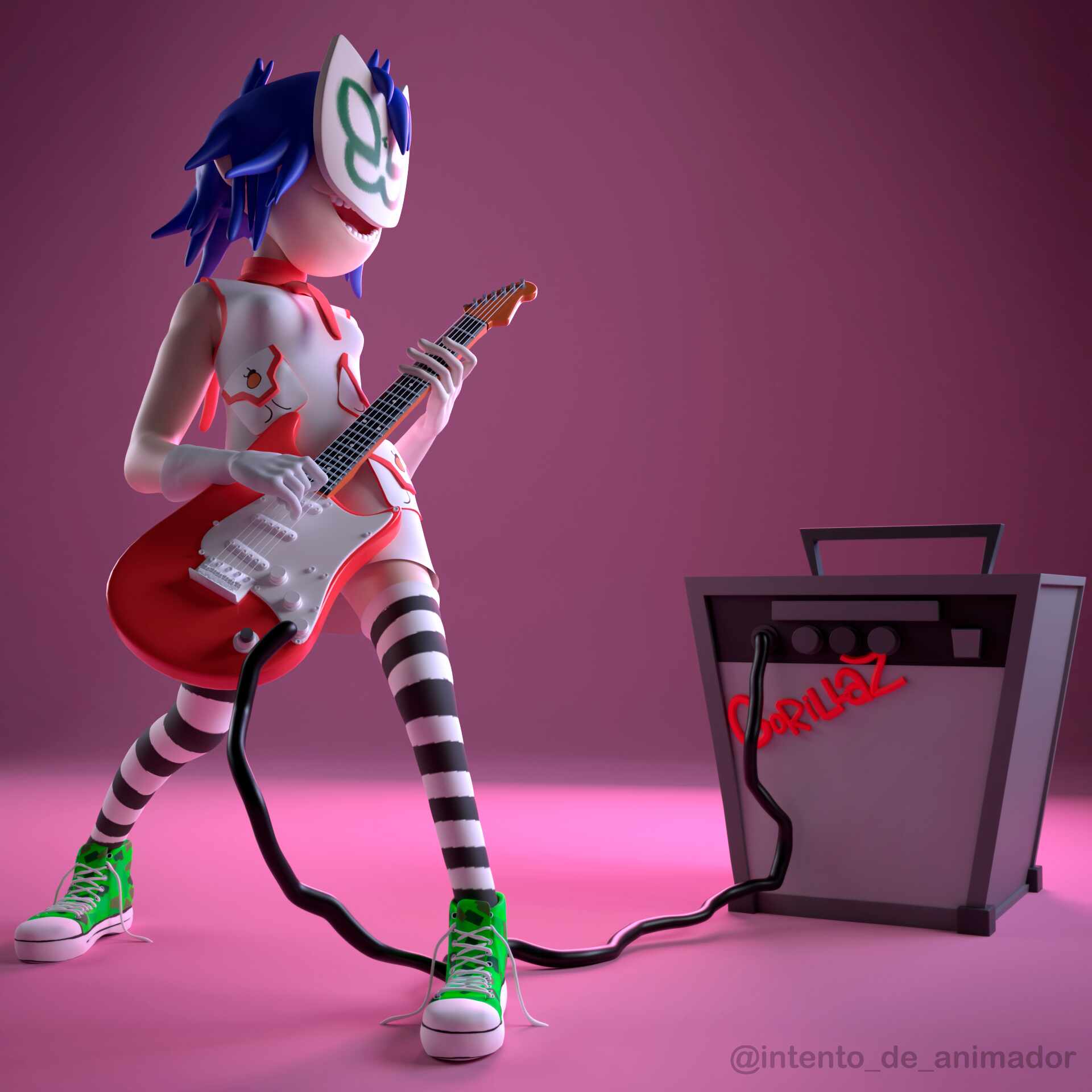
Exploring the Noodle Gorillaz Personality: A Study of Evolution and Stoicism
Noodle’s personality is defined by a unique blend of disciplined stoicism, intellectual curiosity, and an evolving sense of independence. Originally introduced as a mysterious child prodigy, she has matured into the band’s moral and cr...
Noodle’s personality is defined by a unique blend of disciplined stoicism, intellectual curiosity, and an evolving sense of independence. Originally introduced as a mysterious child prodigy, she has matured into the band’s moral and creative compass, balancing her background as a trained super-soldier with a sophisticated interest in global activism, high fashion, and avant-garde philosophy.
Contents
Across the decades of the Gorillaz' history, no character has undergone a more radical psychological and physical transformation than Noodle. While 2-D remains the whimsical frontman, Murdoc the chaotic antagonist, and Russel the grounded anchor, Noodle serves as the intellectual heart of the group. Understanding her personality requires an analysis of her transition from a pre-adolescent enigma to a modern cultural icon, shaped by trauma, military discipline, and a deep-seated need for autonomy.
The Foundation of Discipline: The Super-Soldier Origins
To explore Noodle's personality, one must first look at the "Project Confucius" background. Unlike her bandmates, who stumbled into their roles through luck or misfortune, Noodle was literally designed for excellence. As one of 23 children trained in a secret Japanese government program to become super-soldiers, her early years were defined by rigorous mental and physical conditioning.
This upbringing created a psychological baseline of high-functioning discipline. Even when she arrived at Kong Studios in 1998 via a FedEx crate, unable to speak English except for the word "Noodle," she displayed a level of technical proficiency and focus that surpassed the adult members of the band. This "soldier's mindset" manifests in her adult personality as a calm presence in the face of chaos. While Murdoc might panic or 2-D might retreat into a daze, Noodle typically approaches problems with tactical precision.
Phase-by-Phase Personality Evolution
Noodle’s personality is not static; it is a chronological progression that mirrors the band's musical shifts. Her development can be categorized into distinct eras that highlight different facets of her psyche.
Phase 1: The Child Prodigy (1998–2002)
During the self-titled era, Noodle was characterized by youthful exuberance tempered by mystery. She was the "quiet one," communicating through her guitar and high-energy martial arts displays. Her personality at this stage was largely reactive; she was absorbing the Western culture around her, transitioning from a weapon of war into a creative artist.
Phase 2: The Intellectual Architect (2004–2006)
This is arguably the most pivotal shift in her personality. After traveling back to Japan to uncover her lost memories, Noodle returned for the Demon Days era with a newfound sense of purpose. She wrote the majority of the album herself, signaling a shift toward introspective, socially conscious thought. Her personality became more serious, focused on the "false icons" of modern society and the environmental decay of the world. She transitioned from a band mascot to the band's primary songwriter and visionary.
Phase 3: The Traumatized Survivor (2010–2012)
The "El Mañana" incident, where Noodle was seen on a floating island being attacked by helicopters, led to her temporary disappearance. This era introduced Cyborg Noodle, a robotic doppelgänger created by Murdoc. The real Noodle’s personality during this time was defined by survivalism. When she finally resurfaced, wearing a bruised cat mask and wielding a shotgun, she was no longer the optimistic teenager of Demon Days. She was a hardened warrior, reclaiming her place in a world that had tried to replace her.
Phase 4 to the Present (2016–2026)
In the modern era, including the Cracker Island period and her activities leading into 2026, Noodle has achieved a sense of "zen-like" mastery. She is the most socially active member of the band, serving as a global ambassador for brands like Jaguar and engaging in various fashion and activist circles. Her personality is now characterized by a sophisticated, cosmopolitan outlook. She is less interested in the internal bickering of the band and more focused on her own growth as an individual.
The Stoic Intellectual: Personality Trait Analysis
Noodle’s core personality traits can be broken down into specific psychological markers that differentiate her from traditional fictional archetypes.
1. High Cognitive Complexity
Noodle is often portrayed as polyglot and highly literate in both Eastern and Western philosophy. Her lyrics and "interviews" suggest a personality that finds comfort in complexity. She does not see the world in black and white; she understands the nuances of fame, the dangers of technology, and the importance of spiritual grounding.
2. Emotional Autonomy
While she cares deeply for her bandmates—acting as a younger sister to 2-D and a stabilizing force for Murdoc—Noodle is the only member who does not "need" the band to function. Her personality is fiercely independent. This autonomy allows her to call out Murdoc’s narcissism without fear of retribution, a trait that has earned her the respect of the entire Gorillaz fanbase.
3. Cultural Synthesis
Noodle’s personality is a bridge between her Japanese heritage and her British-influenced upbringing. She retains a sense of Japanese "Bushido" (the way of the warrior) in her discipline, but she also embraces the irreverent, DIY punk aesthetic of the London art scene. This synthesis makes her personality versatile and unpredictable.
Comparing Noodle’s Personalities Across Eras
The following table outlines the primary shifts in Noodle's personality traits as the Gorillaz lore progressed toward the current year 2026.
| Era/Phase | Dominant Trait | Primary Motivation | Emotional State |
|---|---|---|---|
| Phase 1 (Self-Titled) | Innocence/Technical Skill | Discovery and Adaptation | Curious, energetic, mysterious |
| Phase 2 (Demon Days) | Intellectual Leadership | Social Critique and Creation | Focused, philosophical, mature |
| Phase 3 (Plastic Beach) | Resilience/Survival | Reclaiming Identity | Hardened, protective, distant |
| Phase 4-5 (Humanz/Now Now) | Globalism/Sophistication | Cultural Influence | Confident, adventurous, social |
| Phase 6-7+ (Song Machine/2026) | Zen Mastery/Independence | Self-Actualization | Calm, authoritative, balanced |
Noodle vs. Cyborg Noodle: A Personality Study
A common point of confusion in "exploring the noodle gorillaz personality" is the distinction between the biological Noodle and her robotic counterpart. This distinction is vital for understanding the true Noodle's character.
Cyborg Noodle was programmed to be a mindless soldier. Her "personality" was a cold, efficient, and murderous caricature of Noodle’s military past. She represented what Noodle would have become if she had never found the band—a weapon without a soul.
The Real Noodle, by contrast, is defined by her capacity for change. While the Cyborg was static and programmed, the real Noodle is dynamic and self-correcting. The conflict between the two in the Plastic Beach era serves as a metaphor for Noodle's internal struggle: the battle between her origin as a weapon and her choice to be an artist. Her victory over the "machine" version of herself cemented her personality as one rooted in free will and human complexity.
Creative Influence and Songwriting
Noodle’s personality is most visible through the music she "writes" within the band's lore. The shift from the upbeat, punk-inspired tracks of the debut album to the darker, choir-backed, and introspective themes of Demon Days reflects her maturing worldview.
She often explores themes of loneliness, the death of the environment, and the superficiality of pop culture. Her personality isn't just about "coolness"; it's about a deep, sometimes melancholic, concern for the state of the world. By 2026, her contributions to the band's sound have moved toward a more experimental and electronic fusion, mirroring her comfort with the digital age while maintaining her "human" core.
Common Misconceptions About Noodle
- "She is just the band’s fashion icon." While Noodle is heavily involved in fashion, it is a tool for her expression rather than her entire identity. Her fashion choices often reflect her current psychological state—from the functional military gear of the early years to the high-fashion, avant-garde pieces of today.
- "She is the 'stable' one." While she is more stable than Murdoc or 2-D, Noodle has her own complexities. Her history as a super-soldier and her brush with death in Phase 3 have left her with a certain degree of emotional detachment. Her "stability" is a result of immense self-control, not a lack of internal conflict.
- "She is purely a fictional character." Within the context of the Gorillaz meta-narrative, Noodle is treated as a living entity. Her "personality" is developed through diaries, book entries (like Rise of the Ogre), and social media interactions, making her one of the most well-documented fictional personas in music history.
Frequently Asked Questions
Does Noodle still speak Japanese?
Yes, Noodle remains fluent in Japanese, though she predominantly speaks English in band communications. Her personality is deeply tied to her heritage; she often uses Japanese cultural concepts to frame her worldview, and she has frequently visited Japan during hiatus periods to reconnect with her roots.
Why did Noodle’s personality change so much after Phase 2?
The transition was driven by two factors: her regaining her memories of "Project Confucius" and the trauma of the "El Mañana" incident. These events forced her to grow up quickly, moving her from a carefree teenager to a woman who understood the fragility of life and the importance of fighting for her place in the world.
How does Noodle view the other band members?
Noodle views 2-D as a brother who needs protection, Russel as a wise mentor and kindred spirit, and Murdoc as a necessary but deeply flawed annoyance. She is the only person Murdoc truly respects (and fears), which gives her a unique position of power within the band’s hierarchy.
Is Noodle the leader of the Gorillaz?
While Murdoc founded the band, Noodle is often considered the "creative leader," especially during the Demon Days era. In 2026, the band functions more as a collective, but Noodle remains the moral compass and the person most likely to initiate new cultural projects or activism-related ventures.
What is Noodle's role in the 2026 era?
In 2026, Noodle has leaned further into the role of a multi-hyphenate artist. She is less focused on the traditional "rock star" lifestyle and more engaged in the intersection of technology, art, and environmentalism. Her personality has reached a point of "elder stateswoman" within the virtual music scene.
Recommendation for Further Exploration
To truly understand Noodle's personality, fans should look beyond the music videos. The most significant insights into her psyche can be found in the 2006 book Rise of the Ogre, which provides the most detailed account of her early development and her internal thoughts during the band's peak. Additionally, tracing her evolution through the band’s official social media archives and short-form video content provides a contemporary look at her current stoic, yet vibrant, maturity.
Image Gallery