Does Sauce Expire if Unopened? Understanding Shelf Life and Food Safety
Most unopened, commercially processed sauces do not "expire" in a way that makes them immediately toxic after the date on the label. Instead, these products carry "Best By" or "Best if Used By" dates that indicate peak quality, flavor,...
Most unopened, commercially processed sauces do not "expire" in a way that makes them immediately toxic after the date on the label. Instead, these products carry "Best By" or "Best if Used By" dates that indicate peak quality, flavor, and texture. While highly acidic or high-sugar sauces can remain safe for years, their quality eventually degrades due to oxidation and chemical breakdown.
Contents
The Science of Sauce Longevity: Why Some Last Longer Than Others
Understanding whether a sauce is still good in 2026 requires a look at the fundamental principles of food science: pH levels and water activity ($a_w$). These two factors determine how hospitable an environment is for bacteria, mold, and yeast.
The Role of pH and Acidity
Most shelf-stable sauces, such as hot sauce, mustard, and ketchup, are formulated with high levels of vinegar or citric acid. In food science, a pH level of 4.6 or lower is considered the "safety zone" for high-acid foods. This acidity inhibits the growth of most pathogens, including Clostridium botulinum. When a sauce is unopened and vacuum-sealed, the combination of acidity and the absence of oxygen creates a formidable barrier against spoilage.
Water Activity ($a_w$)
Water activity refers to the amount of "free" water available for microbial growth. Sauces like soy sauce or heavy syrups have low water activity because the high concentrations of salt or sugar bind the water molecules. Bacteria need moisture to thrive; by reducing available water, manufacturers can extend the shelf life of unopened sauces far beyond their printed dates.
Preservation Techniques
Beyond the ingredients themselves, the manufacturing process plays a vital role. Commercial sauces undergo pasteurization or hot-filling, where the product is heated to temperatures that kill microorganisms before being sealed in a sterile container. As long as that seal remains intact, the internal environment remains commercially sterile.
Decoding the Labels: "Best By" vs. "Use By"
In 2026, consumer confusion regarding food dating remains a primary driver of unnecessary food waste. It is essential to distinguish between safety-based dating and quality-based dating.
- Best if Used By/Before: This date is a manufacturer's estimate of how long the product will remain at its absolute peak flavor and texture. It is not a safety deadline. An unopened bottle of BBQ sauce labeled "Best by June 2025" is likely perfectly safe to eat in early 2026, though it might be slightly darker in color.
- Use By: Often found on more perishable items, this date is the last date recommended for the use of the product while at peak quality. While still usually about quality, it is a stricter guideline than "Best By."
- Expiration Date: In many jurisdictions, the only products legally required to have true expiration dates (where safety is the primary concern) are infant formula and certain medical foods.
According to the USDA Food Safety and Inspection Service, most shelf-stable foods are safe indefinitely if the seal is intact and the container is in good condition (no dents, rust, or swelling).
Unopened Shelf Life Comparison Table
The following table provides estimated timeframes for how long various sauces remain at acceptable quality levels when stored in a cool, dark environment.
| Sauce Type | Average Shelf Life (Past Printed Date) | Primary Preservation Factor |
|---|---|---|
| Hot Sauce (Vinegar-based) | 2–3 Years | High Acidity (pH < 3.5) |
| Soy Sauce / Tamari | 3+ Years | High Sodium Content |
| Ketchup | 12–18 Months | Vinegar and High Sugar |
| Mustard (Yellow/Dijon) | 1–2 Years | High Acidity / Natural Antimicrobials |
| Mayonnaise (Shelf-stable) | 3–4 Months | Emulsified Acids and Preservatives |
| BBQ Sauce | 1–2 Years | Sugar, Acid, and Liquid Smoke |
| Pasta Sauce (Glass Jar) | 1 Year | Thermal Processing/Pasteurization |
| Worcestershire Sauce | 3+ Years | Vinegar and Fermentation |
| Teriyaki Sauce | 1–2 Years | Salt and Sugar Balance |
Deep Dive: Specific Sauce Categories
Vinegar-Based Condiments (Hot Sauce, Mustard, Ketchup)
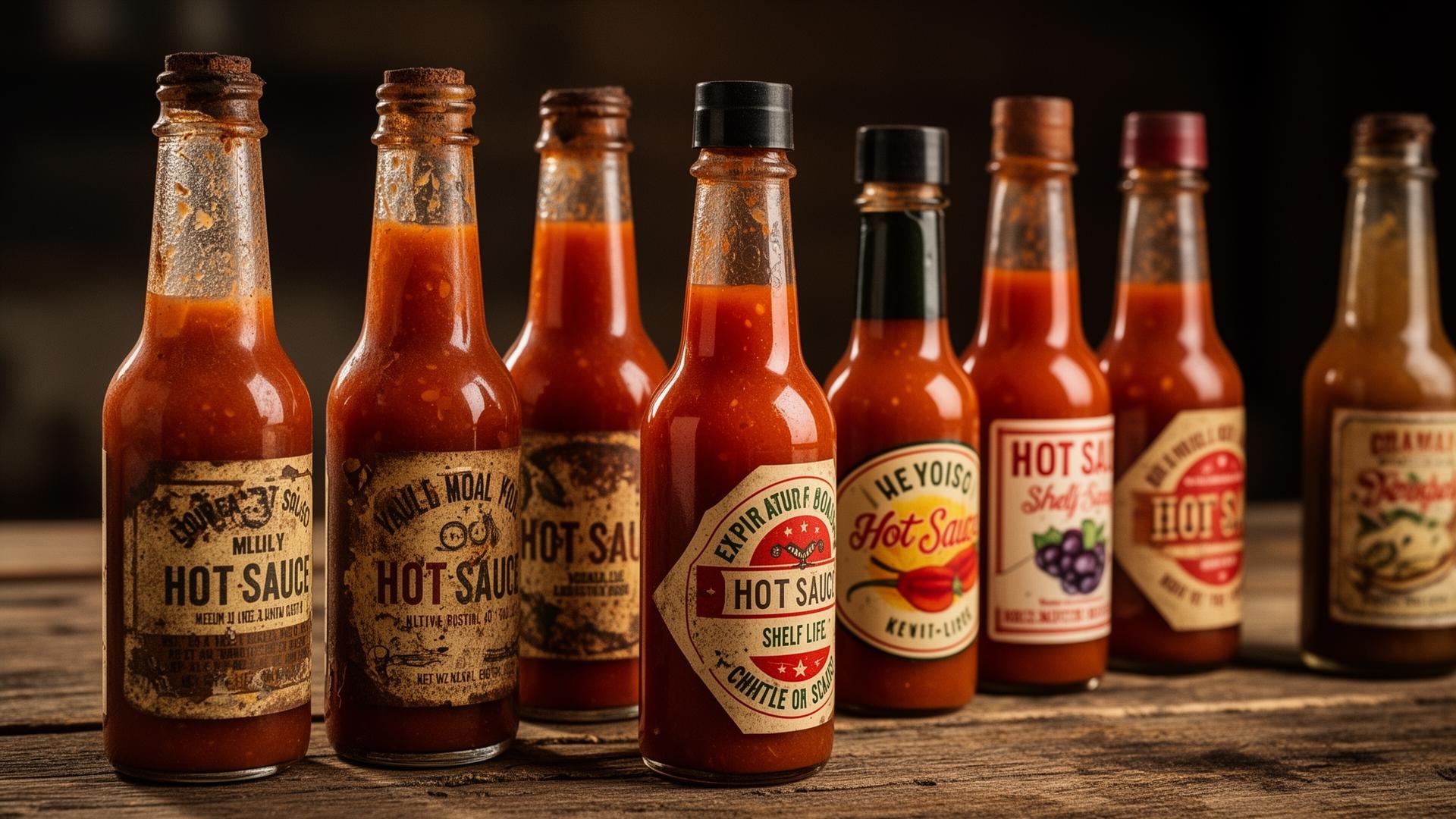
These are the "marathon runners" of the pantry. Mustard contains mustard seeds, which have natural antimicrobial properties. Combined with vinegar, an unopened jar of mustard is incredibly resistant to spoilage. Hot sauces are similarly robust; the capsaicin in peppers also acts as a mild preservative. You may notice these sauces darkening over time (the Maillard reaction), but this is generally a cosmetic change rather than a safety risk.
Emulsified Sauces (Mayonnaise and Salad Dressings)
Mayonnaise is a more sensitive product because it contains fats (oils) and egg yolks. While commercially produced, shelf-stable mayo is treated to be safe, the oils can eventually undergo oxidative rancidity. This doesn't necessarily make you sick, but it creates a "soapy" or "metallic" off-flavor. If you find a jar of mayo from 2024 in the back of your pantry in 2026, check for separation or a yellowing tint before use.
High-Sodium Sauces (Soy Sauce, Fish Sauce)
Fermented sauces like soy sauce have such high salt content that they are almost self-preserving. In an unopened state, they can last for many years. However, the complex flavors of a premium fermented soy sauce will begin to flatten after three to five years. If the seal is intact, the risk of bacterial growth is statistically negligible.
How Storage Conditions Impact Longevity
The "Best By" date assumes the product has been stored under ideal conditions. If these conditions are violated, even an unopened sauce can spoil prematurely.
- Temperature Fluctuations: The ideal storage temperature for unopened sauces is between 50°F and 70°F (10°C - 21°C). Storing sauces in a garage or near a kitchen stove subjects them to "heat cycling," which accelerates the breakdown of chemical bonds and speeds up the oxidation of fats and colors.
- Light Exposure: Light, especially UV light, can penetrate glass jars and cause photodegradation. This is why many high-quality oils and sauces are sold in dark green or amber glass. Light exposure can cause pigments to fade and oils to turn rancid.
- Humidity: While the inside of the bottle is sealed, high external humidity can lead to the corrosion of metal lids. Rust on the rim of a jar can eventually compromise the vacuum seal, allowing air and contaminants to enter.
Signs of Spoilage in Unopened Containers
Before opening a sauce that is past its date, perform a visual and physical inspection of the container.
- The "Button" Test: Most glass jars have a safety button on the lid. If the button is popped up, the vacuum seal has been broken, and the sauce should be discarded immediately.
- Bulging or Swelling: If a plastic bottle or metal lid is bulging, this is a sign of gas production from microbial activity inside. This is a "red alert" for spoilage; do not open it, as the contents may be under pressure.
- Seepage: Look for dried crust or sticky residue around the lid. If the sauce has leaked out, bacteria can crawl back in.
- Discoloration: While some darkening is normal for tomato-based or soy-based sauces, vivid color changes (like bright red turning grey) suggest significant chemical breakdown.
The Risks of Consuming "Expired" Sauces
While the risk is low for high-acid, unopened products, it is not zero. The primary concern with improperly sealed or damaged containers is Botulism, caused by Clostridium botulinum spores. These spores thrive in low-oxygen, low-acid environments. While most sauces are acidic enough to prevent this, a dented can or a jar with a compromised seal could theoretically pose a risk.
More commonly, "expired" sauces simply cause gastrointestinal distress if they have developed mold or if the oils have become highly rancid. If you open an old sauce and notice a sour, yeasty, or "funky" smell that is not characteristic of the product, prioritize safety over savings and discard it.
Frequently Asked Questions
Can I eat unopened ketchup from two years ago?
Yes, in most cases, unopened ketchup is safe to consume two years past its "Best By" date. Ketchup is high in vinegar and sugar, both of which act as preservatives. You may notice the color is a deeper, brownish-red, and the flavor may be slightly more metallic due to the lining of the bottle, but it is generally safe if the seal was intact.
Does hot sauce ever really expire?
Vinegar-based hot sauces are some of the most stable food products available. They rarely "expire" in a safety sense if unopened. However, the heat levels (capsaicin) and vibrant colors can degrade over 3–5 years. If the sauce has turned very dark or the solids have separated significantly, it may not taste as intended.
What happens if I use unopened mayo that is six months past the date?
If the mayo has been stored in a cool, dark place and the seal is perfectly intact, it is likely safe. However, mayo is prone to oxidation. Check for a thick, yellowish layer at the top or a rancid smell. If it smells like old paint or chemicals, the oils have oxidized, and you should throw it away.
Is it safe to use unopened pasta sauce with a small dent in the lid?
You should be cautious. If the dent is on the rim or the "seam" of the lid, it may have allowed microscopic amounts of air into the jar. If the safety button is still depressed and the dent is minor and away from the seal, it is likely fine. However, if the lid feels loose or the button is popped, discard it to avoid the risk of foodborne illness.
Does soy sauce need to be refrigerated once I finally open it?
While the high salt content keeps soy sauce safe at room temperature, refrigeration is highly recommended to preserve the delicate flavors created during fermentation. If you leave it in the pantry after opening, it won't necessarily become "toxic," but it will lose its nuanced aroma and turn bitter much faster.
Practical Recommendation for 2026
When dealing with unopened sauces past their date, follow the "Look, Smell, Taste" protocol. First, look for container integrity and color shifts. Second, smell for any off-aromas (rancidity, yeast, or rot) immediately upon opening. Finally, if it looks and smells normal, perform a small taste test. If the flavor is "off" or unpalatably sharp, discard it. To maximize your pantry's lifespan, implement a First-In, First-Out (FIFO) rotation system, ensuring that older sauces are moved to the front of the shelf for use before their quality significantly declines.
Image Gallery