Understanding the John Wayne Gacy Charges: A Comprehensive Legal and Historical Analysis
John Wayne Gacy was officially charged with 33 counts of murder, deviate sexual assault, and aggravated kidnapping following his arrest in late 1978. These charges represented the largest number of homicide counts brought against a sin...
John Wayne Gacy was officially charged with 33 counts of murder, deviate sexual assault, and aggravated kidnapping following his arrest in late 1978. These charges represented the largest number of homicide counts brought against a single individual in United States history at that time. Gacy was ultimately convicted on all counts in March 1980 and sentenced to death for 12 of the murders.
Contents
Between 1972 and 1978, Gacy systematically targeted young men and boys in the Chicago area, leading to one of the most complex criminal investigations in American history. The legal proceedings against him were not merely a pursuit of a conviction but a massive logistical undertaking by the Cook County State’s Attorney’s Office. Because the majority of his victims were discovered on a single property in Norwood Park Township, the prosecution had to meticulously link each set of remains to a specific charge of murder, even when some victims remained unidentified for decades.
The Investigative Catalyst: The Robert Piest Disappearance
The foundation of the criminal charges against John Wayne Gacy began with the disappearance of 15-year-old Robert Piest on December 11, 1978. Piest, a high school student who worked at a Des Plaines pharmacy, told his mother he was going to speak with a contractor—Gacy—about a higher-paying job. When Piest failed to return, Des Plaines police began a focused investigation into Gacy’s background.
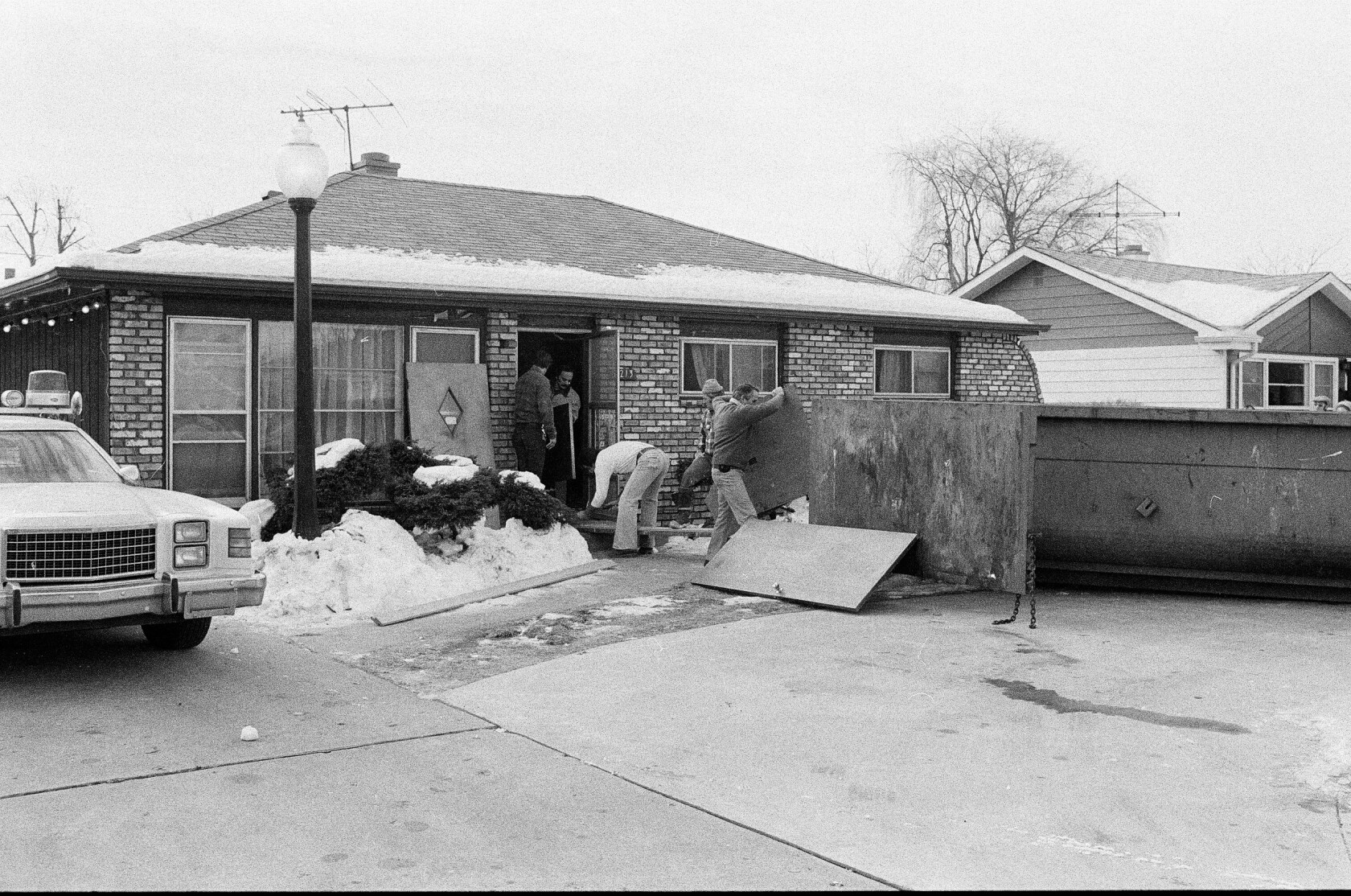
Initial surveillance and a subsequent search warrant of Gacy's residence at 8213 West Summerdale Avenue revealed a receipt from the pharmacy where Piest worked. This physical evidence, combined with the discovery of human remains in the crawl space of the home during a second, more thorough search on December 21, 1978, provided the probable cause necessary for the initial murder charges. While Gacy was initially detained on lesser charges, the recovery of dozens of bodies necessitated a massive expansion of the indictment.
Detailed Breakdown of the Criminal Charges
The legal framework used to prosecute Gacy was designed to ensure that even if some evidence was suppressed, the sheer volume of counts would lead to a life sentence or the death penalty. The primary charges included:
33 Counts of First-Degree Murder
Each count represented a specific individual whose death was attributed to Gacy. Under Illinois law at the time, the prosecution had to prove that Gacy acted with the intent to kill or do great bodily harm. The discovery of 29 bodies buried on Gacy’s property and four bodies recovered from the Des Plaines River formed the physical basis for these counts.
Deviate Sexual Assault
These charges were critical because they established the motive and the "aggravating factors" necessary to seek the death penalty under the Illinois statutes of the late 1970s. The prosecution presented evidence that Gacy used a "handcuff trick" to restrain victims before subjecting them to sexual violence and eventually strangling them.
Aggravated Kidnapping
Because Gacy often used his status as a business owner or a fictitious police officer (utilizing a badge and handcuffs) to lure or force victims into his vehicle and home, kidnapping charges were applied. These charges highlighted the predatory nature of his actions and the lack of consent involved in the transport of the victims to his residence.
The Identification Process and Victimology
One of the greatest challenges for the Cook County State’s Attorney was the identification of the remains. In 1979 and 1980, DNA profiling did not exist. Investigators relied on dental records, X-rays, and physical descriptions. At the time of the trial, several victims remained "John Does," yet Gacy was still charged with their murders based on the location of the remains and the manner of death (typically ligature strangulation).
| Victim Count | Identification Status (as of 2026) | Primary Method of Discovery | Legal Impact |
|---|---|---|---|
| Identified (28) | Known by name (e.g., Robert Piest, James Haakenson) | Dental records, DNA (post-2010), personal effects | Specific murder counts with named victims |
| Unidentified (5) | Remains labeled by number (e.g., Victim #10) | Crawl space recovery | Murder counts based on "Unknown Male" |
| River Recoveries (4) | Identified (e.g., Robert Piest, Timothy O'Rourke) | Des Plaines and Illinois Rivers | Linked Gacy to disposal methods outside the home |
As of 2026, modern forensic genealogy and advanced DNA sequencing have continued to provide names to the previously unidentified victims. The Cook County Sheriff's Office reopened the identification efforts in 2011, leading to the identification of William Bundy, James Haakenson, and Francis Wayne Alexander. These modern developments have not changed the original charges but have provided closure to the families of the victims who were originally listed as "John Doe" in the 1980 indictment.
The Legal Strategy: Prosecution vs. Defense
The trial, People of the State of Illinois v. John Wayne Gacy, began in February 1980. The prosecution, led by Terry Sullivan and William Kunkle, focused on the overwhelming physical evidence and the calculated nature of the crimes. They argued that Gacy was a sane, methodical killer who understood the wrongfulness of his actions.
The Insanity Defense
Gacy’s defense team, led by Robert Motta and Sam Amirante, did not contest that Gacy had killed the 33 young men. Instead, they pursued a "not guilty by reason of insanity" plea. They argued that Gacy suffered from multiple personality disorders and schizophrenia, claiming he was "out of control" during the killings. To support this, they called various psychiatric experts to testify about his mental state.
The Prosecution’s Rebuttal
The State countered this by highlighting Gacy’s ability to run a successful contracting business (PDM Contractors), his involvement in local politics (Democratic precinct captain), and his "clown" performances at charitable events. They argued that a man who could manage complex business logistics and maintain a double life was legally sane. The prosecution famously pointed to the "orderly" way the bodies were buried in the crawl space as evidence of a rational, albeit evil, mind.
Sentencing and the Application of the Death Penalty
On March 12, 1980, the jury deliberated for less than two hours before finding Gacy guilty on all 33 counts of murder. The sentencing phase was particularly significant due to the timing of Illinois’ death penalty laws.
Illinois had reinstated the death penalty in 1977. Because the murders occurred both before and after this reinstatement, the sentencing was split:
- Life Imprisonment: For the murders committed prior to the 1977 statute change, Gacy was sentenced to natural life in prison.
- Death Penalty: For the 12 murders proven to have occurred after the reinstatement of the death penalty (including the murder of Robert Piest), Gacy was sentenced to death by lethal injection.
Gacy spent 14 years on death row at Menard Correctional Center while his legal team exhausted numerous appeals. His defense argued everything from ineffective assistance of counsel to the unconstitutionality of the death penalty. All appeals were eventually denied by the Illinois Supreme Court and the U.S. Supreme Court.
The Execution and Legal Legacy
John Wayne Gacy was executed at Stateville Correctional Center on May 10, 1994. His case remains a landmark in American jurisprudence for several reasons. It prompted significant changes in how missing persons reports involving teenagers are handled by law enforcement, moving away from the "runaway" assumption that allowed Gacy to operate for so long without detection.
Furthermore, the "John Wayne Gacy charges" established a precedent for managing mass-casualty criminal cases. The coordination between the Des Plaines Police Department, the Cook County Sheriff, and the State’s Attorney served as a model for future investigations involving serial offenders. The case also underscored the importance of forensic anthropology and the need for a national database for unidentified remains, which eventually evolved into systems like NamUs.
Frequently Asked Questions
Why was Gacy charged with 33 murders if more victims were suspected?
The 33 charges were based on the specific remains recovered from his property and the nearby rivers. While there has been speculation over the years regarding Gacy’s travels and potential victims in other states, there was insufficient physical evidence to bring additional formal charges that would meet the burden of proof in court.
Did Gacy ever confess to the charges?
Gacy provided several inconsistent "confessions" to investigators following his arrest. He initially admitted to the killings but later retracted these statements, claiming that employees of his contracting firm were responsible for the murders or that the deaths were "accidental" during consensual activities. However, his initial detailed admissions regarding the location of the bodies were used as key evidence against him.
How did the court handle the unidentified victims?
The court allowed the prosecution to file murder charges even for victims whose names were unknown. These victims were identified in the indictment by the sequence in which their remains were recovered (e.g., "Victim #26"). The legal requirement was to prove that a human being had been killed by the defendant, not necessarily to provide a legal name for the deceased.
What were the "aggravated" factors in the Gacy charges?
In Illinois, to qualify for the death penalty, the prosecution had to prove specific aggravating factors. In Gacy’s case, these included the fact that he had murdered more than one person and that the murders were committed during the course of another felony, specifically deviate sexual assault and aggravated kidnapping.
Are there still active investigations related to these charges?
While Gacy is deceased, the Cook County Sheriff’s Office maintains an active effort to identify the remaining "John Doe" victims using modern DNA technology. These are not "new" charges but rather an effort to complete the historical record and return remains to families.
Practical Considerations for Historical Research
For those researching the John Wayne Gacy charges for legal or academic purposes, the official trial transcripts are housed within the Cook County Circuit Court archives. These documents provide the most accurate account of the evidence presented, including the forensic reports from the 1970s. When reviewing these materials, it is essential to distinguish between contemporary media reports and the actual evidence admitted into the court record, as Gacy often attempted to manipulate the narrative through interviews during his time on death row.
Next Action: To understand the forensic evolution of this case, researchers should review the 2011 reopening of the Gacy victim identification project by the Cook County Sheriff's Office, which demonstrates how modern science can resolve decades-old "John Doe" designations within a closed criminal case.
Image Gallery