How Did Dean Corll Die? The Fatal Shooting of the "Candy Man"
Dean Corll, the notorious serial killer responsible for the Houston Mass Murders, died on August 8, 1973, after being shot six times by his 17-year-old accomplice, Elmer Wayne Henley Jr. The shooting took place at Corll’s residence in...
Dean Corll, the notorious serial killer responsible for the Houston Mass Murders, died on August 8, 1973, after being shot six times by his 17-year-old accomplice, Elmer Wayne Henley Jr. The shooting took place at Corll’s residence in Pasadena, Texas, during a violent confrontation where Corll threatened to kill Henley and two other teenagers.
Contents
The death of Dean Corll brought an abrupt end to one of the most prolific and horrifying killing sprees in American history. For three years, Corll—often referred to as the "Candy Man" because his family owned a local candy company—had systematically abducted, tortured, and murdered at least 28 young boys and men. His death did more than just stop a killer; it led to the immediate discovery of a massive forensic crime scene that shocked the nation and fundamentally changed how law enforcement approached missing persons cases involving teenagers.
The Background of the Houston Mass Murders
To understand how and why Dean Corll died, one must first understand the environment he created. Between 1970 and 1973, Corll operated with a level of impunity that modern investigators find staggering. He recruited two teenage accomplices, David Owen Brooks and Elmer Wayne Henley Jr., to lure their peers to his home with promises of parties, drugs, or transportation.
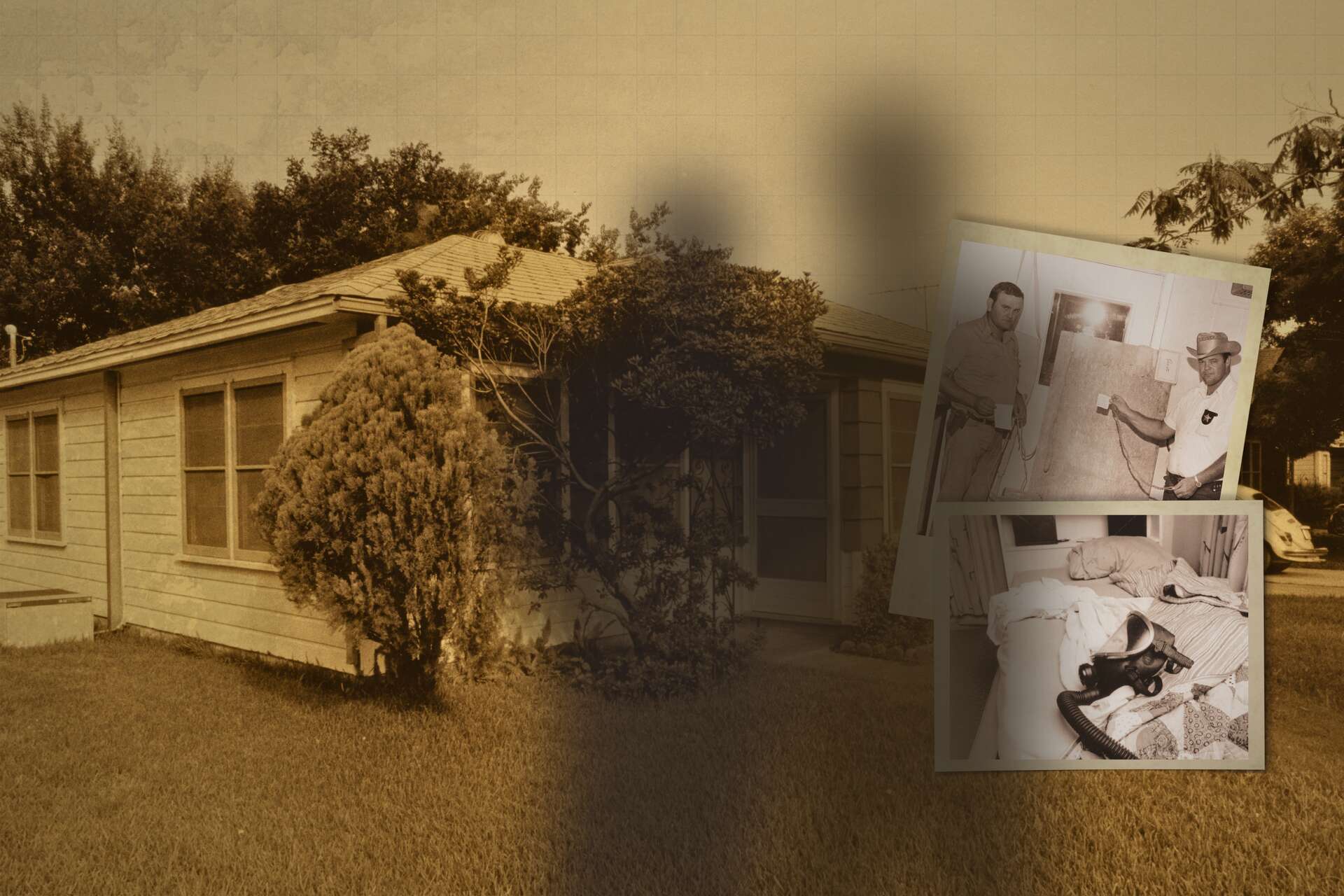
Corll’s "Candy Man" persona was a thin veil of respectability. He was known for being generous with candy and electronics, making him a fixture in the lives of many neighborhood children. However, behind closed doors, he employed a custom-made torture board and followed a meticulous pattern of abuse. Because many of the victims were from working-class families or were considered "runaways" by the police at the time, their disappearances were often dismissed by the Houston Police Department, allowing Corll to continue his crimes for years.
By mid-1973, the tension between Corll and his primary accomplice, Wayne Henley, had reached a breaking point. Henley, who had participated in the abductions and murders, began to feel the weight of Corll’s escalating volatility. This internal friction set the stage for the final confrontation in Pasadena.
The Fatal Confrontation: August 8, 1973
On the evening of August 7, 1973, Wayne Henley brought two other teenagers to Corll’s home at 2020 Lamar Drive in Pasadena: 15-year-old Timothy Kerley and 18-year-old Rhonda Williams. Henley later testified that he had intended to "party" and did not initially plan for them to become victims. However, bringing "outsiders" to the house without Corll’s explicit permission was a violation of Corll’s strict rules of secrecy.
The Escalation of Violence
When Corll arrived at the house and found the two additional teenagers, he was reportedly furious. Despite his initial anger, the group spent several hours huffing acrylic paint fumes, a common practice Corll used to incapacitate his victims. As the night progressed into the early morning hours of August 8, Corll’s demeanor shifted from agitation to lethal intent.
While Williams and Kerley were semi-conscious or asleep, Corll produced his "torture board" and began to restrain them. He also turned his wrath toward Henley, accusing him of betraying their arrangement and threatening to kill him alongside the others. Corll reportedly told Henley, "I’m going to kill you, too."
The Shooting
In a desperate bid for survival, Henley attempted to bargain with Corll. He convinced Corll that he was still loyal and offered to help Corll torture and kill Kerley and Williams. This manipulation worked long enough for Corll to relax his guard. Henley managed to gain access to Corll’s .22-caliber semi-automatic pistol.
As Corll moved toward the bedroom where the victims were restrained, Henley leveled the firearm at him. Corll, realizing the shift in power, allegedly dared Henley to shoot, saying something to the effect of "Kill me, Wayne." Henley fired six shots in rapid succession. Corll was struck in the chest, shoulder, and back. He collapsed on the floor of the hallway and died almost instantly.
Immediate Aftermath and the Call to Police
After shooting Corll, Henley was in a state of shock, but he took immediate action to free the surviving victims. He untied Rhonda Williams and Timothy Kerley, who fled the house. Henley then called the Pasadena Police Department to report the shooting.
When officers arrived at the scene, they found Henley standing outside the house. He admitted to the shooting immediately, claiming self-defense. At first, the police treated the incident as a localized homicide involving a dispute between a man and a teenager. However, as Henley began to talk, the scale of the horror became apparent.
Henley told the investigators that Corll had killed many other boys and offered to show them where the bodies were buried. This led the police to a rented boat storage unit (Shed 11 at 1700 West Belt Drive), where Corll had buried many of his victims beneath a layer of lime and dirt.
Forensic Findings
The autopsy of Dean Corll confirmed that he died from multiple gunshot wounds. Specifically, four bullets entered his chest, one hit his shoulder, and one struck his back. The use of a .22-caliber weapon meant the wounds were not immediately "explosive," but the volume of shots fired at close range ensured the damage to his vital organs was fatal. There was no evidence of significant struggle on Corll's part once the shooting began, suggesting he was caught off guard by Henley’s sudden defiance.
Key Facts of the Death of Dean Corll
| Feature | Details |
|---|---|
| Date of Death | August 8, 1973 |
| Time of Incident | Approximately 8:00 AM |
| Location | 2020 Lamar Drive, Pasadena, Texas |
| Cause of Death | Multiple gunshot wounds (6 total) |
| Weapon Used | .22-caliber semi-automatic pistol |
| Shooter | Elmer Wayne Henley Jr. |
| Immediate Witness(es) | Rhonda Williams, Timothy Kerley |
| Post-Mortem Status | Buried in a local cemetery; case closed by death |
Why Was Dean Corll Not Arrested Sooner?
The death of Dean Corll by the hand of his accomplice highlights a major failure in 1970s law enforcement. Because Corll died before he could be interrogated, many questions regarding his full victim count and potential other accomplices remained unanswered for decades.
As of 2026, criminal justice historians point to several factors that allowed Corll to remain free until his death:
- Victim Profiling: The victims were often from lower-income backgrounds. Police at the time frequently classified missing boys as "runaways" to avoid the paperwork and resources required for abduction investigations.
- Corll’s Demeanor: He was a military veteran and a business owner. He did not "look" like the contemporary stereotype of a serial killer.
- Jurisdictional Gaps: Corll committed crimes in Houston but lived in Pasadena. The lack of communication between these police departments allowed the patterns of disappearances to go unnoticed.
The Legal Fate of the Accomplices
Because Dean Corll died, he never faced a courtroom. However, his accomplices did. The death of Corll triggered a massive investigation that eventually resulted in the recovery of 28 bodies, though some investigators believe the number could be higher.
Elmer Wayne Henley Jr.
Despite his claim that he killed Corll in self-defense and to save the other two teenagers, Henley was charged for his role in the previous 27 murders. He was convicted in 1974 and received six consecutive terms of 99 years. As of 2026, Henley remains incarcerated in the Texas Department of Criminal Justice system, having been repeatedly denied parole over the last several decades.
David Owen Brooks
David Brooks, the accomplice who first introduced Henley to Corll, was also convicted. He was sentenced to life in prison. Brooks died in prison in 2020 due to complications from COVID-19. His death ended any hope that he might provide more information about unidentified victims or additional burial sites.
The Long-Term Impact of Corll’s Death
Dean Corll’s death was the catalyst for the "Houston Mass Murders" becoming a national scandal. It led to significant reforms in how missing children cases are handled in the United States.
The case influenced the creation of the Texas Department of Public Safety’s missing persons clearinghouse and contributed to the eventual development of the National Center for Missing & Exploited Children (NCMEC). The realization that a killer could hide in plain sight for years, aided by police indifference toward "runaways," sparked a movement for better advocacy for missing youth.
In the decades following his death, Corll has remained a subject of intense psychological study. Criminologists use his case to understand the dynamics of "procurer-killer" relationships, where a dominant figure uses younger accomplices to facilitate crimes.
FAQs About Dean Corll's Death
Did Wayne Henley get in trouble for killing Dean Corll?
While Henley initially claimed self-defense for the shooting of Dean Corll, the subsequent investigation revealed his active participation in Corll's previous murders. Henley was not prosecuted specifically for Corll’s death as a murder—given the circumstances of Corll's threats against the teenagers—but he was convicted for his role in the deaths of the victims he helped Corll kidnap and kill.
What happened to the house where Dean Corll died?
The house at 2020 Lamar Drive in Pasadena, Texas, where Corll was killed, remained standing for many years. It has been a site of morbid curiosity for true-crime enthusiasts. However, like many locations associated with high-profile serial killings, the property has changed hands multiple times, and the neighborhood has evolved significantly since 1973.
Were there any other survivors on the day Corll died?
Yes. Rhonda Williams and Timothy Kerley were the two teenagers present at Corll’s home on the morning of August 8, 1973. Both were bound and threatened with death, but they survived because Henley turned the gun on Corll. Their testimony was crucial in the trials of Henley and Brooks.
Where is Dean Corll buried?
Dean Corll is buried in the Corll family plot at a cemetery in the Houston area. Unlike his victims, who were buried in shallow graves and boat sheds, Corll received a private burial. His grave has occasionally been a target for vandalism due to the nature of his crimes.
How many people did Dean Corll kill before he died?
Officially, 28 victims were identified following the discovery of the mass graves. However, because of Corll’s death and the limited information provided by his accomplices before their deaths or during their incarceration, some investigators suspect there may be more victims who were never found.
Final Perspective
The death of Dean Corll remains a unique moment in the annals of true crime. It is one of the few instances where a prolific serial killer was stopped mid-act by one of his own associates. While the shooting on August 8, 1973, ended the immediate threat to the youth of Houston, it also left a legacy of trauma and unanswered questions that continue to be felt by the victims' families and the community more than 50 years later. As of 2026, the case serves as a grim reminder of the importance of vigilant law enforcement and the dangers of societal indifference toward vulnerable populations.
Image Gallery