Medicaid Eligibility Requirements in NM: 2026 Comprehensive Guide
To qualify for Medicaid in New Mexico, currently known as Turquoise Care, applicants must meet specific criteria regarding residency, citizenship, and financial need. Eligibility is primarily determined by your household’s Modified Adj...
To qualify for Medicaid in New Mexico, currently known as Turquoise Care, applicants must meet specific criteria regarding residency, citizenship, and financial need. Eligibility is primarily determined by your household’s Modified Adjusted Gross Income (MAGI) relative to the Federal Poverty Level, though separate asset-based rules apply to seniors and individuals with disabilities.
Contents
New Mexico has long been a leader in healthcare expansion, providing comprehensive coverage to hundreds of thousands of residents. In 2026, the state continues to operate under the Turquoise Care model, which integrated previous managed care systems into a more streamlined experience. Administered by the New Mexico Health Care Authority (HCA)—the successor to the Human Services Department—the program provides essential medical services, including doctor visits, hospital stays, prescriptions, and long-term care. Understanding the nuances of these requirements is essential for securing and maintaining coverage.
Fundamental Non-Financial Requirements
Before evaluating income or assets, every applicant must satisfy basic demographic and legal criteria. These "categorical" requirements establish your link to the state of New Mexico and your legal status within the United States.
Residency and Identity
You must be a current resident of New Mexico. There is no minimum duration of residency required; however, you must intend to remain in the state or have entered with a job commitment. Applicants are generally required to provide proof of identity, such as a driver's license or state ID, and proof of residency, such as utility bills or a lease agreement.
Citizenship and Immigration Status
Medicaid is available to U.S. citizens and "qualified non-citizens." This includes lawful permanent residents (Green Card holders) who have generally been in the country for at least five years, though this five-year waiting period is waived for certain groups, such as refugees, asylees, and pregnant women. In 2026, New Mexico continues to provide state-funded "Medicaid-equivalent" coverage for certain immigrant groups who do not meet federal citizenship requirements, ensuring broad access to care.
Social Security Numbers
Most applicants must provide a Social Security Number (SSN) or proof that they have applied for one. This allows the HCA to verify income through automated data matches with the Internal Revenue Service (IRS) and the Social Security Administration (SSA).
Income Eligibility for MAGI Groups
For most adults, children, and pregnant women, eligibility is determined using Modified Adjusted Gross Income (MAGI) rules. These rules, established by the Affordable Care Act, focus on taxable income and household size rather than total assets or savings.
The Medicaid Expansion for Adults
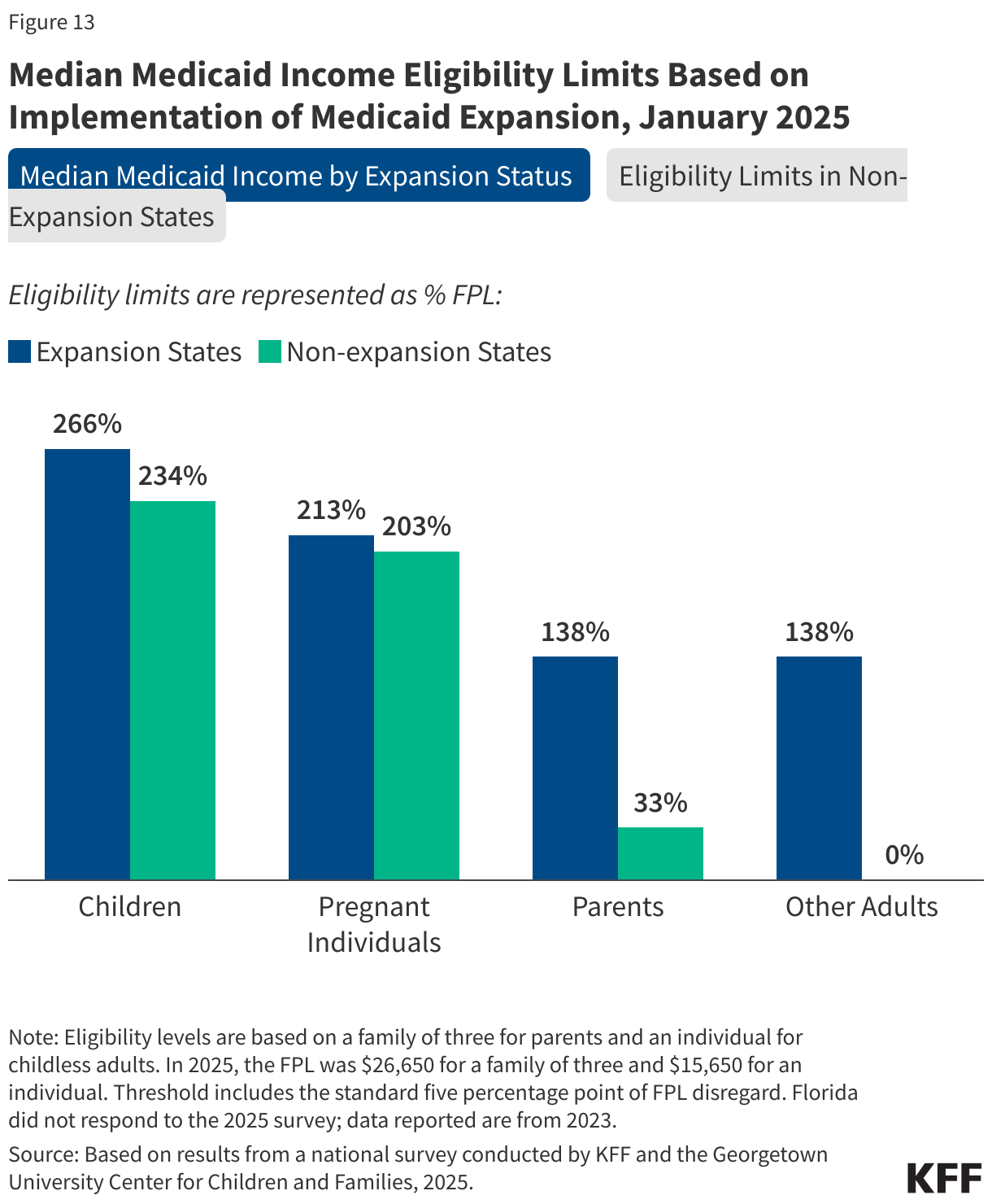
New Mexico is an expansion state, meaning adults aged 19 to 64 who are not eligible for Medicare can qualify based solely on income. For 2026, the income limit for this group is 138% of the Federal Poverty Level (FPL). This expansion covers low-income workers, parents, and childless adults who might otherwise fall into a coverage gap.
Coverage for Children (NM Kids)
The state prioritizes healthcare for minors through higher income thresholds. Children in households with incomes up to approximately 300% of the FPL may qualify for either full Medicaid or the Children’s Health Insurance Program (CHIP). Because these limits are higher than those for adults, it is common for children in a family to qualify for Medicaid even if the parents do not.
Pregnant Women
To ensure healthy birth outcomes, New Mexico offers expanded eligibility for pregnant individuals. The income limit for this group typically extends to 250% of the FPL. Coverage includes prenatal care, delivery, and postpartum care. As of 2026, New Mexico maintains its commitment to 12 months of continuous postpartum coverage, ensuring mothers have access to mental health and physical recovery services long after childbirth.
Income and Asset Limits for Aged, Blind, and Disabled (ABD)
Eligibility requirements change significantly for residents who are 65 or older, or those who have a qualifying disability. These "Non-MAGI" groups are subject to both income limits and asset (resource) limits.
Income Limits for ABD
For individuals receiving Supplemental Security Income (SSI), Medicaid eligibility is often automatic. However, for those not on SSI, the income limit is generally pegged to 100% of the FPL. New Mexico also offers the Working Disabled Individuals (WDI) program, which allows people with disabilities who are employed to earn significantly more—up to 250% of the FPL—while maintaining Medicaid coverage by paying a small monthly premium.
Asset Limits and Resource Standards
Unlike the adult expansion group, ABD applicants must prove that their "countable resources" fall below a specific threshold. For a single individual, this limit is usually $2,000, and for a couple, it is $3,000.
Countable resources include:
- Cash and checking/savings accounts.
- Stocks, bonds, and mutual funds.
- Secondary vehicles.
- Real estate other than the primary residence.
Excluded resources include:
- The primary home (up to a certain equity value, generally around $713,000 in 2026).
- One vehicle used for transportation.
- Personal effects and household goods.
- Certain burial funds or prepaid funeral contracts.
Long-Term Care and the "Look-Back" Period
For those seeking Medicaid coverage for nursing home care or Home and Community-Based Services (HCBS), the HCA performs a rigorous financial review. This includes a 60-month look-back period. Any assets transferred or gifted for less than fair market value within the five years prior to application can result in a "transfer penalty," delaying eligibility for long-term care services.
| Household Size | Adult Expansion (138% FPL) | Children's Coverage (Approx. 300% FPL) | Pregnant Women (250% FPL) |
|---|---|---|---|
| 1 | $21,120 | $45,180 | $37,650 |
| 2 | $28,620 | $61,260 | $51,050 |
| 3 | $36,120 | $77,340 | $64,450 |
| 4 | $43,620 | $93,420 | $77,850 |
| 5 | $51,120 | $109,500 | $91,250 |
| Estimated 2026 figures; actual FPL levels are updated annually by the federal government. |
The Application Process in New Mexico
Applying for Medicaid in NM has been centralized through the YesNM portal, which is now part of the unified New Mexico Health Care Authority digital infrastructure. Residents have several pathways to submit an application.
Online Applications
The most efficient method is using the YesNM Portal. The system allows users to create an account, upload supporting documents (like pay stubs or ID), and track their application status in real-time. In 2026, the portal features enhanced AI-driven assistance to help applicants categorize their income correctly.
In-Person and Telephone Applications
For those who prefer face-to-face assistance, HCA Field Offices are located in nearly every county, from Bernalillo to Doña Ana. Applicants can also apply over the phone by calling the Consolidated Customer Service Center at 1-800-283-4465.
Required Documentation
To prevent delays, applicants should gather the following before starting:
- Proof of Income: Pay stubs for the last 30 days, award letters for unemployment, or tax returns if self-employed.
- Identity: Birth certificate, U.S. passport, or driver's license.
- Immigration Status: Permanent Resident Card (Green Card) or other USCIS documents.
- Health Insurance: Information about any current employer-sponsored insurance.
- Expenses: For certain categories, proof of childcare costs or high medical bills can be used to "spend down" income.
Maintaining Coverage and Renewals
Medicaid is not a "set it and forget it" program. Eligibility is typically reviewed every 12 months through a process called Recertification.
Annual Renewals
The HCA will first attempt an "ex parte" renewal, which means they use existing data from the Department of Workforce Solutions and the SSA to verify income automatically. If they can confirm you are still eligible, you will receive a notice stating your coverage has been renewed. If they cannot verify your status, they will mail you a renewal packet. Failure to return this packet by the deadline is the leading cause of coverage loss in New Mexico.
Reporting Changes
Participants are legally required to report changes in their circumstances within 10 days. This includes:
- Changes in household income (raises, new jobs, or loss of employment).
- Changes in household size (births, deaths, marriage, or divorce).
- Moving to a new address.
- Gaining access to other health insurance.
Common Mistakes to Avoid
Navigating Medicaid eligibility requirements in NM can be complex, and small errors often lead to denials.
- Underreporting Household Members: MAGI is based on the "tax household." Even if someone living with you isn't a relative, if they are on your tax return, they count. Conversely, if you live with family but file taxes separately, your income limits are calculated differently.
- Ignoring Asset Limits for ABD: Many seniors assume they qualify because their Social Security income is low, forgetting that a secondary property or a large savings account will disqualify them.
- Missing the Renewal Window: Always ensure your mailing address is up to date with the HCA. Many residents lose coverage simply because their renewal forms were sent to an old address.
- Self-Employment Confusion: Self-employed individuals should report their net income (after business expenses), not their gross receipts. Reporting gross receipts often makes income appear higher than it actually is.
FAQ: Frequently Asked Questions
Can I have Medicaid and a job at the same time in New Mexico?
Yes. There is no requirement to be unemployed. As long as your total household income remains below the 138% FPL limit (for adults), you can work and maintain Medicaid. In 2026, many Turquoise Care members are "working poor" residents who use Medicaid as their primary or secondary insurance.
What happens if my income is just over the limit?
If your income exceeds Medicaid limits, your application will automatically be forwarded to beWellnm, New Mexico’s Health Insurance Exchange. You may qualify for significant subsidies (Advance Premium Tax Credits) that make private insurance plans very affordable, sometimes with premiums as low as $0 per month.
Is there a "spend down" program in New Mexico?
New Mexico offers a "Medically Needy" program for certain groups, such as children or pregnant women, allowing them to qualify if their medical expenses are high enough to reduce their effective income below the limit. However, this is generally not available for the standard adult expansion group.
Does Medicaid in NM cover dental and vision for adults?
Under Turquoise Care, Medicaid in New Mexico provides comprehensive benefits for adults, which includes preventive dental care and vision exams. This is more generous than many other states, which limit adult Medicaid to "emergency-only" dental services.
Can I own a car and still get Medicaid?
Yes. Under MAGI rules (for adults 19-64, children, and pregnant women), the value of your car does not matter. For the Aged, Blind, and Disabled (ABD) category, one vehicle is completely excluded from the asset limit regardless of its value, provided it is used for transportation.
Practical Recommendation
If you are unsure of your eligibility, the best course of action is to apply anyway. New Mexico’s system is designed to screen applicants for multiple programs simultaneously. Even if you do not qualify for full Medicaid, you may be eligible for limited-benefit programs or subsidized private plans through beWellnm. Visit the HCA Website to begin the screening process or find a local enrollment counselor who can provide free, one-on-one assistance.
Image Gallery