Round Rug Geometric Design Explained: Visual Harmony, Patterns, and Room Styling
A geometric design on a round rug combines structured shapes—such as grids, concentric rings, or radial polygons—with a circular perimeter. This synthesis balances rigid linear forms against soft outer boundaries, creating a strong vis...
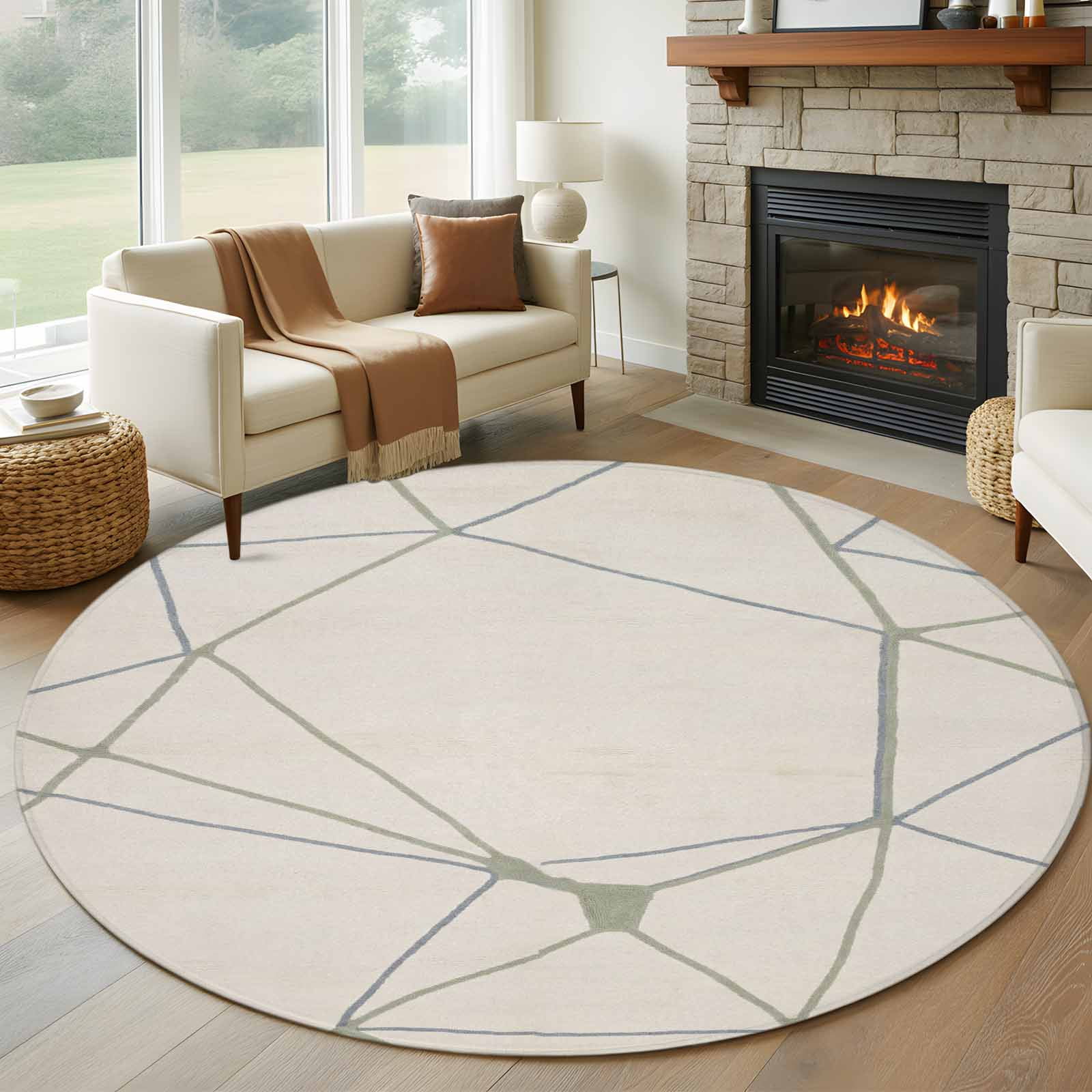
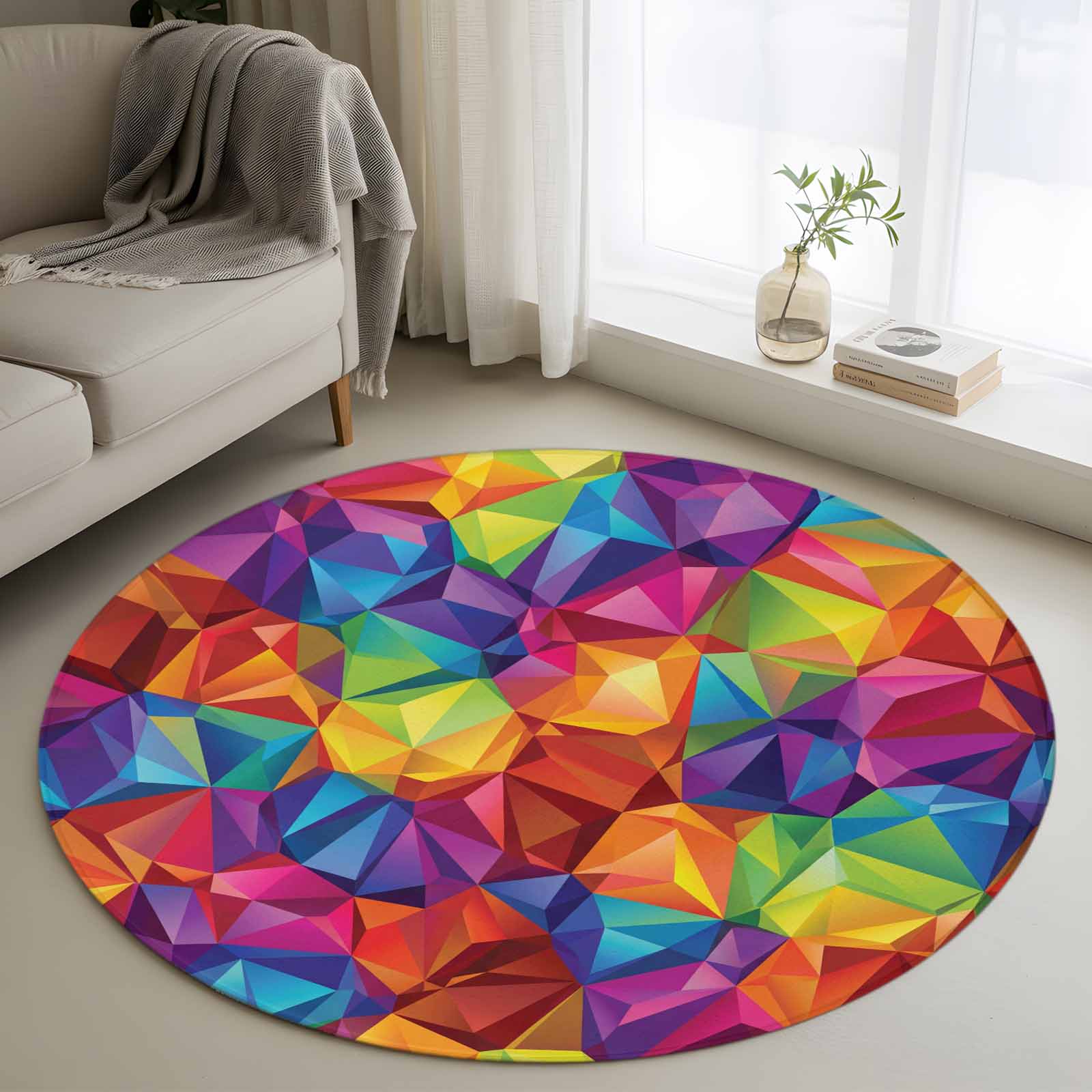
A geometric design on a round rug combines structured shapes—such as grids, concentric rings, or radial polygons—with a circular perimeter. This synthesis balances rigid linear forms against soft outer boundaries, creating a strong visual focal point that anchors furniture arrangements, softens rectangular architecture, and directs movement within interior spaces.
Contents
Understanding how geometric patterns behave within a circular boundary requires examining visual weight, scale, textile construction, and architectural harmony. Geometric round rugs serve as versatile floor coverings, bridging modern minimalism, traditional art forms, and transitional interior design styles.
The Interplay of Geometry and Circular Silhouettes
The primary aesthetic appeal of a round geometric rug lies in the tension between straight lines and curved edges. Most modern rooms feature predominantly rectangular geometry: straight walls, square windows, boxy sofas, and right-angled cabinetry. A standard rectangular rug reinforces these sharp corners, whereas a round rug breaks up rigid room boundaries by introducing an organic curve.
When geometric motifs—such as triangles, diamonds, linear grids, or chevron stripes—are placed inside a circular frame, they create a distinct visual dynamic:
- Dynamic Contrast: The sharp angles of internal shapes push outward against the fluid edge of the circle, drawing the viewer's eye across the entire rug surface.
- Radial Centering: Patterns that expand outward from the rug's center create a natural focal point, making the space feel grounded and intentional.
- Visual Movement: Asymmetrical or linear geometries within a circle guide sightlines across a room, creating a sense of motion rather than static placement.
By framing precise angles within a rounded boundary, these rugs act as visual anchors, softening harsh room geometry while maintaining architectural structure.
Major Geometric Pattern Archetypes for Round Rugs
Geometric round rugs are not limited to one artistic style. The pattern archetype determines how the rug interacts with surrounding furniture, ambient light, and floor surfaces.
1. Radial and Concentric Motifs
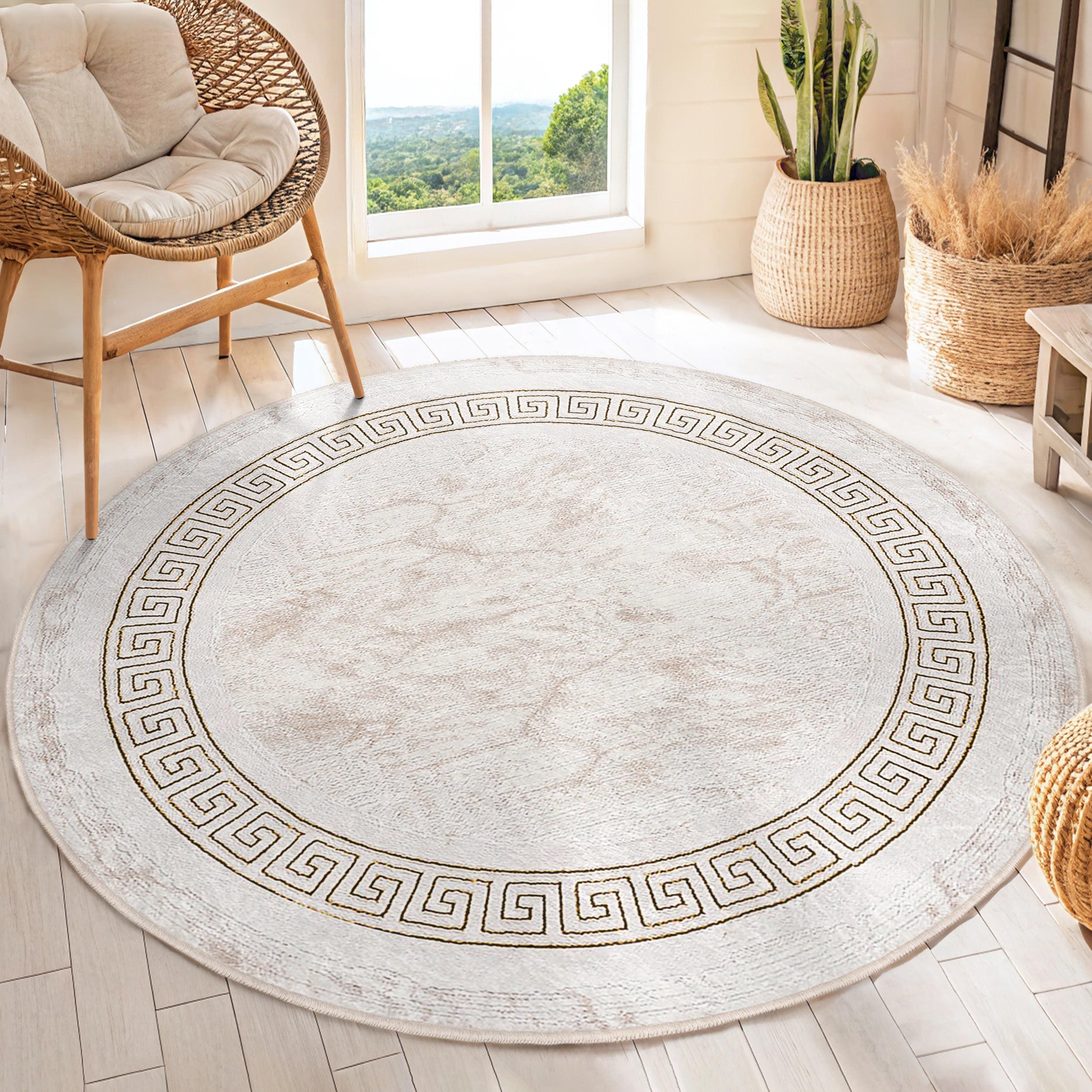
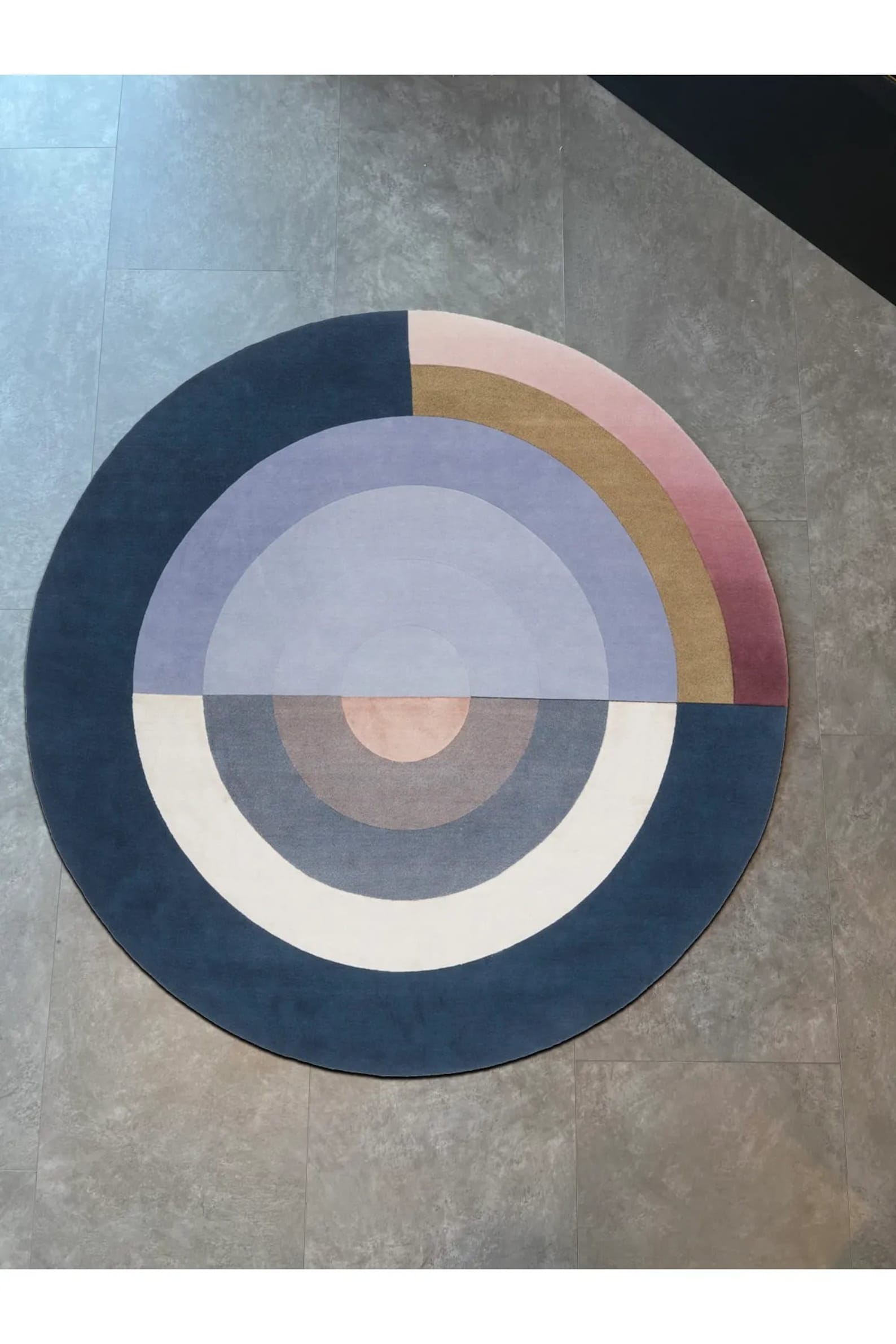
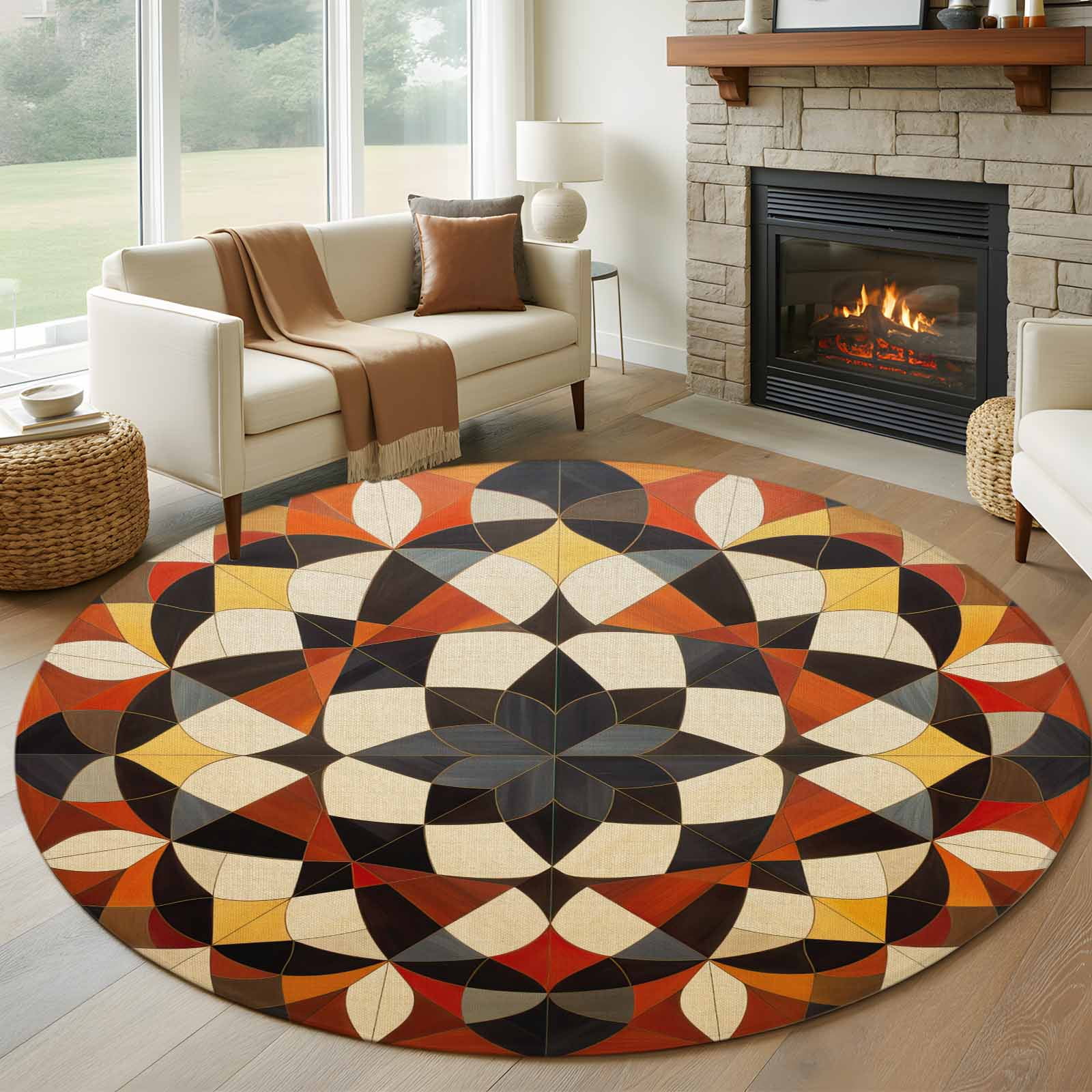
Radial patterns originate from a single central point and radiate toward the outer edge. Concentric motifs consist of nested circles, rings, or repeating polygons that echo the rug's perimeter.
- Visual Characteristics: Symmetrical, balanced, and inherently harmonious with the round shape.
- Design Function: These designs accentuate the circular nature of the rug. They work exceptional well under round coffee tables, dining tables, or in wide foyers where the center of the rug remains visible.
- Artistic Roots: Frequently seen in traditional mandalas, sunburst designs, mid-century modern circular graphics, and modern minimalist ring concepts.
2. Linear Grids, Trellis, and Diamond Tessellations
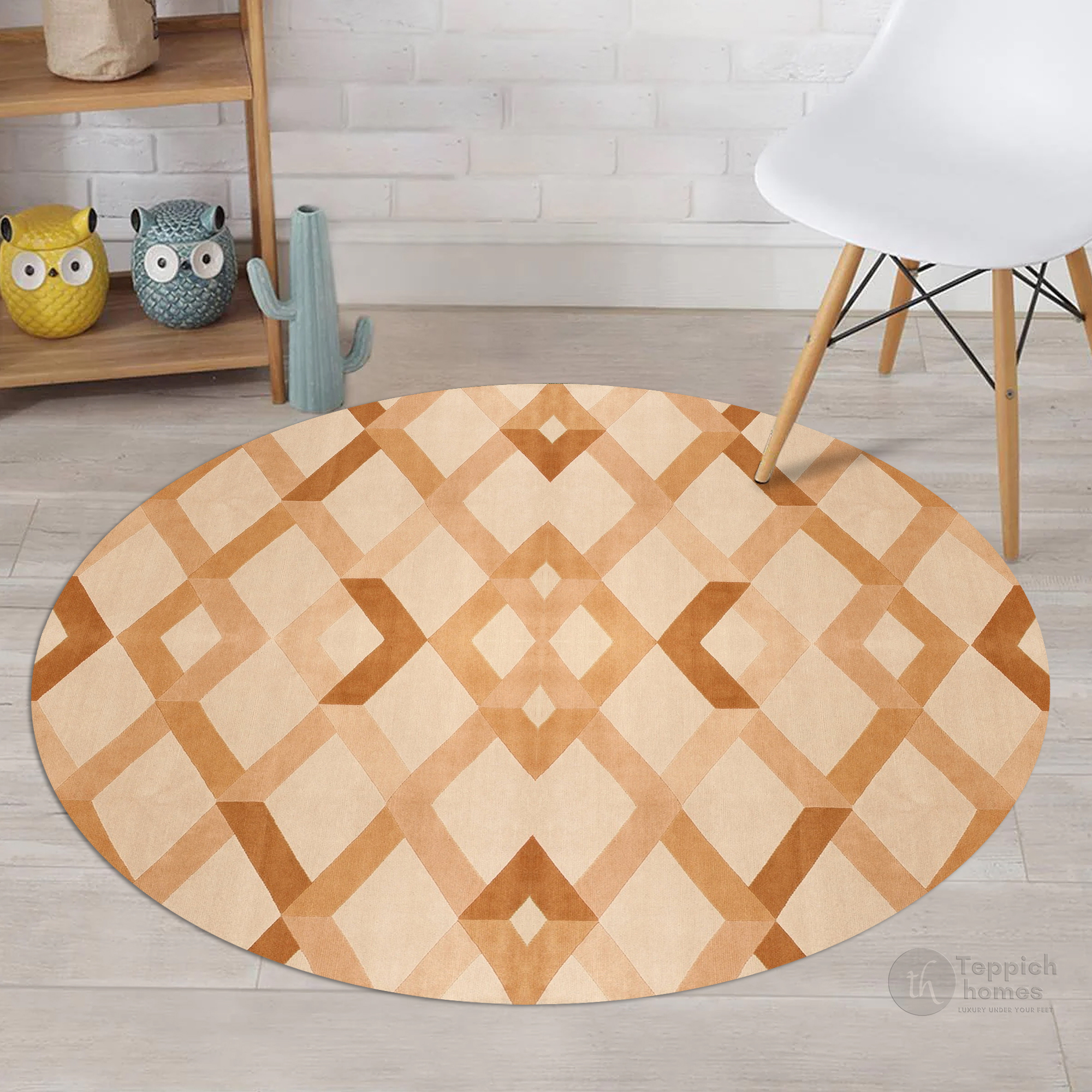
These designs superimpose repeating linear networks—such as Moroccan-style diamond lattices, windowpane grids, or intersecting diagonals—onto a round canvas.
- Visual Characteristics: The geometric pattern is truncated by the circular border, creating an intriguing cropped effect where lines terminate at varying angles along the perimeter.
- Design Function: Linear grids introduce structural order to open floor plans. They prevent round rugs from feeling overly soft or bohemian, adding a modern architectural edge.
- Artistic Roots: Derived from traditional Berber weaving, Bauhaus structural design, and mid-century modern linear art.
3. Mid-Century and Modernist Abstractions
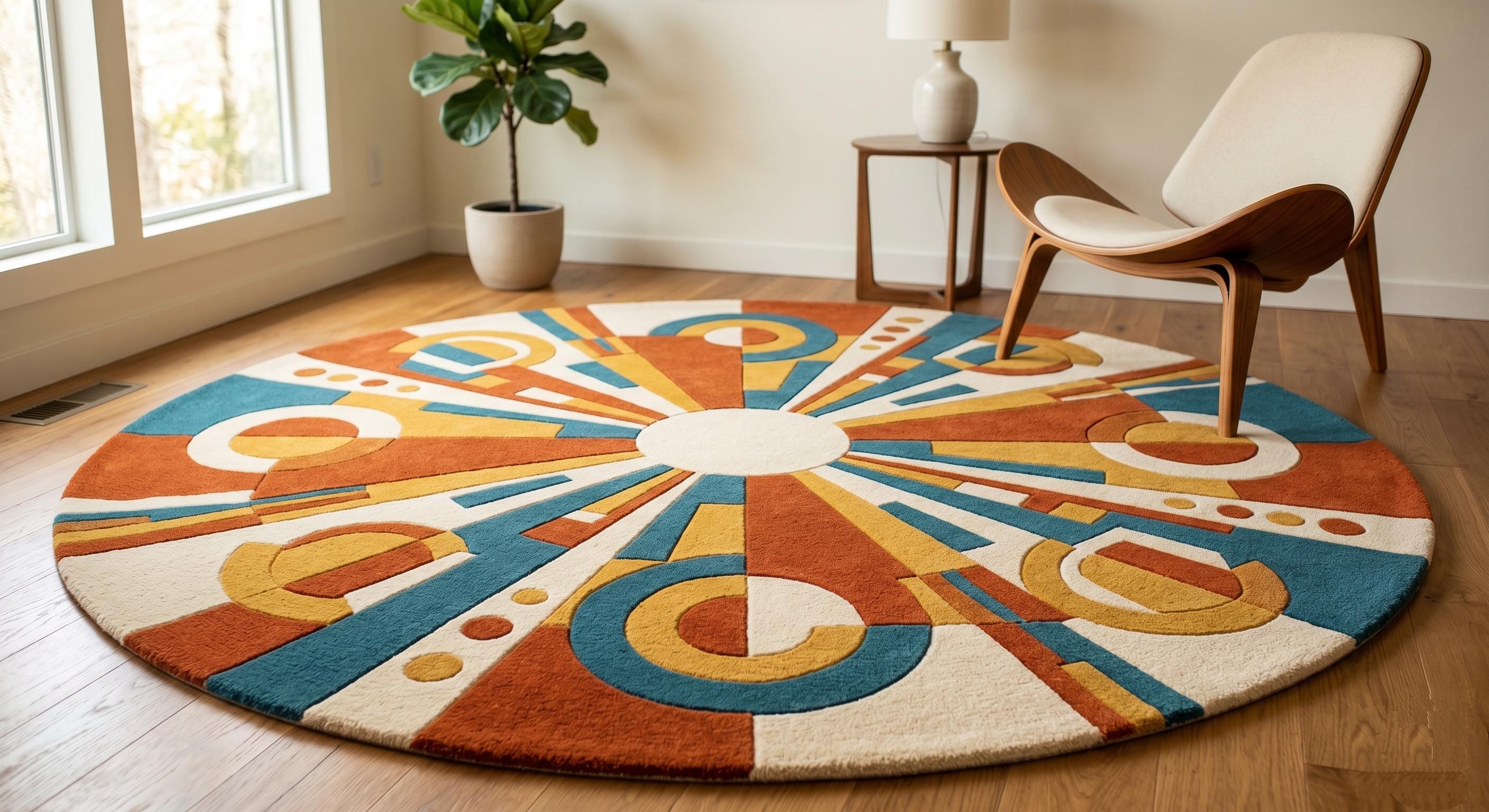
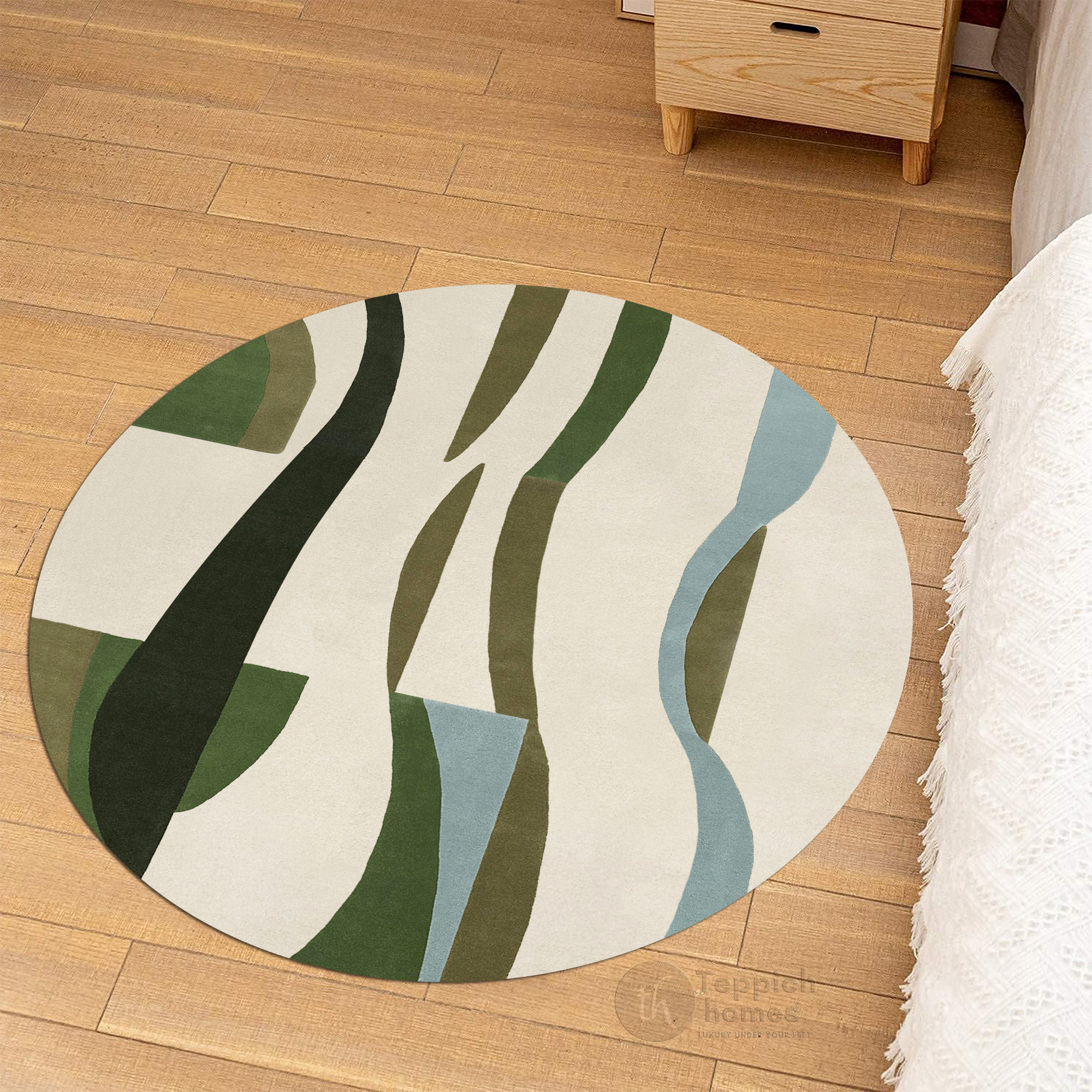
Modernist geometric round rugs feature asymmetrical arrangements of geometric primitives—such as half-circles, intersecting arcs, overlapping polygons, and block-color wedges.
- Visual Characteristics: Bold, artistic, and often high-contrast, functioning effectively as floor art.
- Design Function: These patterns draw attention directly to the floor. They work best in minimalist or mid-century interiors where furniture profiles are clean, elevated on thin legs, and uncluttered.
- Artistic Roots: Inspired by De Stijl, Abstract Expressionism, and mid-century graphic design movements.
4. Optical Art and 3D Sculpted Lines
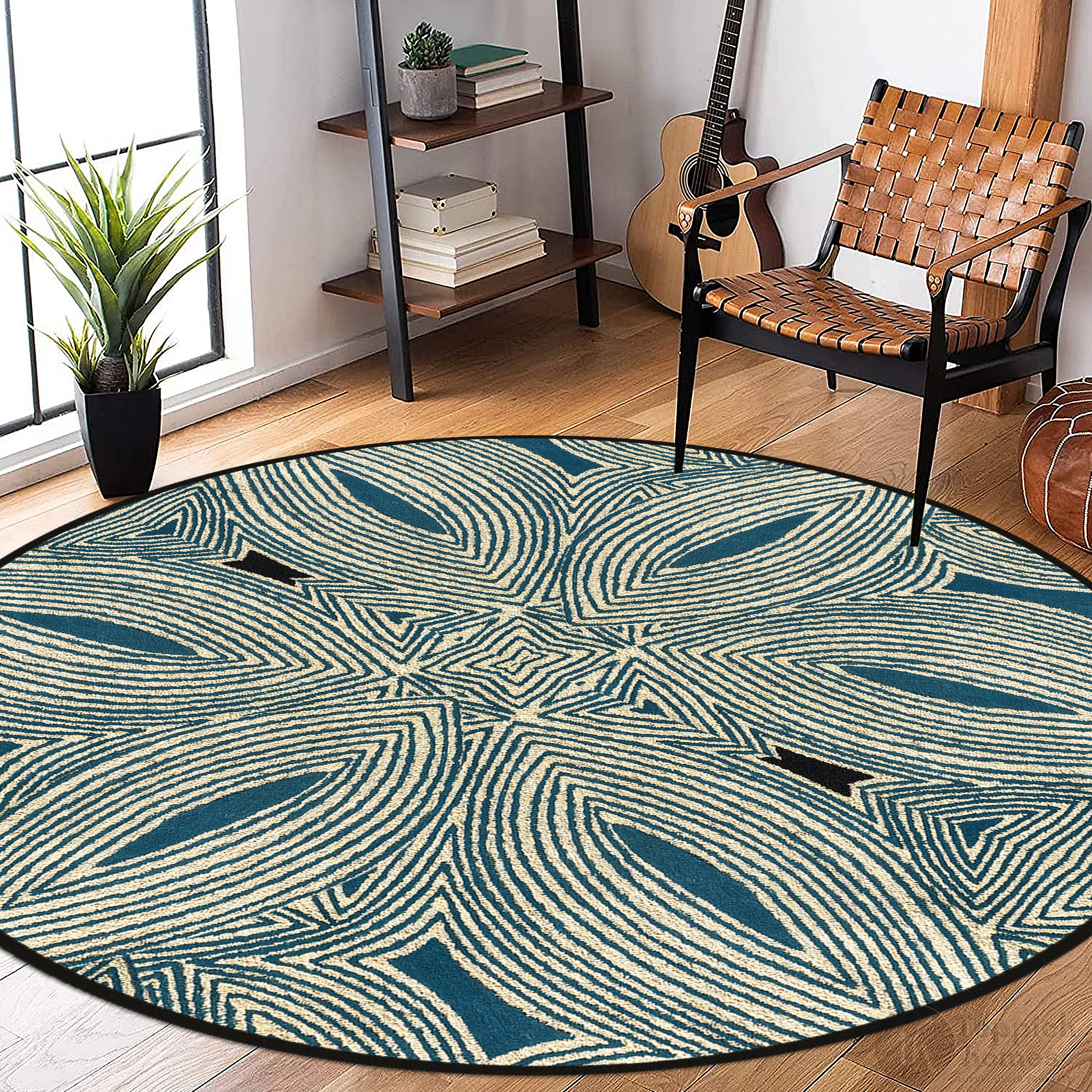
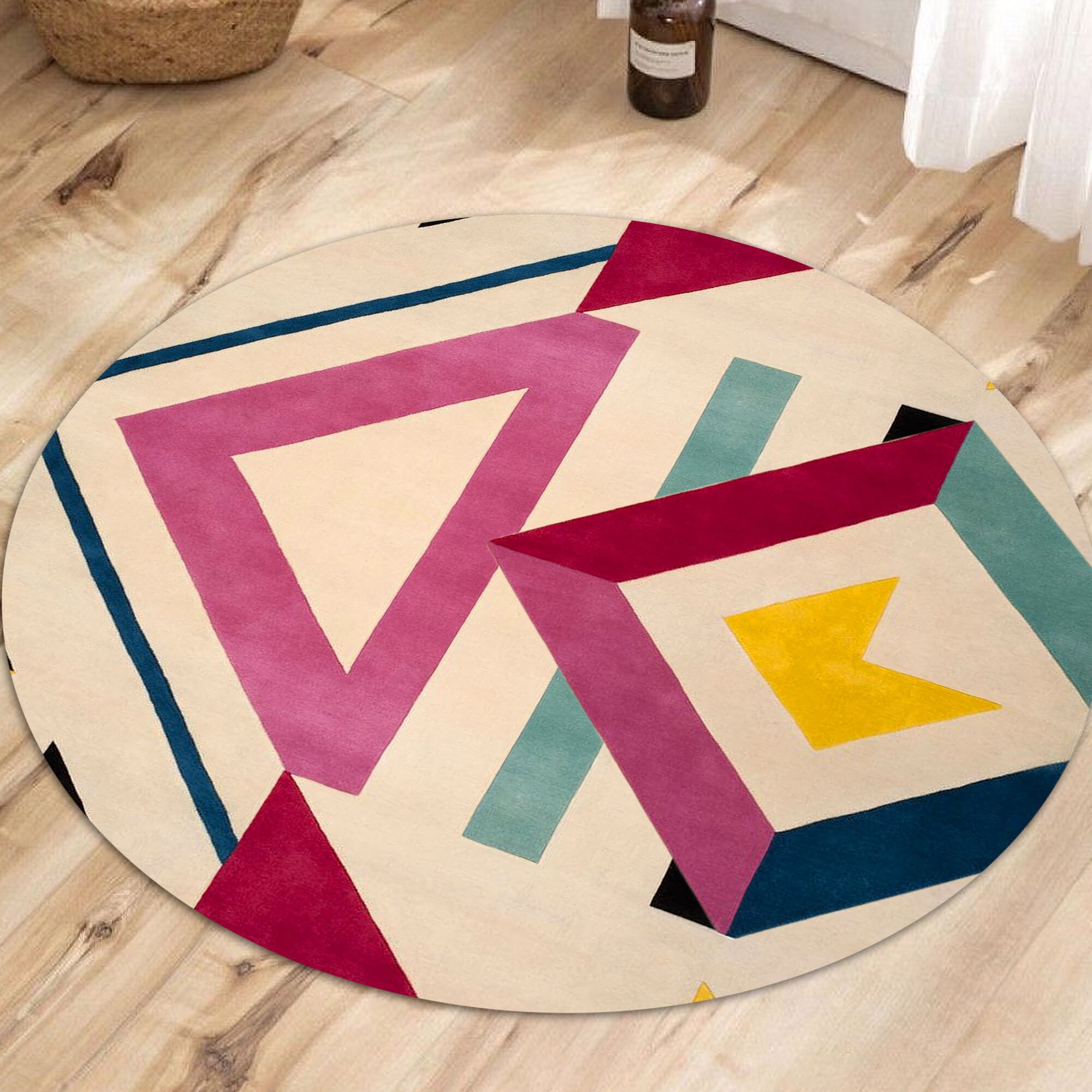
Using contrasting color values or carved tufting techniques, optical geometric rugs create an illusion of depth, three-dimensionality, or movement.
- Visual Characteristics: Receding lines, cube tessellations, and carved channels that play with light and shadow.
- Design Function: Adds physical and visual texture to quiet spaces like home offices, bedrooms, or reading nooks.
How Scale, Line Weight, and Color Contrast Shape Room Perception
The success of a round geometric rug depends heavily on three variables: pattern scale, line thickness, and color contrast.
Visual Impact Variables in Geometric Round Rugs:
- Pattern Scale
- Large-Scale: Expands room, anchors large furniture
- Micro-Scale: Adds texture, ideal for compact spaces
- Line Weight
- Thick/Carved: Architectural structure, bold presence
- Fine Lines: Subtle framing, delicate transition
- Color Contrast
- High (B&W): Focal point, dramatic energy
- Low/Tone-on-Tone: Subtle depth, calming ambience
Pattern Scale
- Large-Scale Geometrics: Oversized shapes and bold, sweeping lines expand a room visually. They prevent small areas from feeling chaotic and work well under minimal furniture that does not obscure the design.
- Small-Scale Geometrics: Intricate, repeating micro-patterns add rich visual texture. However, if the pattern is too small, it can appear busy or look like a solid color from a distance.
Line Weight
- Thick Lines: Create high visual weight and strong architectural boundaries. They work well in high-ceilinged or spacious rooms requiring strong grounding elements.
- Thin, Delicate Lines: Provide subtle structure without overwhelming light-toned flooring or lightweight furniture.
Color Contrast
- High Contrast (e.g., Black and White or Navy and Cream): Demands immediate visual attention, making the rug the room's central feature.
- Low Contrast / Tone-on-Tone (e.g., Cream and Beige or Slate and Charcoal): Relies on subtle shifts in hue or pile height to reveal the geometry. This provides texture without clashing with existing patterns in curtains or upholstery.
Architectural Comparison: Geometric Archetypes vs. Interior Uses
| Pattern Archetype | Visual Effect | Best Room Application | Recommended Furniture Pairings |
|---|---|---|---|
| Concentric / Radial | Expansive, grounding, symmetrical | Dining rooms, foyers, circular seating groups | Round dining tables, curved sofas, pedestal tables |
| Linear Grid / Lattice | Structured, architectural, stabilizing | Rectangular living rooms, home offices | Angular sofas, square coffee tables, straight desk setups |
| Modernist Abstract | Artistic, dynamic, high-energy | Open-plan lofts, creative spaces, reading nooks | Mid-century furniture, thin-legged chairs, glass tables |
| Micro-Diamond / Trellis | Textured, subtle framing, cozy | Bedrooms, nursery spaces, smaller seating areas | Fully upholstered beds, plush armchairs, low-profile furniture |
| Optical / Carved 3D | Dimensional, tactile, intriguing | Quiet sitting rooms, executive offices | Minimalist furniture, leather chairs, streamlined metal frames |
Room-by-Room Placement and Styling Guidelines
Placing a round rug with a geometric pattern requires balancing the rug’s central axis with surrounding architecture and furniture legs.
Room Layout Alignment:
- Living Room
- Main Sofa
- Front Legs
- Round Geometric Rug (Centered Axis)
- Coffee Table
- Round Geometric Rug (Centered Axis)
- Front Legs
- Main Sofa
Entryways and Foyers
In an entryway, a round geometric rug creates an immediate architectural statement.
- Styling Tip: Center the rug directly beneath a hanging light fixture or chandelier.
- Pattern Choice: Radial or starburst motifs work exceptionally well here, as they highlight the central axis of the entry space.
Living Rooms
In a living room, a geometric round rug helps define a floating seating area within an open floor plan.
- Furniture Alignment: Position the rug so that the front legs of the main sofa and accent chairs sit on the outer edge of the rug. Ensure the center of the geometric pattern aligns with the center of the coffee table.
- Coffee Table Selection: Glass or open-frame metal coffee tables allow the geometric pattern underneath to remain fully visible rather than blocking the design.
Dining Rooms
Pairing round rugs with dining tables requires careful attention to size and scale.
- Shape Matching: A round geometric rug naturally complements a round dining table. The table should match the rug's shape to preserve visual symmetry.
- Sizing Rule: Ensure the rug extends at least 24 to 30 inches beyond the table edge on all sides. This allows dining chairs to remain on the rug even when pulled out, preventing chair legs from catching on the edge.
Bedrooms
A round geometric rug can soften the rigid, boxy lines of a bed and nightstands.
- Offset Placement: Instead of centering the rug completely under the bed (where much of the design would be hidden), place the round rug partially under one lower corner of the bed, allowing 60% or more of the geometric design to extend out into the room.
Material Selection and Weave Techniques
The construction method of a rug directly influences how crisp and defined its geometric lines appear.
Weave Comparison:
- Flatweave (Kilim)
- Sharp, flat geometric lines
- Hand-Tufted / Carved
- Tactile, 3D relief channels
1. Flatweave (Kilim, Dhurrie, Braided)
- Characteristics: Interwoven warp and weft threads produce a completely flat surface without pile.
- Geometric Clarity: Yields extremely crisp, sharp geometric lines. Grid and lattice patterns render with high visual precision.
- Durability: Highly durable and easy to clean, making flatweaves ideal for dining areas and high-traffic hallways.
2. Hand-Tufted and Cut Pile
- Characteristics: Yarn is punched into a canvas backing and cut to create a plush, soft surface.
- Geometric Clarity: Softens line edges slightly. High-end cut-pile rugs often feature hand-carving, where artisan weavers shear channels along the edges of the geometric shapes to create tactile 3D relief lines.
- Durability: Excellent for living rooms and bedrooms where foot comfort is a priority.
3. Loop Pile and High-Low Textures
- Characteristics: Combines cut pile and looped pile at varying heights to outline geometry without using contrasting colors.
- Geometric Clarity: The geometric design is defined by texture rather than dye. This creates a subtle visual effect that changes depending on lighting angles.
Common Design Mistakes to Avoid
Obscuring the Central Motif with Solid Furniture: Placing a heavy, solid-wood coffee table or fully skirted ottoman over an intricate radial design hides the main feature of the rug. Opt for leggy, elevated, or transparent furniture to showcase the pattern.
Mismatched Scale: Placing a high-density micro-geometric pattern in a massive, high-ceilinged room can make the space feel chaotic. Conversely, an oversized single-geometry shape on a small 4-foot round rug may cut off the pattern awkwardly at the edges.
Ignoring Floor Contrast: A low-contrast geometric rug (e.g., light grey on light oak flooring) loses its perimeter definition. Ensure there is enough contrast between the rug's outer boundary and the surrounding flooring to maintain the distinct circular shape.
Misalignment with Ceiling Fixtures: In foyers and dining rooms, failing to align the center of a radial rug with overhead lighting (like chandeliers or pendant lights) creates an unsettling asymmetrical feel.
Frequently Asked Questions
Does a geometric round rug work under a square dining table?
While a round geometric rug can be placed under a square table, it requires careful pattern selection. Linear grids or abstract geometries work better than concentric circles in this layout, as concentric rings can clash visually with the sharp corners of a square table. Matching a round rug with a round table generally creates a more harmonious look.
How do I choose between a concentric pattern and a linear grid for a round rug?
Choose a concentric pattern if your primary goal is to emphasize the center of the space and highlight circular furniture, such as a round coffee table or pedestal table. Choose a linear grid or lattice pattern if you want to introduce structured architectural lines to balance plush, curved upholstery or break up a long, narrow room.
Should all furniture legs sit on a geometric round rug?
Not necessarily. In living rooms, having the front legs of seating on the rug while back legs remain off is standard practice. The key requirement is that the key furniture pieces anchor the rug's perimeter without completely hiding the central geometric design.
How does pile height affect the visibility of geometric rug designs?
Low-pile and flatweave construction provide the sharpest line definition for complex or fine-lined geometric designs. High-pile or shag rugs soften line work, causing intricate shapes to blur. If choosing a plush rug, select large-scale geometric designs or carved high-low textures rather than tight micro-patterns.
Are geometric round rugs suitable for small rooms?
Yes. Geometric round rugs are particularly effective in small spaces because their curved borders visually soften tight corners, making rooms feel less boxed-in. Choosing a light-colored rug with a medium-to-large scale geometric pattern will help expand the visual floor space.
Summary and Actionable Next Steps
A round rug with a geometric design serves as an effective bridge between structural clarity and spatial softness. By pairing linear patterns with a circular perimeter, these rugs anchor furniture, control visual flow, and break up rigid room boundaries.
Next Steps for Selection and Placement:
- Measure Your Space: Ensure a minimum 18- to 24-inch border of exposed flooring remains visible around the rug's perimeter to maintain spatial proportions.
- Assess Furniture Geometry: Pair concentric patterns with round furniture, and use linear grids or abstract motifs to balance angular furniture.
- Select the Right Weave: Choose flatweaves for precise line clarity in dining rooms or high-traffic areas, and carved cut-pile weaves for plush comfort in bedrooms and living rooms.
- Verify Alignment: Prioritize central alignment with key overhead fixtures or room focal points when laying down radial geometric designs.
Image Gallery