Why Cancerous Moles Sometimes Grow Hair
While hair growth in a mole is traditionally viewed as a sign of a benign (non-cancerous) lesion, it is possible for cancerous moles to have hair. This occurs because the cancer develops within or around pre-existing, healthy hair foll...
While hair growth in a mole is traditionally viewed as a sign of a benign (non-cancerous) lesion, it is possible for cancerous moles to have hair. This occurs because the cancer develops within or around pre-existing, healthy hair follicles. If the malignancy has not yet destroyed the deep follicular structure, the hair will continue to grow despite the presence of cancerous cells.
Contents
Understanding the relationship between hair follicles and melanocytes is critical for early detection and peace of mind. For decades, many people believed that a "hairy mole" was a guaranteed "safe mole." While there is a grain of truth to this—hair follicles usually require an organized, healthy skin structure to function—it is not an absolute rule. In 2026, dermatologists emphasize that any change in a mole, regardless of its hair status, warrants professional evaluation.
The Biological Relationship Between Moles and Hair
To understand why a cancerous mole might feature hair, one must first understand what a mole is. A mole, or nevus, is a dense cluster of melanocytes, the cells responsible for producing pigment (melanin) in the skin. Under normal conditions, these cells are spread out. When they cluster, they form the brown, black, or tan spots we recognize as moles.
Hair follicles are independent structures that extend deep into the dermis. A mole can form anywhere on the skin, including directly over a hair follicle. When a mole is congenital (present at birth or shortly after), the melanocytes are often integrated into the skin’s architecture during embryonic development. In these cases, the melanocytes often wrap around the hair follicles. Because the follicle is part of the original, healthy skin structure, it produces hair normally.
The Myth of the "Safe" Hairy Mole
The widespread belief that hair growth proves a mole is benign stems from the idea that cancer is chaotic. Malignant tumors typically disrupt the organized structure of the skin as they grow. It was long thought that if a mole was "healthy enough" to support a growing hair, it couldn't possibly be cancerous. While it is true that an invasive melanoma will eventually destroy hair follicles and cause the hair to fall out, in the early or "in situ" stages of cancer, the hair follicles may remain perfectly functional.
Scenarios Where Cancerous Moles Feature Hair
There are two primary scenarios in which a mole that appears or has become cancerous may still grow hair:
1. Malignant Transformation of a Congenital Nevus
Large congenital melanocytic nevi (moles present from birth) are frequently hairy. These moles have a slightly higher risk of developing into melanoma over a lifetime compared to moles that appear later. If a small section of a large, hairy congenital mole becomes malignant, the surrounding hair follicles often continue to produce hair until the cancer becomes quite advanced and invasive.
2. Melanoma Arising in Normal Skin
If a melanoma develops in a patch of skin that already contains active hair follicles, the initial growth of the cancer may not immediately kill the follicle. This is particularly common in lentigo maligna, a type of melanoma that grows slowly on sun-damaged skin (often the face). Because the progression is gradual, the hairs (including facial hair or eyebrows) may continue to grow through the lesion for a significant period.
When Hair in a Mole Becomes a Warning Sign
While the presence of hair isn't a definitive "all-clear," changes in that hair can be a significant diagnostic clue. In clinical dermatology, the loss of hair from a mole that was previously hairy is often considered more concerning than the presence of hair itself.
- Sudden Hair Loss: If a mole that has had a hair for years suddenly loses it, this could indicate that cancerous cells are invading the dermis and destroying the follicular bulb.
- Structural Changes: If the hair becomes brittle or the skin at the base of the hair begins to bleed or crust, it suggests the underlying architecture is being compromised.
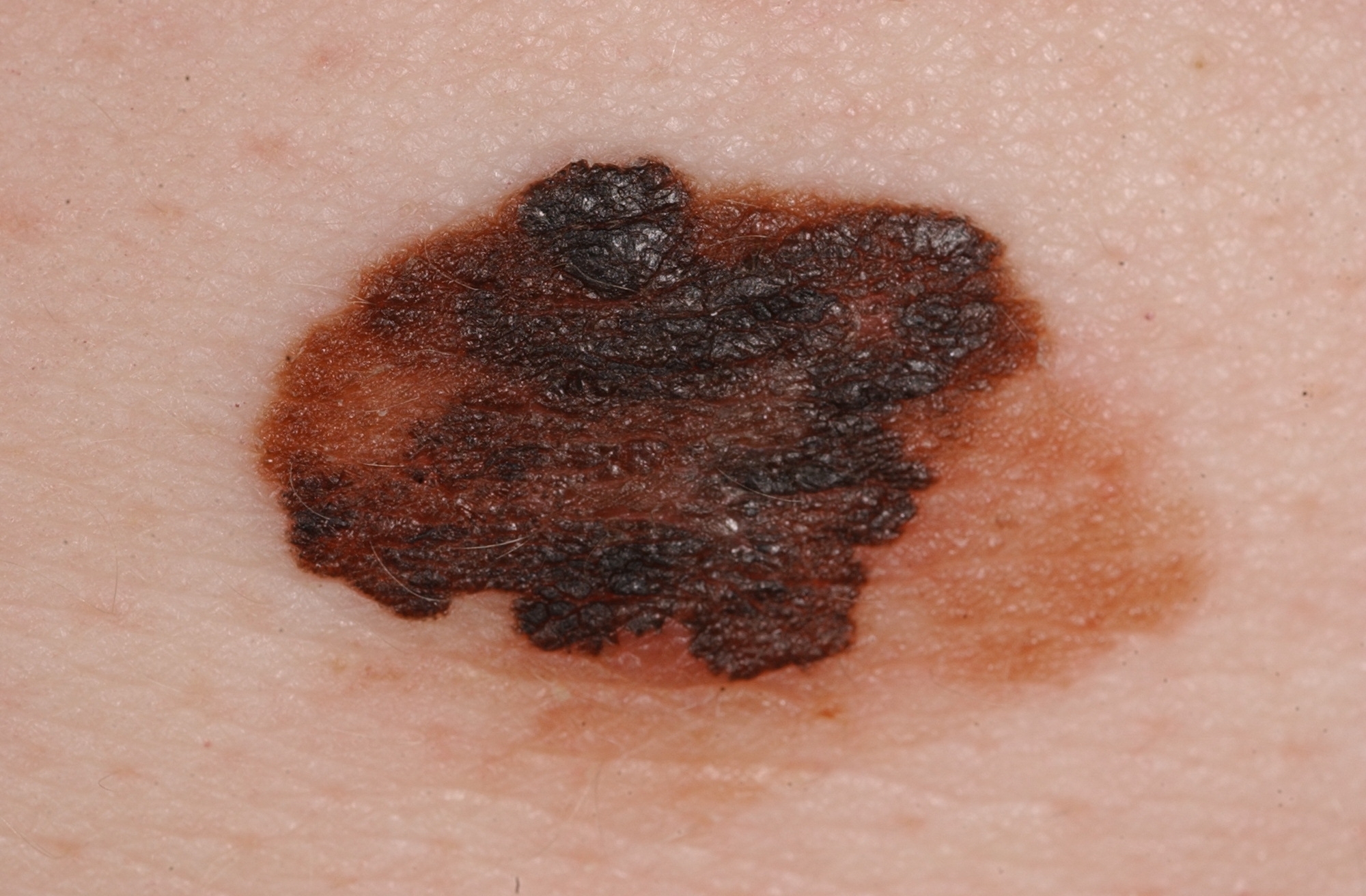
- The ABCDEs: Even a hairy mole must be judged by the standard American Academy of Dermatology (AAD) criteria: Asymmetry, Border irregularity, Color variegation, Diameter (larger than 6mm), and Evolving.
Comparing Benign vs. Concerning Hairy Moles
The following table outlines the general characteristics that dermatologists look for when evaluating a mole that contains hair.
| Feature | Typically Benign | Potential Warning Sign |
|---|---|---|
| Hair Consistency | Hair has grown consistently for years. | Sudden loss of hair or thinning. |
| Mole Texture | Soft, pliable, and moves with the skin. | Hard, fixed, or "stuck" to underlying tissue. |
| Pigmentation | Uniform color throughout the mole. | Multiple shades of brown, black, or blue. |
| Borders | Smooth, well-defined edges. | Ragged, blurred, or notched edges. |
| Sensation | No sensation or occasional itching. | Persistent itching, tenderness, or pain. |
| Surface Change | Smooth or slightly pebbled (cobblestone). | Ulceration, bleeding, or oozing. |
Diagnostic Breakthroughs in 2026
As of 2026, the diagnostic process for evaluating hairy moles has moved far beyond simple visual inspection. Advanced technologies now allow for "non-invasive biopsies" that can see beneath the surface without destroying the hair follicle or the skin.
AI-Enhanced Dermoscopy
Modern dermatoscopes are now equipped with AI algorithms that compare the vascular patterns around hair follicles within a mole to databases of millions of confirmed cases. This helps distinguish between the organized blood supply of a healthy follicle and the "disorganized" neo-angiogenesis (new blood vessel growth) associated with melanoma.
Reflectance Confocal Microscopy (RCM)
RCM is a literal "window into the skin." It allows doctors to see individual cells in real-time. In the case of a hairy mole, RCM can visualize whether melanocytes are simply clustering around the follicle (benign) or if they are invading the follicular sheath in a pagetoid (random, upward) spread, which is a hallmark of malignancy.
Electrical Impedance Spectroscopy (EIS)
EIS measures the electrical resistance of skin tissue. Cancerous cells hold and conduct electricity differently than healthy cells. This tool is particularly useful for hairy moles because the hair itself does not interfere with the electrical reading, providing a more objective "score" of the lesion's risk.
Frequently Asked Questions
Does plucking hair from a mole cause cancer?
No. There is no scientific evidence that plucking a hair from a mole causes it to become cancerous. However, plucking can cause temporary inflammation, redness, or a small infection (folliculitis), which might make the mole look "changed" or suspicious during a skin check. It is generally recommended to clip the hair with scissors rather than plucking it to avoid irritation.
Why do some moles grow longer, thicker hair than the rest of the body?
This is usually due to the high concentration of melanocytes and the structure of a congenital nevus. The clustered cells can sometimes stimulate the hair follicle to stay in the "growth phase" (anagen) longer, or they may provide more pigment to the hair, making it appear darker and thicker than surrounding "vellus" hairs.
If a mole has hair, can I wait longer to see a doctor?
No. While hair is a statistically positive sign, it is not a "get out of jail free" card. If a mole is changing in shape, size, or color, or if it meets any of the ABCDE criteria, you should seek a professional skin exam regardless of whether hair is present.
Can a mole grow hair after it has been removed?
If a mole is removed via a "shave biopsy," the deep part of the hair follicle often remains in the dermis. Consequently, the hair may grow back even if the pigmented surface of the mole is gone. If the mole was removed via a full "excisional biopsy" (cut out with stitches), the follicle is usually removed, and hair will not regrow in the scar tissue.
Is hair in a mole more common in certain age groups?
Hairy moles are most commonly associated with congenital nevi, meaning they are often noticed in childhood or adolescence. However, as hormones change during puberty or pregnancy, the hair in these moles may become more prominent, darker, or coarser.
Recommendation and Next Actions
If you have a mole that grows hair, do not assume it is harmless, but also do not panic. The presence of hair is a common physiological feature of many benign nevi. To ensure your skin health in 2026, follow these proactive steps:
- Perform a Monthly Self-Exam: Use a full-length mirror and a hand mirror to check every inch of your skin. Pay attention to moles that look different from your "ugly ducklings" (moles that don't match your others).
- Monitor the Hair: If a mole that was always hairy suddenly becomes "bald," or if the skin around the hair follicle changes texture, schedule a dermatological appointment immediately.
- Use Professional Mapping: If you have many moles, consider Total Body Photography or digital mole mapping. This creates a high-resolution baseline that AI tools can use to detect the smallest changes over time.
- Practice Sun Safety: Protect your moles from UV radiation by using broad-spectrum SPF 30 or higher and wearing protective clothing. UV damage is the primary driver of the malignant transformation that can occur in any mole, hairy or otherwise.
For more information on skin cancer types and symptoms, visit the National Cancer Institute (NCI) or consult with a board-certified dermatologist.
Image Gallery