The 2018 Tesla Model 3 Performance Horsepower Story: From Launch to Legacy
The 2018 Tesla Model 3 Performance debuted with an estimated 450 horsepower and 471 lb-ft of torque. However, its "story" is defined by two major over-the-air software updates in 2019 that increased power by a total of 10%, eventually...
The 2018 Tesla Model 3 Performance debuted with an estimated 450 horsepower and 471 lb-ft of torque. However, its "story" is defined by two major over-the-air software updates in 2019 that increased power by a total of 10%, eventually pushing real-world output closer to 480–490 horsepower through digital optimization.
Contents
In the history of automotive performance, few vehicles have seen their factory specifications change as dramatically after leaving the showroom as the 2018 Tesla Model 3 Performance. When it first hit the streets, it was Tesla’s "M3 killer," a compact sedan designed to disrupt the dominance of European sport sedans. Yet, the exact horsepower figure was initially a moving target, complicated by Tesla's preference for reporting kilowatt (kW) output and the subsequent "free" power increases delivered via Wi-Fi. Looking back from 2026, the 2018 Model 3 Performance remains a landmark vehicle that proved software could redefine hardware limitations.
The Genesis of the "P3D" and the Binning Process
When Tesla launched the Performance variant of the Model 3 in mid-2018 (often referred to by enthusiasts as the P3D), it utilized the same dual-motor architecture as the Long Range All-Wheel Drive model. This led to immediate questions from the community: why was the Performance model significantly more expensive if the hardware appeared identical?
The answer lay in a process called "Lot Sorting" or binning. Elon Musk clarified via social media that while the motors were physically similar, the Performance units were selected from the top of the internal testing curve. These motors demonstrated the highest efficiency and thermal resilience during factory stress tests. Once selected, these "golden" motors were paired with higher-output inverters and a specific software "uncorking" that allowed them to draw more current from the 75 kWh battery pack.
In 2018, the initial EPA filings and Tesla’s internal documentation suggested a combined output of approximately 340 kW. Using the standard conversion factor (1 kW = 1.341 hp), this equated to roughly 450 horsepower. Unlike traditional internal combustion engines, which have a relatively static power curve based on mechanical components, the Model 3’s power was limited primarily by the battery's ability to discharge current and the inverter's ability to manage heat.
The 2019 "Uncorking": The 5% Power Increases
The most pivotal chapter in the 2018 Model 3 Performance horsepower story occurred in 2019. In a move that was virtually unprecedented in the mass-market auto industry, Tesla released two separate over-the-air (OTA) updates that physically increased the car's power output.
The First 5% Boost (Version 2019.8.2)
In March 2019, Tesla released software version 2019.8.2. The release notes explicitly stated that the peak power of all Model 3 variants would increase by approximately 5%. Tesla engineers had analyzed fleet data and determined that the thermal margins of the motors and the battery were wider than initially estimated. By refining the motor control algorithms, they allowed for a higher peak current draw without compromising the long-term reliability of the drivetrain.
The Second 5% Boost (Version 2019.36.2.1)
Later that same year, in November 2019, Tesla repeated the feat. Software version 2019.36.2.1 provided another 5% increase in power. For the 2018 Performance model, these cumulative updates meant the car was roughly 10% more powerful than it was on the day of delivery. This pushed the estimated peak horsepower from the original 450 hp to somewhere between 480 and 490 hp.
These updates did more than just change a number on a spec sheet. They improved the 0-60 mph time—originally quoted at 3.5 seconds—down to a consistent 3.2 seconds in ideal conditions. This capability turned a mid-year 2018 car into a faster machine by late 2019, all without a single wrench being turned.
Dyno Testing: Measuring the Reality of 2018 Power
Because Tesla does not officially list "horsepower" in the same way a traditional manufacturer does, the enthusiast community turned to chassis dynamometers (dynos) to verify the "story." Testing conducted by independent shops like Mountain Pass Performance and various third-party reviewers revealed a complex power delivery system.
Unlike a gasoline engine that builds power to a redline, the 2018 Model 3 Performance delivers peak torque almost instantly, with peak horsepower arriving around 45-50 mph. Dyno results consistently showed that:
- State of Charge (SoC) Matters: The car could only hit its maximum "horsepower" figure when the battery was above 70-80%. As the voltage drops, the maximum current the battery can provide also drops.
- Wheel Horsepower vs. Motor Horsepower: On a four-wheel dyno, the 2018 Model 3 Performance typically showed between 410 and 430 "wheel horsepower" (whp) after the 2019 updates. Accounting for drivetrain losses (which are lower in EVs than ICE vehicles but still exist), this corroborated the ~480 crank horsepower estimate.
The "Stealth" Performance (P3D-) vs. The Performance Upgrade Package
A confusing but essential part of the 2018 horsepower story is the existence of the "Stealth" Performance, or P3D-. In the early production runs, Tesla offered a version of the Model 3 Performance that had the uncorked software and "binned" motors but lacked the physical "Performance Upgrade Package" (PUP).
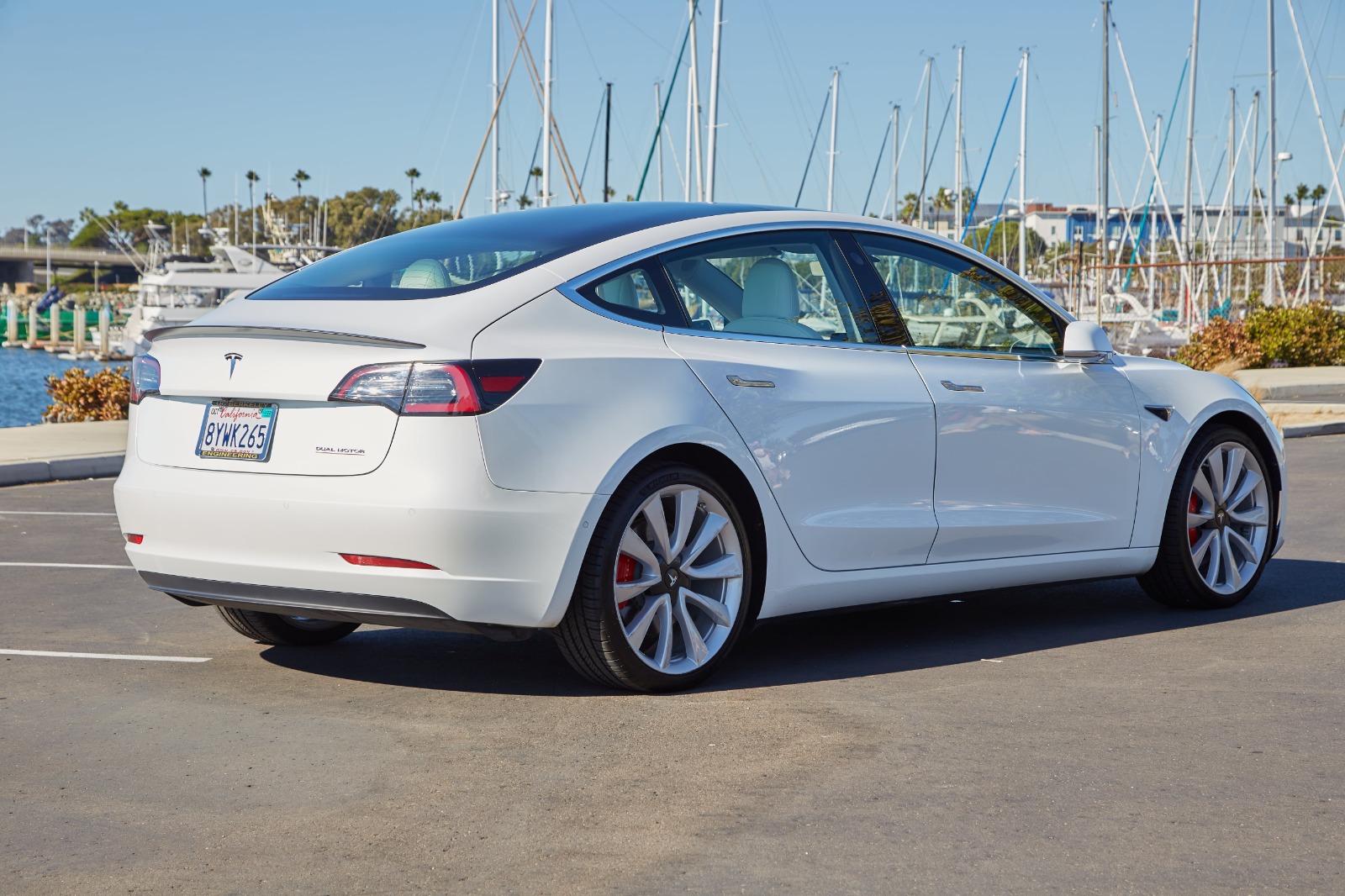
The PUP included 20-inch wheels, Michelin Pilot Sport 4S tires, larger brake calipers, and a lowered suspension. The "Stealth" models looked identical to a standard Dual Motor AWD car—even sporting 18-inch Aero wheels—but possessed the same 450+ horsepower output. This created a sleeper car that was arguably the fastest-accelerating version of the Model 3 at the time due to the lower rotational mass of the 18-inch wheels compared to the heavy 20-inch Performance wheels.
Technical Specifications Comparison: 2018 vs. Post-Update
The following table outlines the evolution of the 2018 Model 3 Performance's power metrics as they shifted through software revisions.
| Specification | At Launch (June 2018) | Post-Oct 2019 Updates | Real-World Impact |
|---|---|---|---|
| Peak Power (Estimated) | ~450 hp (335 kW) | ~490 hp (365 kW) | Increased top-end pull |
| Peak Torque | 471 lb-ft | 487+ lb-ft | Sharper off-the-line response |
| 0-60 MPH Time | 3.5 Seconds | 3.2 Seconds | Competes with Supercars |
| Top Speed | 155 mph | 162 mph | Improved via "Track Mode" |
| Quarter Mile | ~11.8 Seconds | ~11.5 - 11.6 Seconds | Consistent mid-11s |
Track Mode: Unleashing the Horsepower
The horsepower story of the 2018 Model 3 Performance is incomplete without mentioning Track Mode. Introduced in late 2018, Track Mode was a software suite that changed how the horsepower was distributed between the front and rear motors.
By using the motors for "torque vectoring," Tesla could over-drive one motor while using the other for regenerative braking to help the car rotate through corners. This didn't necessarily change the peak horsepower number, but it changed the accessibility of that power. It allowed the 2018 model to maintain its performance for longer durations by aggressively managing the thermal state of the battery and motors—essentially "pre-cooling" the system to ensure that peak horsepower wouldn't be throttled due to heat soak.
Legacy and Value in 2026
As of 2026, the 2018 Tesla Model 3 Performance is considered the "OG" of high-performance mass-market EVs. While newer models have introduced heat pumps for better efficiency and refined suspension setups, the 2018 model's raw power delivery remains largely competitive.
For buyers in the used market in 2026, verifying the horsepower story of a 2018 unit involves checking the "Software" tab on the vehicle's touchscreen. A true 2018 Performance model will show "Model 3 Performance" underlined in red. If it is a "Stealth" model, it will still show the Performance designation, confirming it has the binned motors and the 490 hp software "uncorking" that defined this era of Tesla development.
Frequently Asked Questions
Can I still get the 5% power updates if I buy a used 2018 Model 3 today? Yes. Since these updates are permanent firmware changes, any 2018 Model 3 Performance that has been connected to Wi-Fi at any point since 2019 will already have these power increases installed. You do not need to pay extra for them; they are baked into the vehicle's current operating system.
Is there a hardware difference between the 2018 Performance and the 2018 Long Range AWD? Physically, the motors share the same part numbers in many cases, but the Performance motors underwent "burn-in" testing to ensure they could handle higher current. The Performance model also uses a different inverter capable of handling 800+ amps, whereas the standard AWD is limited to lower amperage via software.
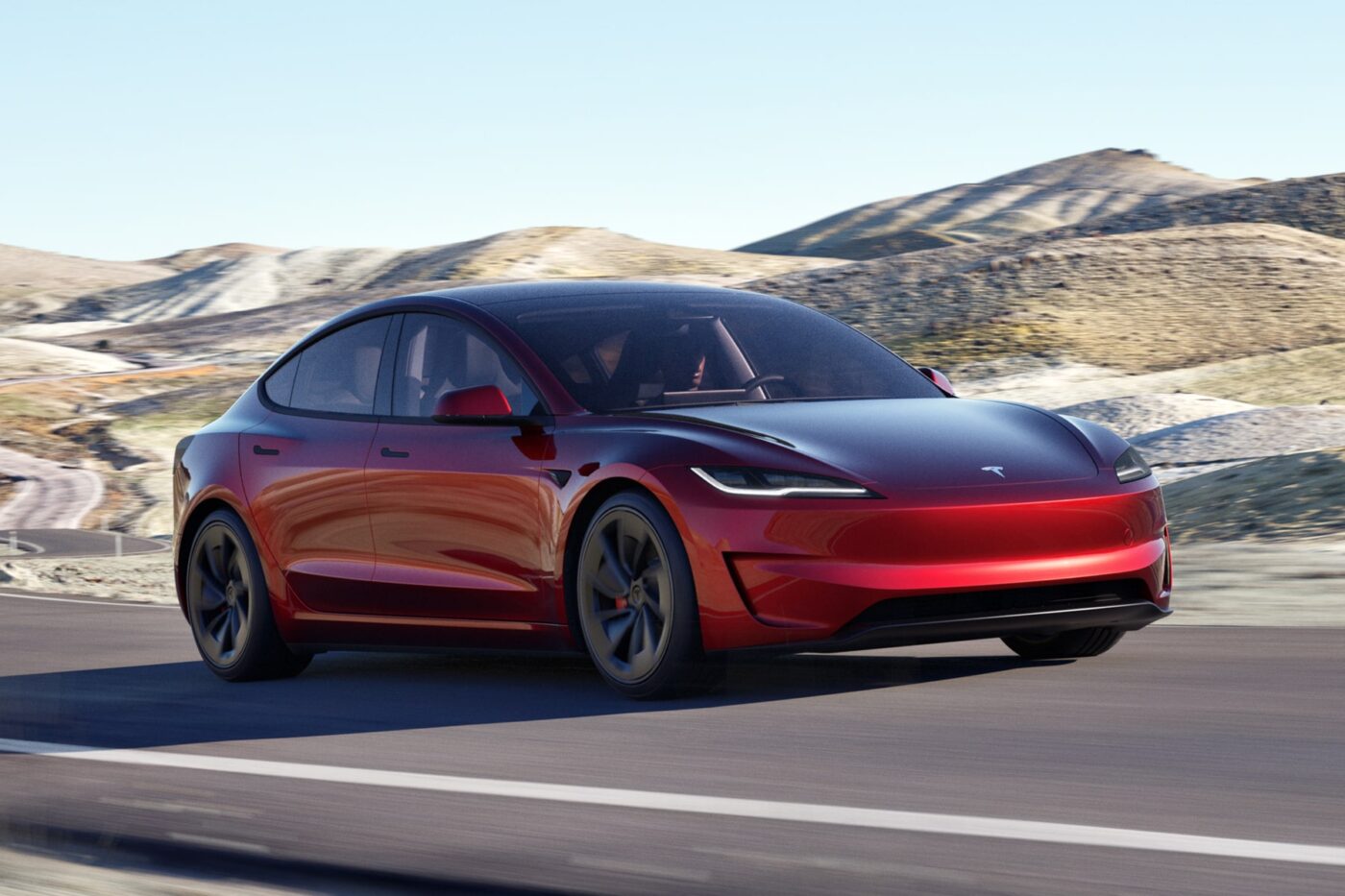
How does the 2018 horsepower compare to the 2024+ "Highland" Performance? The newer 2024+ Performance models (often called Ludicrous in some regions) feature a revised rear motor that provides more sustained power at high speeds. While the 2018 model is nearly as fast from 0-60 mph, the newer versions have a higher peak horsepower (often cited above 500 hp) and a broader power band.
Does high horsepower usage degrade the 2018 battery faster? While frequent use of maximum discharge (full-throttle acceleration) generates more heat, there is no evidence that the 2018 Performance models suffer from significantly higher degradation than the AWD models. Tesla’s battery management system (BMS) is designed to throttle power before physical damage occurs to the cells.
How can I verify the actual horsepower of my specific car? To get an exact reading, you can use a Bluetooth OBDII adapter (like an OBDLink LX) paired with an app like "Scan My Tesla." This allows you to see the real-time kilowatt discharge from the battery. Multiplying the peak kW by 1.34 will give you the most accurate horsepower reading for your specific vehicle's health and state of charge.
Final Recommendation for Owners and Buyers
If you are looking to maximize the "horsepower story" of a 2018 Model 3 Performance, focus on thermal management. The car's ability to produce its full 490 hp output is highly dependent on the battery being in its "sweet spot" (approximately 90°F to 110°F). For those buying used, ensure the vehicle has the version 2019.36.2.1 or later firmware to guarantee you are accessing the full cumulative 10% power boost. Despite being several years old, the 2018 P3D remains one of the most cost-effective ways to access sub-3.5-second acceleration in a reliable, daily-driver format.
Image Gallery