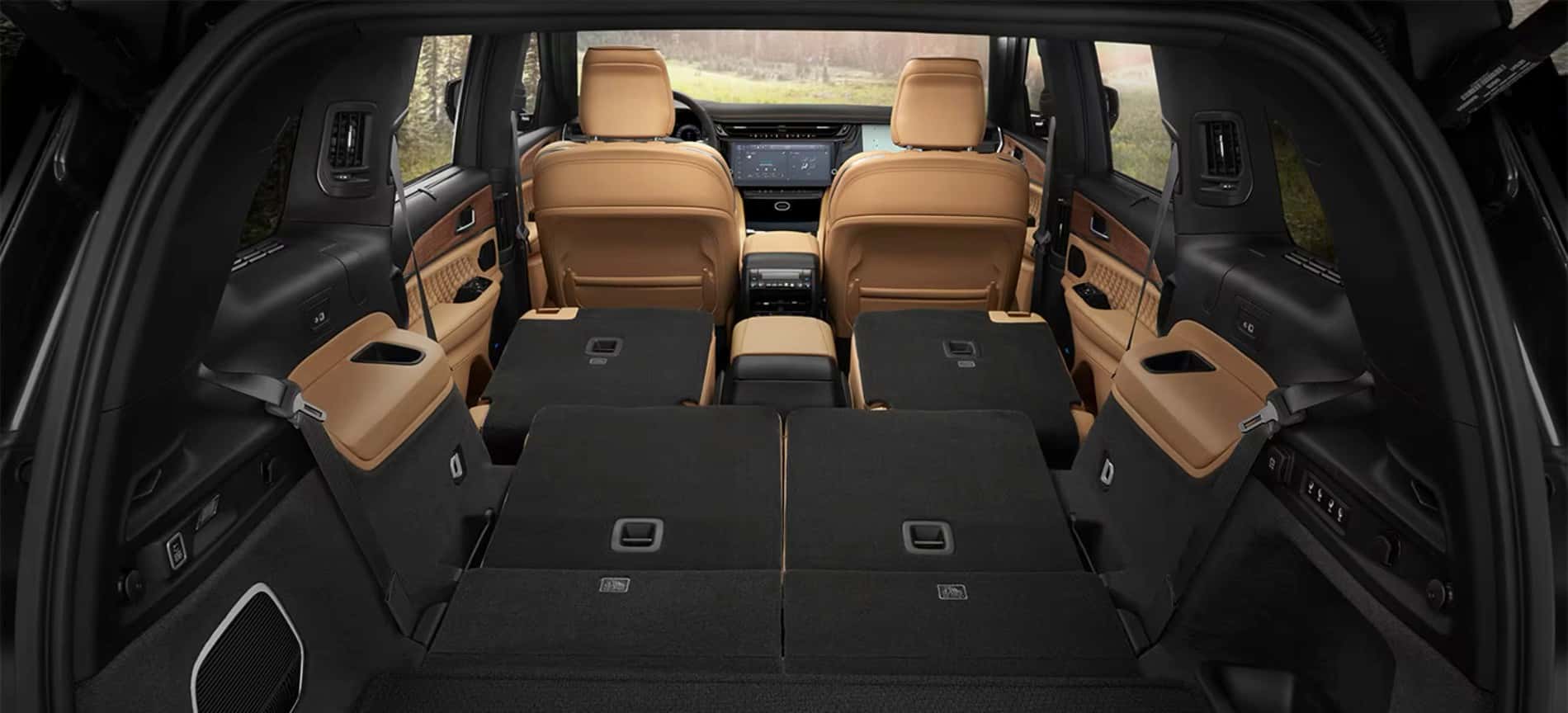
Jeep Grand Cherokee Trunk Size and Cargo Dimensions Guide
The standard two-row 2026 Jeep Grand Cherokee provides 37.7 cubic feet of cargo space behind the second-row seats. When these seats are folded flat, the capacity expands to a maximum of 70.8 cubic feet. The larger three-row Grand Chero...
The standard two-row 2026 Jeep Grand Cherokee provides 37.7 cubic feet of cargo space behind the second-row seats. When these seats are folded flat, the capacity expands to a maximum of 70.8 cubic feet. The larger three-row Grand Cherokee L offers up to 84.6 cubic feet of total storage volume.
Contents
The Jeep Grand Cherokee has long been a benchmark for the midsize SUV segment, balancing off-road capability with premium interior comfort. For most buyers, the "utility" in Sport Utility Vehicle comes down to one specific factor: how much gear can fit in the back. Whether you are cross-shopping the two-row WL chassis, the extended "L" variant, or the 4xe plug-in hybrid, understanding the precise measurements of the trunk is essential for planning road trips, grocery runs, and outdoor adventures.
Understanding Cargo Capacity by Generation
To accurately assess the trunk size, it is important to distinguish between the various generations and body styles currently found on the road in 2026. The current "WL" platform, which debuted for the 2021-2022 model years, represents a significant step up in interior volume compared to its predecessor, the "WK2."
The Current WL Generation (2021–Present)
The 2026 Jeep Grand Cherokee utilizes the WL architecture, which was designed with a more efficient use of interior space. In the standard two-row configuration, the trunk is notably deep and wide, benefiting from a suspension design that minimizes wheel-well intrusion. This allows for a flatter load floor and more usable width compared to older luxury SUVs in this class.
The Legacy WK2 Generation (2011–2022)
While the WK2 is no longer in production as of 2026, it remains a massive presence in the pre-owned market. The WK2 offered approximately 36.3 cubic feet behind the second row and 68.3 cubic feet in total. If you are upgrading from a 2018 or 2019 model to a 2026 model, you will notice a modest but meaningful increase in "stackable" space and floor length.
Two-Row vs. Three-Row: The Grand Cherokee L
The most significant choice for Jeep buyers today is between the standard Grand Cherokee and the Grand Cherokee L. The "L" is not merely a trim level; it is a long-wheelbase version of the SUV designed to accommodate a third row of seating.
Standard Grand Cherokee (Two-Row) Specs
The two-row model is favored by those who prioritize maneuverability and garage-friendliness over maximum passenger count.
- Space behind 2nd row: 37.7 cubic feet.
- Space behind 1st row (seats folded): 70.8 cubic feet.
The floor length in the two-row model is approximately 40 inches with the seats up, extending to nearly 72 inches when the second row is stowed. This makes it ideal for carrying large items like mountain bikes (with wheels removed) or flat-packed furniture.
Grand Cherokee L (Three-Row) Specs
The Grand Cherokee L offers three distinct cargo configurations depending on how many seats are deployed.
- Behind the 3rd row: 17.2 cubic feet. This space is sufficient for a few grocery bags or a compact stroller.
- Behind the 2nd row (3rd row folded): 46.9 cubic feet. This is significantly larger than the standard Grand Cherokee’s trunk.
- Total Capacity (all rear seats folded): 84.6 cubic feet. This transforms the Jeep into a legitimate hauling machine capable of carrying small appliances or large camping setups.
Detailed Interior Trunk Dimensions
Cubic feet tell only part of the story. Practical loading depends on the height of the opening and the width between the wheel arches. For the 2026 model year, the Grand Cherokee maintains the following approximate physical dimensions:
- Cargo Width (between wheel wells): Approximately 45 inches. This is wide enough to lay most golf bags horizontally.
- Cargo Height: Approximately 32 inches. The sloping roofline of the Grand Cherokee is less aggressive than "SUV Coupes," preserving vertical room for taller boxes.
- Liftgate Opening: The aperture is roughly 42 inches wide, which helps when loading wider items that might otherwise get caught on the trim.
The load floor height is also a consideration. As a vehicle with off-road DNA, the Grand Cherokee sits higher than a typical minivan or crossover. Owners should expect a lift-over height of roughly 30 to 32 inches depending on whether the vehicle is equipped with the Quadra-Lift Air Suspension. Models with air suspension can be lowered to "Entry/Exit" mode, which significantly eases the process of loading heavy cargo.
Impact of the 4xe Plug-In Hybrid Powertrain
The Grand Cherokee 4xe is a popular choice in 2026 due to its blend of torque and efficiency. Many buyers worry that the 17.3 kWh battery pack might eat into the trunk space. Fortunately, Jeep engineers placed the battery pack underneath the floor and the rear seats.
In the 4xe, the cargo volume remains identical to the gasoline-only two-row models (37.7 cu ft). However, there is a minor trade-off: the 4xe typically lacks the space for a full-size spare tire under the cargo floor, often replaced by a tire repair kit or a slightly modified storage bin configuration. If you frequently travel into remote areas where a full-size spare is a necessity, this is a technical detail to verify at the dealership.
Cargo Features and Organization
Jeep has integrated several "Quality of Life" features into the trunk area of the Grand Cherokee to make the space more functional:
- Power Liftgate: Standard on most trims (Limited and above), the power liftgate can be programmed to open to a specific height—essential for users with low garage ceilings.
- Tie-Down Loops: Four heavy-duty chrome or plastic loops are located in the corners of the floor, allowing for the use of bungee cords or cargo nets to secure loose items.
- Under-Floor Storage: In non-hybrid models, there is a dedicated bin surrounding the spare tire which is perfect for storing jumper cables, emergency kits, or trailer hitches.
- Side Cubbies: Small recessed areas behind the wheel wells provide a spot for smaller items like milk jugs or cleaning supplies to prevent them from rolling around.
- 12V Power Outlet: Most trims include a 12-volt "cigarette lighter" style outlet in the rear cargo area, useful for powering portable air compressors or coolers.
2026 Jeep Grand Cherokee Cargo Comparison Table
The following table compares the cargo capacities of the standard Grand Cherokee, the Grand Cherokee L, and key competitors in the 2026 midsize SUV market.
| Vehicle Model | Behind 3rd Row (cu ft) | Behind 2nd Row (cu ft) | Max Cargo Volume (cu ft) |
|---|---|---|---|
| Jeep Grand Cherokee (2-Row) | N/A | 37.7 | 70.8 |
| Jeep Grand Cherokee L (3-Row) | 17.2 | 46.9 | 84.6 |
| Ford Explorer | 18.2 | 47.9 | 87.8 |
| Toyota 4Runner | 9.0 | 46.2 | 88.8 |
| Honda Passport | N/A | 41.2 | 77.7 |
| Chevrolet Blazer | N/A | 30.5 | 64.2 |
Data based on manufacturer specifications and EPA size class standards for the 2026 model year.
Common Mistakes When Measuring Cargo Space
When evaluating the trunk size of a Jeep Grand Cherokee, many shoppers make the mistake of looking only at the "Max Cargo" number. It is vital to consider how you actually use the vehicle.
- The "Diagonal" Factor: Many long items (like skis or 2x4 lumber) are measured in linear inches. While the Grand Cherokee has a 70.8 cu ft capacity, the diagonal length from the back of the front passenger seat to the rear corner of the trunk is the most important measurement for hardware store trips.
- Suspension Compression: If you fill the 37.7 cubic foot trunk with heavy materials like bags of concrete, the rear of the vehicle will squat. Only models with the Quadra-Lift Air Suspension feature automatic load leveling to keep the vehicle level under heavy cargo loads.
- Passenger Encroachment: If you have car seats installed in the second row, you cannot easily fold the seats down to access the 70.8 cubic feet of space. In this scenario, you are strictly limited to the 37.7 cubic feet behind the bench.
FAQs About Grand Cherokee Cargo Space
Can you fit a 4x8 sheet of plywood in a Jeep Grand Cherokee?
No, a standard 4x8 sheet of plywood will not fit flat on the floor of a standard Grand Cherokee or the Grand Cherokee L. The width between the wheel wells (approx. 45 inches) is less than the 48 inches required for plywood. However, the sheets can be carried if tilted or supported by a roof rack.
Is the trunk of the Grand Cherokee L bigger than the Wagoneer?
No. While the Grand Cherokee L is large, the Jeep Wagoneer is a full-size SUV. The Wagoneer offers significantly more space, particularly behind the third row (approx. 27.4 cu ft) and a total maximum volume exceeding 116 cubic feet.
Does the Grand Cherokee have a hands-free liftgate?
Yes, most upper-tier trims like the Overland, Summit, and Summit Reserve come equipped with a hands-free power liftgate. This allows you to open the trunk by waving your foot under the rear bumper, provided the key fob is on your person.
Are the rear seats power-folding?
In the two-row Grand Cherokee, the rear seats are typically manual-folding. In the three-row Grand Cherokee L, power-folding third-row seats are available on higher trims, allowing you to expand the trunk space with the press of a button located in the cargo area.
Does the 4xe hybrid have less trunk space?
Technically, no. The cargo volume above the floor remains the same at 37.7 cubic feet. The main difference is the loss of some under-floor storage depth where the battery components are housed, and the absence of a full-size spare tire in most configurations.
Practical Recommendation
If you are a solo driver or a couple who frequently carries outdoor gear, the standard two-row Grand Cherokee offers a perfect balance of 37.7 cubic feet of storage and a manageable vehicle length. However, for families or those who frequently visit big-box retailers, the Grand Cherokee L is the superior choice. Even if you rarely use the third row for passengers, keeping those seats folded provides nearly 47 cubic feet of trunk space—a 24% increase over the standard model—which is a difference you will feel every time you load the vehicle. For the most accurate assessment, visit a local dealership with your most common large item (such as a specific stroller or equipment bag) to test the real-world fit before finalizing your purchase.
Image Gallery