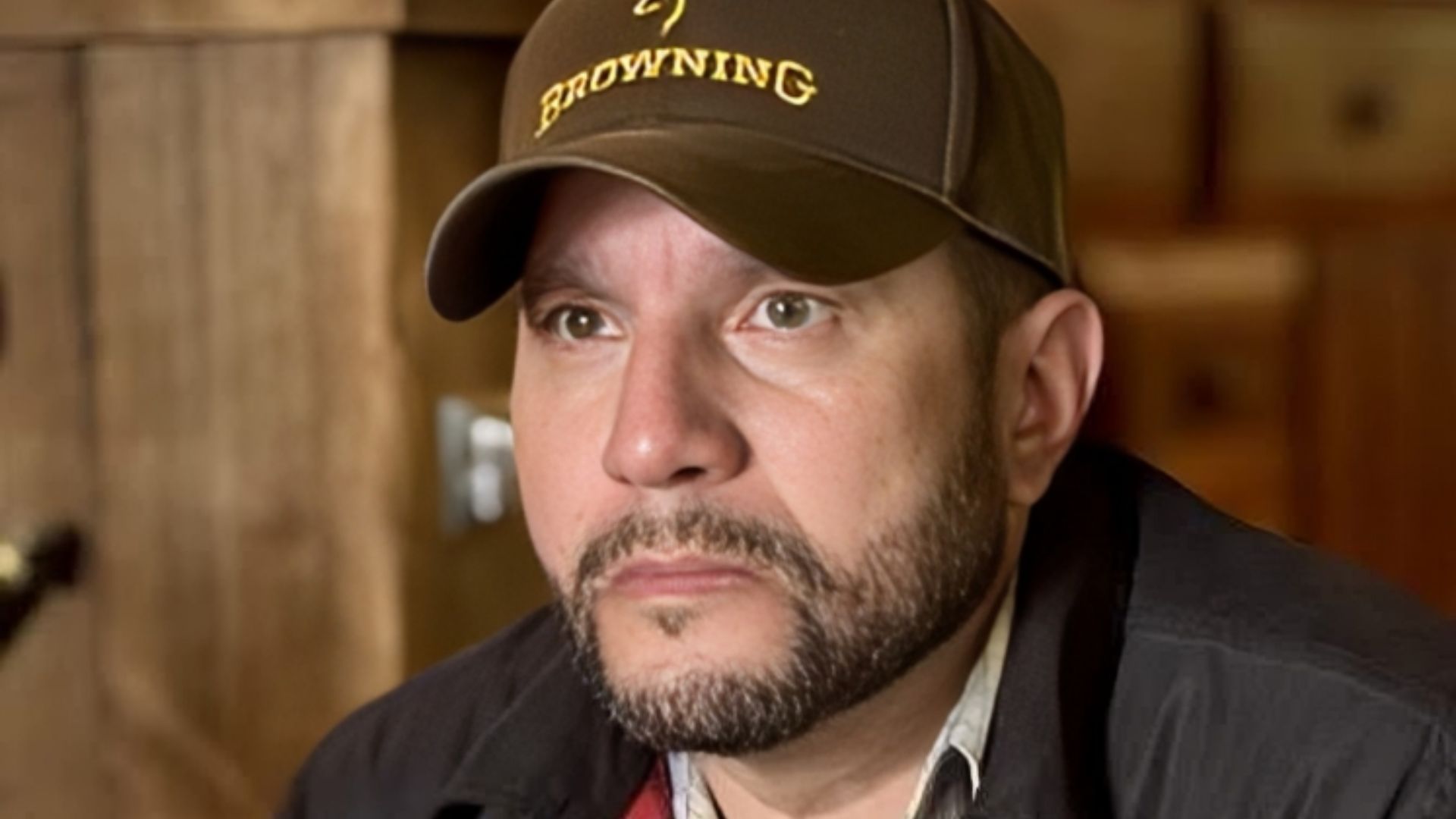
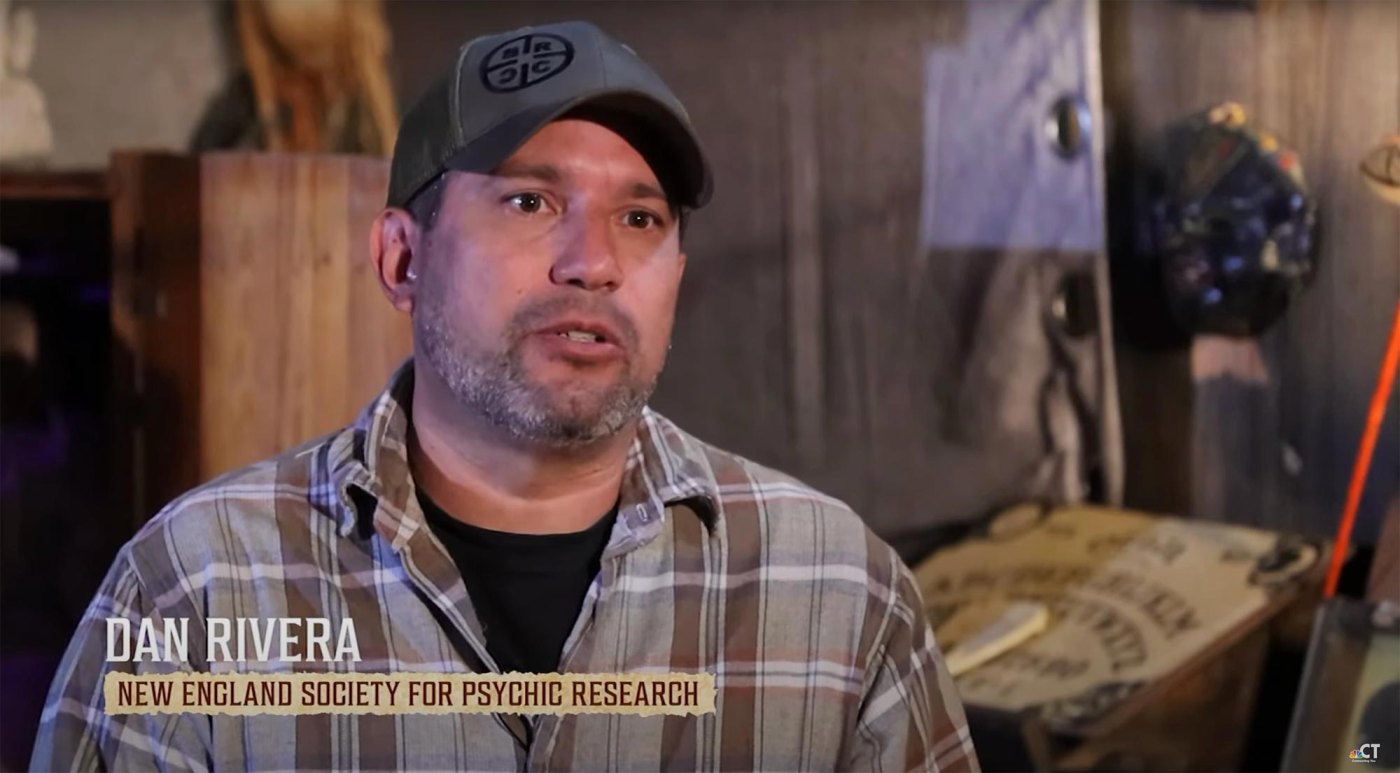
Dan Rivera: The Methodologies and Impact of the Paranormal Researcher
Dan Rivera is a prominent paranormal researcher and lead investigator known for his rigorous, evidence-based approach to documenting unexplained phenomena. As a founding member of the investigative group "The Searchers," Rivera special...
Dan Rivera is a prominent paranormal researcher and lead investigator known for his rigorous, evidence-based approach to documenting unexplained phenomena. As a founding member of the investigative group "The Searchers," Rivera specializes in high-profile historical hauntings, utilizing advanced technical equipment and historical data to validate or debunk claims of supernatural activity.
Contents
The Evolution of Dan Rivera’s Investigative Career
The trajectory of Dan Rivera’s career in the paranormal field reflects a broader shift in the industry toward scientific literacy and historical preservation. Rivera did not begin his journey as a media personality; rather, he emerged from a background of deep curiosity regarding the intersection of human consciousness and residual energy. By 2026, his work has become a benchmark for independent researchers who prioritize data over dramatization.
In the early stages of his career, Rivera focused on regional hauntings in the Northeastern United States, a territory rich with colonial history and architectural antiquity. These early investigations were characterized by a "boots-on-the-ground" philosophy, where Rivera would spend dozens of hours in a single location to establish a baseline of normal environmental conditions. This meticulous baseline testing is what eventually separated his work from the more sensationalist "ghost hunting" shows prevalent in the 2010s.
Rivera’s rise to prominence is inextricably linked to his role in The Searchers. This group was established not just to find ghosts, but to "search" for the truth behind the legends. Under Rivera's leadership, the team adopted a protocol that involves exhaustive archival research before any electronic equipment is deployed. By understanding the genealogical and architectural history of a site, Rivera ensures that any "findings" are contextualized within the actual events that occurred on the property.
Core Methodologies and Technical Protocols
Dan Rivera is recognized for his disciplined use of technology. He often argues that a tool is only as effective as the researcher's understanding of its limitations. His methodology centers on the concept of Environmental Baseline Analysis, which involves monitoring a site for natural fluctuations in electromagnetic fields (EMF), temperature, and vibration before an investigation begins.
Advanced Data Collection
Rivera utilizes a specific "kit" that has become standard for high-level research. This includes:
- Triangulated EMF Monitoring: Rather than using a single handheld meter, Rivera often employs a grid of sensors. This allows him to track the movement of an energy spike across a room, helping to determine if the source is a stationary electrical fault or a mobile anomaly.
- Full-Spectrum Photography: By capturing light frequencies outside the human visible range (infrared and ultraviolet), Rivera attempts to document anomalies that do not reflect standard light.
- Acoustic Analysis: His use of digital voice recorders (DVRs) is coupled with specialized software to analyze Electronic Voice Phenomena (EVP). Rivera is known for his "conservative labeling" policy, where he only classifies a recording as an EVP if it cannot be attributed to wind, mechanical noise, or human speech contamination.
The Searchers Protocol
The "Searchers Protocol" is a set of guidelines developed by Rivera and his team to maintain the integrity of their evidence. This protocol dictates that at least two independent sensors must trigger simultaneously for an event to be considered "anomalous." For example, a temperature drop must be accompanied by an EMF spike or a visual anomaly. This multi-modal verification system reduces the likelihood of false positives caused by equipment malfunction or environmental "dead zones."
Major Cases: The Lucius Beebe Woods Mystery
One of the most significant chapters in Dan Rivera’s career is his extensive investigation of the Lucius Beebe Woods. Located in Wakefield, Massachusetts, this area is steeped in local lore and reports of "shadow figures" and disembodied voices. Rivera’s approach to this case serves as a masterclass in modern paranormal research.
The Beebe Woods case was not merely about looking for ghosts; it was about the legacy of the Beebe family and the land they occupied. Rivera spent months cross-referencing local land deeds and historical accounts of the "Beebe Estate" to identify specific locations where high-intensity events were reported.
During the investigations, Rivera and his team documented several instances of what researchers call "intelligent hauntings"—phenomena that seem to react to the presence or questions of the investigators. By utilizing Geophone technology (which detects minute vibrations in the ground), Rivera was able to rule out footsteps from hikers or nearby traffic, leading to some of the most compelling evidence of localized, unexplained physical movement in the woods.
Media Presence and Public Education
In 2026, the role of a paranormal researcher extends beyond the field and into the realm of digital media and education. Dan Rivera has leveraged platforms like YouTube and specialized streaming services to bring the reality of investigative work to the public. Unlike reality television, Rivera’s content often focuses on the "lulls" of an investigation—the hours of silence and the technical troubleshooting—which provides a more honest look at the profession.
The Searchers YouTube Channel
Through The Searchers digital presence, Rivera provides deep-dives into equipment tutorials and case files. His focus is on teaching the next generation of researchers how to avoid common pitfalls, such as pareidolia (the tendency to see faces or patterns in random data) and confirmation bias.
Rivera also participates in public speaking engagements and "paranormal workshops." These events are designed to bridge the gap between historical societies and paranormal enthusiasts. He frequently advocates for the preservation of haunted locations, arguing that the "ghost stories" are often what keep the history of a building alive and funded.
Comparing Investigative Philosophies
To understand Dan Rivera’s standing in the field, it is helpful to compare his evidence-based approach with other common styles of paranormal research.
| Feature | Sensationalist / "TV" Style | Rivera / Evidence-Based Style |
|---|---|---|
| Primary Goal | Entertainment and "Jump Scares" | Data Collection and Validation |
| Historical Research | Minimal or surface-level | Exhaustive archival and genealogical |
| Equipment Usage | Reactive (moving toward the "hit") | Proactive (grid-based monitoring) |
| Evidence Standards | Subjective (personal feelings) | Objective (multi-sensor confirmation) |
| Publication | Edited for dramatic effect | Raw data logs and contextual analysis |
| Stance on Skepticism | Often dismissed | Encouraged as a tool for accuracy |
Ethics and Responsibility in Ghost Hunting
As a veteran researcher, Dan Rivera has been a vocal advocate for ethics within the paranormal community. In his lectures, he emphasizes three core pillars of ethical research:
- Respect for the Deceased: Rivera maintains that if spirits are indeed human consciousness surviving death, they deserve the same respect as a living person. He avoids provocative "shouting" or "challenging" techniques often seen on television.
- Respect for Property Owners: He strictly adheres to "no-trespassing" laws and works closely with site owners to ensure that investigations do not damage historical structures.
- Honesty with the Audience: Rivera is known for admitting when an investigation yields zero results. In the world of paranormal research, a "quiet night" is a valid scientific result, and Rivera refuses to manufacture activity for the sake of a compelling narrative.
Frequently Asked Questions
What is Dan Rivera’s most famous investigation?
While he has covered numerous sites, his work with The Searchers at the Lucius Beebe Woods remains his most cited investigation due to the volume of synchronized environmental data collected over several years. This case helped establish his reputation for meticulous, long-term site monitoring rather than "one-and-done" visits.
Does Dan Rivera believe in ghosts?
Rivera often describes himself as a "hopeful skeptic." While he has documented phenomena that defy current scientific explanation, he remains open to the possibility that these events may eventually be explained by future breakthroughs in physics or psychology. His focus is on the existence of the phenomena rather than the definition of it.
What equipment does Dan Rivera recommend for beginners?
Rivera typically advises beginners to start with a high-quality digital voice recorder and a basic EMF meter like the K-II. However, he emphasizes that the most important "tool" is a critical mind and a notebook for documenting environmental variables like weather, lunar cycles, and local power grid fluctuations.
How can I join Dan Rivera’s team?
"The Searchers" usually operates as a closed group of specialized experts. However, Rivera frequently offers workshops and "open investigation" nights for the public through various historical societies. He encourages aspiring researchers to form their own local groups and apply his technical protocols to regional legends.
Where can I watch Dan Rivera’s current work in 2026?
His latest findings and documentary shorts are primarily hosted on the official Searchers YouTube channel and their dedicated website. He also contributes expert analysis to several paranormal podcasts and independent documentaries focusing on the intersection of history and the unexplained.
Practical Recommendations for Aspiring Researchers
If you are looking to follow in the footsteps of a researcher like Dan Rivera, your first action should be to prioritize history over equipment. Before buying expensive sensors, visit your local library or historical society. Learn the names of the people who lived on the land you intend to investigate and understand the architectural changes the property has undergone.
Secondly, practice controlled skepticism. When you hear a noise or see a shadow, your first task is not to prove it is a ghost, but to prove it is not a draft, a settling floorboard, or a trick of the light. By attempting to debunk your own evidence, you ensure that the remaining data—the truly unexplained—holds much higher value.
Finally, document everything. Keep a "clean" log of every investigation, including the nights where nothing happened. This longitudinal data is what ultimately transforms a hobbyist into a researcher. Dan Rivera’s success is built on a foundation of thousands of hours of documented "quiet," which makes his "loud" moments all the more significant to the scientific community.
Image Gallery