Understanding Louisiana Auto Insurance Filing Requirements and SR-22 Compliance
In Louisiana, an auto insurance filing—most commonly referred to as an SR-22—is a state-mandated certificate of financial responsibility required for high-risk drivers seeking to reinstate their driving privileges. This document is not...
In Louisiana, an auto insurance filing—most commonly referred to as an SR-22—is a state-mandated certificate of financial responsibility required for high-risk drivers seeking to reinstate their driving privileges. This document is not an insurance policy itself but a verification filed by your insurer with the Louisiana Office of Motor Vehicles to prove you meet the legal minimum liability requirements.
Contents
What is a Louisiana Auto Insurance Filing?
In the context of Louisiana traffic law and the Department of Public Safety (DPS), an auto insurance filing is a formal certification that an individual carries the necessary liability insurance to operate a motor vehicle legally. While the term "SR-22" is the industry standard used across the United States, in Louisiana, it specifically refers to the form that an insurance company must submit to the Office of Motor Vehicles (OMV) on behalf of a driver.
This filing is typically triggered by a court order or a direct mandate from the OMV following specific legal infractions. Unlike a standard insurance card that you keep in your glove box, an SR-22 filing creates a direct, real-time communication link between your insurance provider and the state. If your policy lapses for even a single day, the insurance company is legally obligated to notify the OMV immediately, which usually results in the instantaneous suspension of your driver’s license.
In 2026, the process remains predominantly electronic. The state requires this filing to ensure that drivers who have demonstrated high-risk behavior—such as driving while intoxicated or operating a vehicle without insurance—cannot easily circumvent the state's financial responsibility laws. It serves as a guarantee that the driver is financially capable of covering damages in the event of an accident.
Common Reasons the State of Louisiana Requires a Filing
Not every driver in Louisiana needs an insurance filing. It is a targeted regulatory tool used for specific scenarios where a driver's history suggests they pose a significant risk to the public or have failed to adhere to standard insurance laws.
Driving While Intoxicated (DWI)
A DWI conviction is the most frequent catalyst for a mandatory SR-22 filing in Louisiana. Under current 2026 statutes, a driver convicted of operating a vehicle under the influence will almost certainly have their license suspended. To regain driving privileges, even with a hardship license, the OMV requires an insurance filing to prove the driver is covered by a policy that specifically acknowledges their high-risk status.
Driving Without Insurance
Louisiana is a "No Pay, No Play" state, meaning uninsured motorists are limited in the damages they can collect after an accident, even if they are not at fault. Furthermore, if you are caught driving without the mandatory 15/30/25 coverage, the state may suspend your registration and license. Reinstatement in these cases typically requires an SR-22 filing for a period of three years to ensure future compliance.
Accumulation of Points or Serious Accidents
Drivers who accumulate an excessive number of points on their record within a short timeframe, or those involved in a serious accident while uninsured where property damage or bodily injury occurred, are often flagged. The filing acts as a probationary mechanism, ensuring that the driver remains insured while they work to improve their driving record.
Failure to Pay Legal Judgments
If a driver is sued following an accident and fails to pay the court-ordered judgment, the OMV can suspend their license. Along with satisfying the debt, the driver must often provide an insurance filing to prove they have the means to cover any future incidents.
Mandatory Minimum Coverage Levels in Louisiana (2026)
To satisfy the requirements of a Louisiana insurance filing, your policy must meet or exceed the state’s mandatory minimum liability limits. As of 2026, these limits remain consistent with the long-standing 15/30/25 rule.
| Coverage Type | Louisiana State Minimum Requirement | Description |
|---|---|---|
| Bodily Injury Liability | $15,000 | The maximum amount paid for injuries to a single person in an accident. |
| Total Bodily Injury | $30,000 | The total maximum amount paid for all injuries sustained in a single accident. |
| Property Damage | $25,000 | The maximum amount paid for damage to another person's property (vehicles, fences, etc.). |
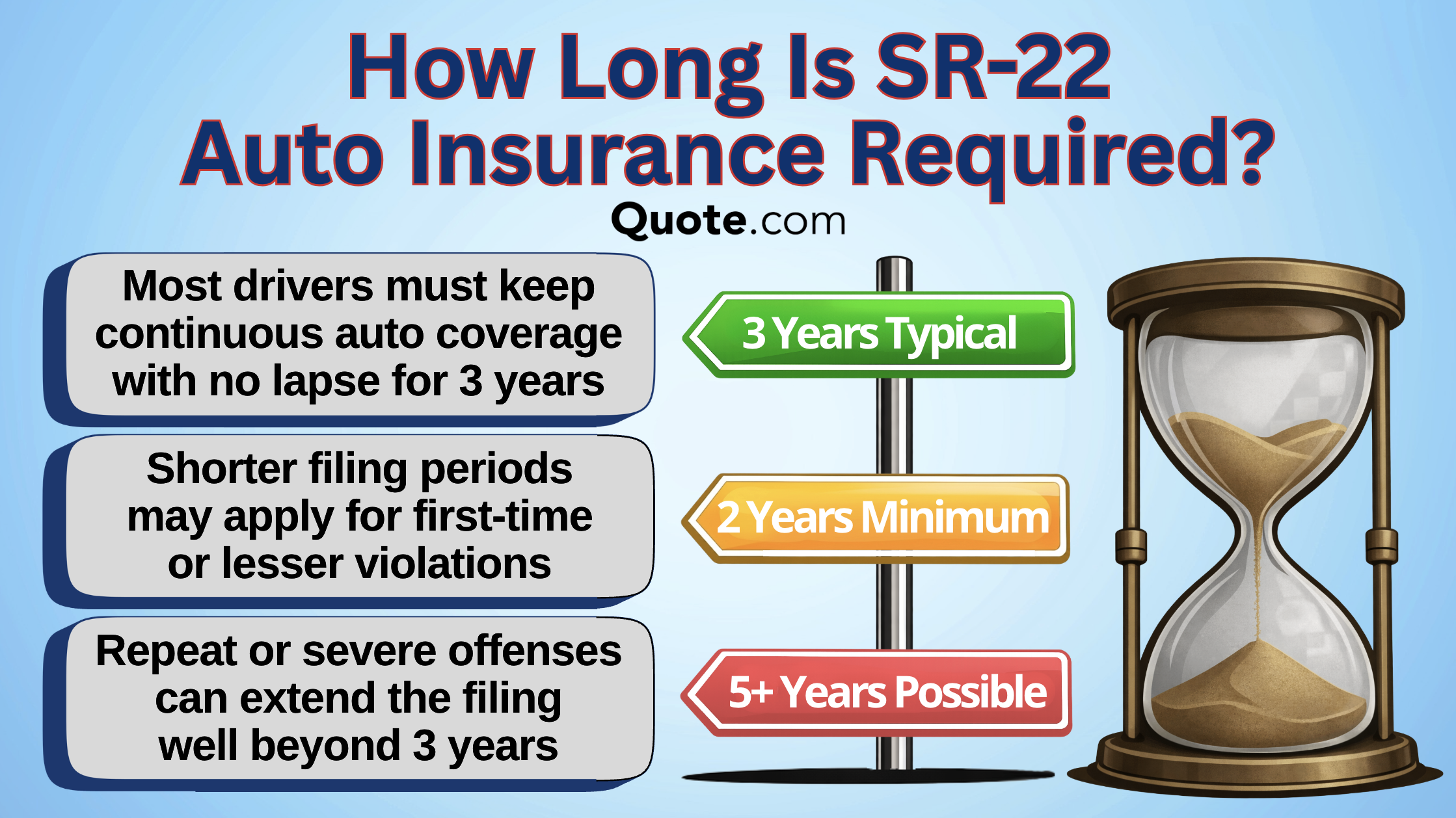
| Duration of Filing | 3 Years (Standard) | The typical length of time the filing must remain active without a lapse. |
It is important to note that these are the minimum requirements. Many high-risk drivers find that increasing these limits provides better personal financial protection, although it will increase the premium. The SR-22 filing specifically verifies that these minimums are active and being monitored by the state.
The Process of Obtaining and Submitting an SR-22 Filing
Navigating the bureaucracy of the Louisiana OMV and the insurance market can be complex. If you have been notified that you require a filing, you should follow these specific steps to ensure compliance and avoid further legal penalties.
1. Verification of Requirement
Before contacting an insurance agent, confirm exactly why the filing is required by checking your official driving record or the notice sent by the OMV. This will determine the duration of the filing and whether any other requirements, such as an ignition interlock device, are also necessary.
2. Contacting Your Current Insurer
Notify your current insurance provider that you require an SR-22 filing. Be aware that not all insurance companies provide this service. Some "standard" or "preferred" market carriers may decline to renew your policy if you require a high-risk filing, as their risk models do not accommodate DWI or multiple-offense profiles.
3. Shopping for High-Risk Coverage
If your current insurer cannot or will not file the SR-22, you must seek out a non-standard or "high-risk" insurance carrier. These companies specialize in drivers with complicated histories. When getting quotes, specifically mention that you need a "Louisiana SR-22 filing" so the agent can include the filing fee and ensure the company is authorized to report to the Louisiana OMV.
4. Payment and Filing Transmission
Once you select a policy and pay the premium (and the small administrative fee for the filing, usually $15 to $50), the insurer will electronically transmit the SR-22 certificate to the Louisiana OMV. In 2026, this is almost instantaneous, but it may still take 24 to 72 hours for the OMV's internal systems to update your status.
5. Reinstatement of Privileges
After the OMV receives the filing, you may still need to pay a reinstatement fee to the state. These fees vary depending on the reason for suspension. Only after the filing is accepted and all fees are paid will your driving status return to "valid."
Financial Impact: Costs and Premium Hikes
The insurance filing itself is inexpensive; the real cost lies in the underlying insurance policy. Because the state requires a filing only for drivers who have demonstrated significant risk, insurance companies adjust their rates accordingly.
Drivers requiring a filing can expect their annual premiums to increase by 40% to 100%, and in cases of multiple DWIs, even more. Furthermore, many high-risk insurers require the policy to be paid in full upfront or require a significant down payment to mitigate the risk of the policy canceling due to non-payment.
In Louisiana, "lapse" is the most dangerous word for a driver with a filing. If you miss a payment and the policy cancels, the insurer sends an SR-26 form to the OMV. This form informs the state that your filing is no longer valid. In 2026, the OMV's automated systems typically trigger a license suspension notice the same day an SR-26 is received. This results in the driver having to start their three-year filing period over from the beginning in many instances.
Non-Owner SR-22 Filings in Louisiana
A common misconception is that you only need an insurance filing if you own a vehicle. However, Louisiana law requires the driver to be covered, regardless of vehicle ownership. If you do not own a car but need to reinstate your license, you must obtain a Non-Owner SR-22 Insurance Policy.
A non-owner policy provides liability coverage when you are driving a vehicle you do not own (such as a friend's car or a rental). It satisfies the state's requirement for a filing and allows you to keep your license valid. This is often a more affordable way for high-risk drivers to maintain their filing status if they do not have regular access to a vehicle. However, it does not cover a vehicle that is registered in your name or a vehicle that you use regularly (like a roommate's car).
Duration and Removal of the Filing Requirement
The standard requirement for an auto insurance filing in Louisiana is three consecutive years. During this period, the policy must remain active without any interruptions.
Once you have reached the end of your mandated period—for instance, three years from the date of your reinstatement—you are responsible for confirming with the OMV that the requirement has been lifted. Do not simply stop paying for your high-risk policy. You should:
- Contact the OMV to verify the filing period is complete.
- Once cleared, contact your insurance company to have the SR-22 removed from your policy.
- Shop for a standard insurance policy, as you may now qualify for much lower "preferred" rates once the high-risk filing is no longer necessary.
Frequently Asked Questions
Does Louisiana accept SR-22 filings from other states?
Yes, if you move to Louisiana and have an SR-22 requirement from another state, you must maintain that filing. You will need to find a Louisiana-authorized insurer that can file the certificate with your former state's licensing agency to ensure your driving privileges remain intact across state lines.
What is the difference between an SR-22 and an FR-44?
While Louisiana primarily uses the SR-22, some states like Florida and Virginia use an FR-44, which requires much higher liability limits (often double or triple the state minimum). If you are moving to Louisiana with an FR-44 requirement from another state, you must continue to meet those higher limits to satisfy that state’s laws.
Can I file the SR-22 myself with the OMV?
No. Louisiana law requires the insurance company to file the document directly. This ensures the information is verified and that the state is notified immediately if the policy is cancelled.
Will my SR-22 expire automatically?
No. The requirement to carry the filing usually has a set end date (typically three years), but the insurance policy itself will continue to include the filing until you or the insurer removes it. Always verify with the OMV before removing the filing to avoid an accidental suspension.
What happens if I move out of Louisiana while I have a filing requirement?
If you move, you must still maintain the filing to keep your driving record clear. If you fail to maintain the Louisiana filing, Louisiana will suspend your license, and most other states will honor that suspension, preventing you from getting a new license in your new home.
Practical Recommendations for Drivers
If you are facing a Louisiana auto insurance filing requirement in 2026, your primary goal should be uninterrupted compliance. Set up automatic payments for your insurance to ensure the policy never lapses. Even a one-day lapse can reset your three-year clock and result in significant reinstatement fees.
Additionally, use the three-year filing period to improve your driving habits. Avoid further tickets or accidents, as these will compound your insurance costs and potentially extend the duration of the filing requirement. Once the three years are up, proactively shop for a new policy; staying with a high-risk carrier after you are no longer legally required to do so can cost you thousands of dollars in unnecessary premiums.
Disclaimer: This information is provided for educational purposes regarding Louisiana regulatory requirements as of 2026. For specific legal or financial advice, consult with a licensed Louisiana attorney or a certified insurance professional.
Image Gallery