The Truth Behind the Valentine’s Day Killer Case
The truth behind the Valentine’s Day Killer case primarily refers to the 1929 St. Valentine’s Day Massacre in Chicago, a pivotal moment in American organized crime. While Al Capone is widely believed to have ordered the hits, forensic...
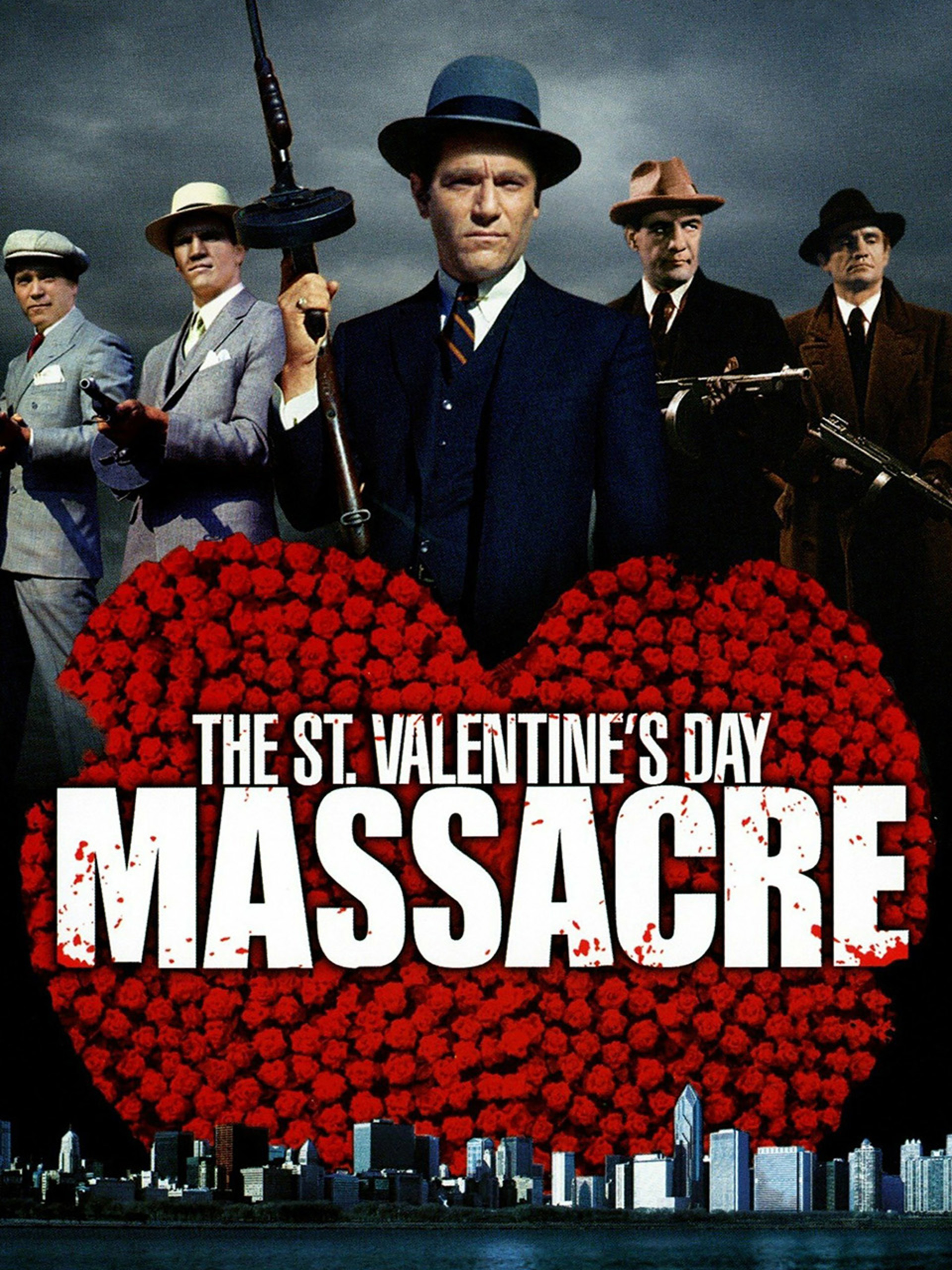
The truth behind the Valentine’s Day Killer case primarily refers to the 1929 St. Valentine’s Day Massacre in Chicago, a pivotal moment in American organized crime. While Al Capone is widely believed to have ordered the hits, forensic ballistics and historical records later identified specific gunmen, such as Fred "Killer" Burke, though no one was ever officially tried for the murders.
Contents
The moniker "Valentine’s Day Killer" has been applied to various high-profile tragedies occurring on February 14th, ranging from the gangland executions of the Prohibition era to modern domestic tragedies and cold cases. To understand the "truth" behind these events, one must distinguish between the 1929 Chicago massacre, the 1971 Durham murders, and the 2013 Oscar Pistorius case. This analysis provides a deep dive into the evidence, the forensic breakthroughs, and the enduring mysteries surrounding these specific instances.
The 1929 St. Valentine’s Day Massacre: The Foundation of the Legend
When people search for the "Valentine Day Killer case," they are most often referring to the events of February 14, 1929, at 2122 North Clark Street in Chicago. Seven men associated with George "Bugs" Moran’s gang were lined against a brick wall and executed with Thompson submachine guns.
The Motive and the Players
The primary driver of the massacre was the control of the illegal bootlegging trade during Prohibition. Al Capone’s "Chicago Outfit" was in a violent struggle for territory with the "North Side Gang," led by Bugs Moran. The "truth" of the setup involved a decoy: a shipment of hijacked whiskey from Detroit’s Purple Gang was promised to Moran. When Moran’s men arrived to receive the shipment, they were met by four men—two dressed in police uniforms—who they believed were conducting a routine raid.
The Identification of the Killers
For decades, the identities of the shooters remained a matter of speculation. However, the investigation led by Calvin Goddard, the father of modern ballistics, proved that two Thompson submachine guns were used. In December 1929, police searched the bungalow of Fred "Killer" Burke in Michigan after he killed a police officer. They discovered the two weapons used in the massacre.
The "truth" revealed through forensic science was that the shooters were not just local thugs but a specialized "hit squad" likely comprised of Burke, John Scalise, Albert Anselmi, and Jack "Machine Gun" McGurn’s associates. Despite this evidence, the political climate and witness intimidation prevented successful prosecutions for the massacre itself.
Forensic Breakthroughs and the "Scientific" Truth
The St. Valentine’s Day Massacre is historically significant because it birthed the first independent forensic laboratory in the United States. Before this case, ballistics was largely considered a "pseudo-science."
- Comparison Microscopy: Calvin Goddard used a comparison microscope to match the shells found at the scene with test-fired bullets from Burke’s Thompson guns. This provided an irrefutable link that defied the "he said, she said" nature of gangland testimony.
- The S-M-I-T-H Connection: Rumors persisted that the shooters were actual Chicago police officers. The forensic truth debunked this; while police uniforms were used as a ruse, the specific weapons and tactical execution pointed toward hired professionals from outside the city, specifically "Egan’s Rats" from St. Louis.
- The Alibi of Al Capone: At the time of the shooting, Capone was famously in Florida, meeting with officials and ensuring he had a visible alibi. The truth behind his involvement is circumstantial but overwhelming; the operation required resources and organizational oversight that only the Outfit possessed.
The 1971 Durham Valentine’s Day Murders: A Cold Case Solved
Another case often associated with the "Valentine Day Killer" involves the 1971 disappearance and murder of Jesse McBane and Patricia Mann in Durham, North Carolina. For over 50 years, this case remained one of the state's most haunting mysteries.
The truth behind this case was finally unearthed in the early 2020s through the use of Forensic Investigative Genetic Genealogy (FIGG). The couple was kidnapped from a "lover’s lane" area on Valentine's Day and their bodies were found tied to a tree days later. The investigation initially stalled due to a lack of physical evidence and the limitations of 1970s forensic technology.
In 2026, as we look back at the resolution of this case, it serves as a testament to the power of DNA preservation. The suspect, identified as a local man who had since passed away, was linked to the crime through DNA found on the ropes used to bind the victims. This case highlights how "the truth" can shift from a cold-case mystery to a scientific certainty decades after the fact.
The Oscar Pistorius Case: The Modern Valentine’s Day Killer
In the 21st century, the phrase "Valentine’s Day Killer" was frequently used by international media to describe South African paralympian Oscar Pistorius. On February 14, 2013, Pistorius shot and killed his girlfriend, Reeva Steenkamp, through a locked bathroom door.
The Legal Truth vs. The Public Perception
Pistorius claimed he believed an intruder had entered his home. The prosecution argued it was a case of domestic violence and premeditated murder. The "truth" in this case was hashed out through multiple appeals in the South African legal system.
- Initial Verdict: Culpable homicide (manslaughter).
- Final Ruling: The Supreme Court of Appeal overturned the initial ruling, finding him guilty of murder under the principle of dolus eventualis—meaning he should have foreseen that firing four shots into a small cubicle would kill whoever was behind the door, regardless of who he thought it was.
As of 2026, Pistorius has completed a significant portion of his sentence and remains a central figure in discussions regarding gender-based violence and the celebrity justice system. The "truth" of his intent remains a subject of debate, but the legal truth is firmly established as murder.
Comparative Summary of Valentine's Day Criminal Cases
| Case Name | Date | Key Figure/Suspect | Primary Weapon | Resolution Status |
|---|---|---|---|---|
| St. Valentine's Day Massacre | Feb 14, 1929 | Al Capone / Fred Burke | Thompson Submachine Guns | Solved (Ballistics), No Convictions |
| Durham "Lovers Lane" Murders | Feb 14, 1971 | H. Brame (Posthumous ID) | Strangulation/Ropes | Solved (Genetic Genealogy) |
| Nicholas Kunselman Case | Feb 14, 2000 | Unknown | Firearms | Unsolved (Cold Case) |
| The "Blade Runner" Case | Feb 14, 2013 | Oscar Pistorius | 9mm Pistol | Solved (Conviction) |
Common Misconceptions About the 1929 Case
To find the truth, one must peel back the layers of Hollywood romanticization and urban legends that have surrounded the Chicago massacre for nearly a century.
Myth: Bugs Moran was killed in the massacre
Truth: Moran was actually the primary target, but he arrived late to the warehouse. He saw the "police car" outside and, assuming a raid was underway, he turned around and left. This stroke of luck saved his life but effectively ended his reign as a major power in Chicago.
Myth: The massacre happened at night
Truth: The execution took place at approximately 10:30 AM on a Thursday. The boldness of the daytime operation is what shocked the American public and eventually forced the federal government to intervene in Chicago’s gang wars, leading to the "Public Enemy No. 1" designation for Al Capone.
Myth: Seven gang members died instantly
Truth: Six died immediately. The seventh, Frank Gusenberg, survived for several hours despite having 14 bullet wounds. When police asked him who shot him, he famously replied, "Nobody shot me," maintaining the gangland code of silence (omertà) until his death.
Investigating the Unsolved: The 2000 Littleton Case
On February 14, 2000, teenagers Nicholas Kunselman and Stephanie Hart-Grizzell were murdered at a Subway restaurant in Littleton, Colorado. As of 2026, this remains one of the most prominent unsolved "Valentine Day Killer" cases. The truth behind this event is still being sought by the Jefferson County Sheriff's Office.
Current investigative leads often focus on:
- The "Unknown Male": A man seen leaving the scene in a red vehicle.
- Ballistic Forensics: Re-evaluating the shell casings with modern automated fingerprint and ballistics databases (NIBIN).
- Digital Footprints: Investigating social connections and potential threats that may have been overlooked in the pre-social media era.
Frequently Asked Questions
Who was the "Valentine Day Killer"?
There is no single "Valentine Day Killer." The term is most commonly associated with Al Capone’s associates (like Fred Burke) or Oscar Pistorius. In specific regions, it may refer to local cold cases that occurred on the holiday.
Was Al Capone ever arrested for the 1929 Massacre?
No. Capone was never charged with the St. Valentine's Day Massacre. The lack of witnesses willing to testify and his solid alibi in Florida made a murder charge impossible. He was eventually imprisoned for income tax evasion in 1931.
How did ballistics solve the 1929 case?
Calvin Goddard used the comparison microscope to match the specific "fingerprint" of the firing pin and the barrel rifling from two Thompson submachine guns found in Fred Burke's home to the shells found at the Clark Street warehouse. This was the first time ballistics was used so definitively in a high-profile case.
What happened to the wall where the 1929 massacre occurred?
The warehouse was demolished in 1967. However, the bricks from the wall were purchased by a Canadian businessman and eventually ended up at the Mob Museum in Las Vegas, Nevada, where they are currently on display as a historical artifact.
Are there any active leads in the 2000 Littleton Valentine's Day case?
As of 2026, investigators continue to use advanced DNA phenotyping and genetic genealogy to attempt to identify the suspect. Periodic rewards are offered for information, but the case remains categorized as an active cold case.
Final Recommendations for Researchers
The "truth" behind these cases is rarely found in a single source. For those seeking deeper historical accuracy, the following steps are recommended:
- Review Primary Sources: Access the FBI's Vault for declassified records on the St. Valentine's Day Massacre and Al Capone.
- Consult Forensic Journals: Look for papers by Calvin Goddard to understand the birth of ballistic science through the lens of the 1929 case.
- Analyze Legal Transcripts: For modern cases like Oscar Pistorius, reviewing the High Court and Supreme Court of Appeal judgments provides the most accurate account of the evidence and legal reasoning.
- Support Cold Case Initiatives: For unsolved cases, organizations like the National Center for Missing & Exploited Children often provide updated information and ways to assist in identifying suspects.
Image Gallery